Sprig Originals's kitchen / Small-Batch Homemade Kombucha (First & Second Ferment)
Small-Batch Homemade Kombucha (First & Second Ferment)
 By Sprig Originals · cooked up in Sprig
Worked out from this recipe's ingredients. If you're cooking for an allergy, always read the full ingredient list.
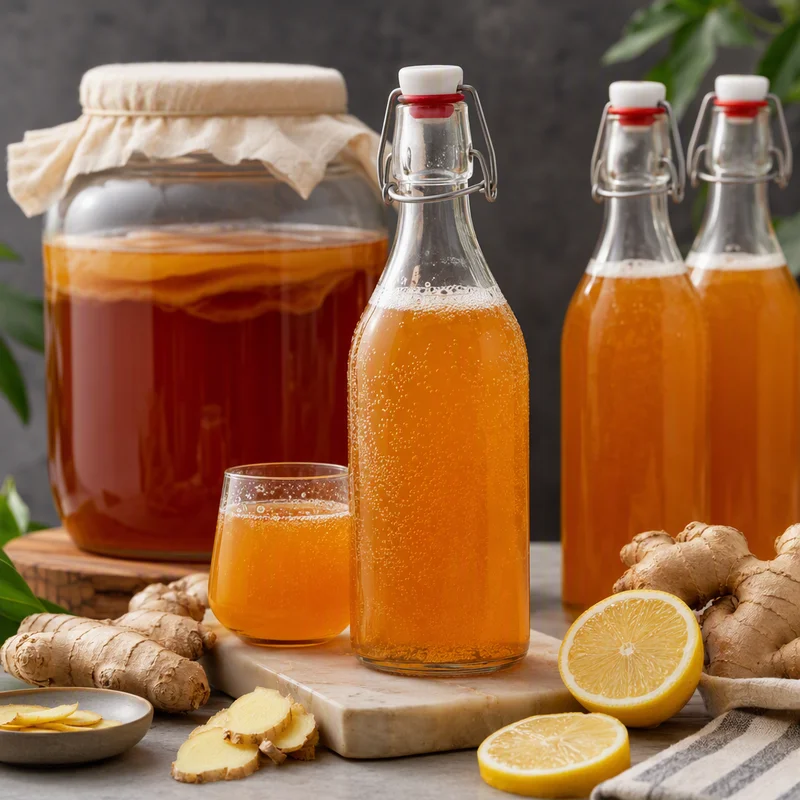
A one-gallon batch of homemade kombucha built the way good taprooms do it: a clean black-tea base fermented with a SCOBY until it turns bright and tart, then bottled with fresh ginger and lemon for a natural, gently fizzy second ferment. No special equipment beyond a glass jar and a few swing-top bottles, and no alcohol — just live, lightly sour sparkling tea you control from sweet to sharp.
Ingredients
Sweet Tea Base (First Ferment)
- 14 cups filtered or dechlorinated water, divided
- 1 cup granulated white sugar
- 8 bags plain black tea bags (or 2 tablespoons loose-leaf black tea)
- 2 cups unflavored kombucha starter liquid (from a previous batch or raw store-bought plain kombucha)
- 1 live kombucha SCOBY, about 4 inches across
Ginger-Lemon Second Ferment
- 3 inches fresh ginger, peeled and finely grated
- 3 tablespoons fresh lemon juice
- 3 tablespoons granulated sugar or honey (for carbonation)
Equipment
- 1 1-gallon wide-mouth glass jar, washed in hot soapy water and rinsed well
- 1 tightly woven cloth or coffee filter plus a rubber band
- 5 16-ounce swing-top or thick-walled glass bottles
- pH strips or a small fine-mesh strainer and funnel
Instructions
- Bring 4 cups of the filtered water to a boil in a clean saucepan, then remove from the heat and let it drop to about 200°F (30 seconds off the boil). Add the 8 black tea bags and steep exactly 10 minutes — longer makes the finished kombucha harshly astringent.
- Lift out the tea bags without squeezing them, then stir in the 1 cup sugar until it fully dissolves and the liquid is clear, about 1 minute. The sugar is food for the culture, not sweetness for you; do not reduce it.
- Pour the sweet tea concentrate into the clean 1-gallon glass jar and add the remaining 10 cups cool filtered water. Let the jar sit uncovered until the liquid registers below 85°F on an instant-read thermometer, 45 to 90 minutes. Anything hotter can kill the culture.
- Add the 2 cups starter liquid and stir with a wooden or stainless spoon. Slide the SCOBY in with clean hands; it may float, sink, or hover sideways — all are normal. If you have pH strips, the liquid should read 4.5 or lower at this point.
- Cover the jar mouth with the woven cloth or coffee filter and secure with a rubber band. Do not use a solid lid — the ferment needs airflow. Set the jar somewhere dark, still, and 72–78°F, away from direct sun and out of the path of any other ferments.
- Ferment 7 to 14 days without stirring. A new cream-colored pellicle will form across the surface within a few days, often with brown stringy strands hanging below; this is healthy. Starting on day 7, taste a spoonful drawn from the side of the jar with a straw or turkey baster.
- Stop the first ferment when the liquid tastes pleasantly tart with only a whisper of sweetness — like a very dry apple cider. In a warm kitchen this can happen by day 8; in a cool one it may take 14. Over-fermented kombucha tastes vinegary and cannot be walked back.
- With clean hands, lift out both the original SCOBY and the new pellicle and set them in a bowl with 2 cups of the finished kombucha; this is your starter for the next batch. Reserve it at room temperature if you are brewing again within a week.
- For the second ferment, stir the grated ginger, lemon juice, and 3 tablespoons sugar together in a small bowl. Divide the mixture evenly among the 5 clean bottles, then funnel in the kombucha, leaving 1 1/2 inches of headspace at the top of each bottle. Seal tightly.
- Leave the bottles at room temperature (70–78°F) for 2 to 4 days to carbonate, ideally standing in a plastic tub or paper bag. Starting at 48 hours, open one bottle over the sink each day to check fizz — when it hisses assertively and pours with a lasting head, it is done.
- Refrigerate all bottles for at least 6 hours to stop fermentation and settle the carbonation before opening. Serve very cold, straining through a fine-mesh strainer if you dislike ginger threads. Chilled kombucha keeps 1 month, though it slowly grows more sour.
Chef's tips
- Never use tea with added oils or flavorings (Earl Grey, chai, flavored greens) for the first ferment — the oils damage the SCOBY. Save flavoring for the second ferment, where anything goes.
- Chlorinated tap water can weaken the culture. If you don't have filtered water, boil tap water for 5 minutes or leave it uncovered overnight before using.
- Mold on kombucha is always dry, fuzzy, and clearly blue, black, or green, sitting on top of the pellicle. Brown strands, bumps, and translucent patches are not mold. If you see true mold, discard the entire batch including the SCOBY and start fresh.
- Glass bottles under pressure can fail. Use swing-top or purpose-built pressure bottles, never repurposed wine or juice bottles, and burp any bottle you plan to leave out past day 3.
- Kombucha's natural alcohol stays under 0.5% ABV when the second ferment is kept short and the bottles are refrigerated promptly. Long, warm second ferments push it higher, so chill on schedule.
- Cool kitchens slow everything down. If your house sits at 66°F, set the jar on top of the refrigerator or use a seedling mat on its lowest setting to hold 75°F.
- Great second-ferment swaps for the ginger-lemon: 1/4 cup blueberry puree per bottle, 2 tablespoons pineapple juice plus a mint sprig, or 1 tablespoon strawberry puree with a strip of lemon peel.
Nutrition (per serving, estimated)
30calories
0gprotein
7gcarbs
Estimates only — values vary with brands and portions.
Made with Sprig
Small-Batch Homemade Kombucha (First & Second Ferment) was created in Sprig — the AI chef that turns any craving into a complete recipe, plans your week, and shops with one smart list.
Free to start · 14-day Pro trial · cancel anytime
Not ready yet? Get the occasional recipe worth cooking — a couple a month at most.
You're on the list — check your inbox!
Unsubscribe anytime. Privacy Policy
More from Sprig Originals
French Onion Patty Melts on Rye
Dark Roux Seafood Gumbo with Quick Shrimp Stock
One-Skillet Blackened Cajun Chicken Pasta
Are you this recipe's original author or publisher? Report a problem