Sprig Originals's kitchen / Same-Day Idli with Vegetable Sambar and Coconut Chutney
Same-Day Idli with Vegetable Sambar and Coconut Chutney
 By Sprig Originals · cooked up in Sprig
Worked out from this recipe's ingredients. If you're cooking for an allergy, always read the full ingredient list.
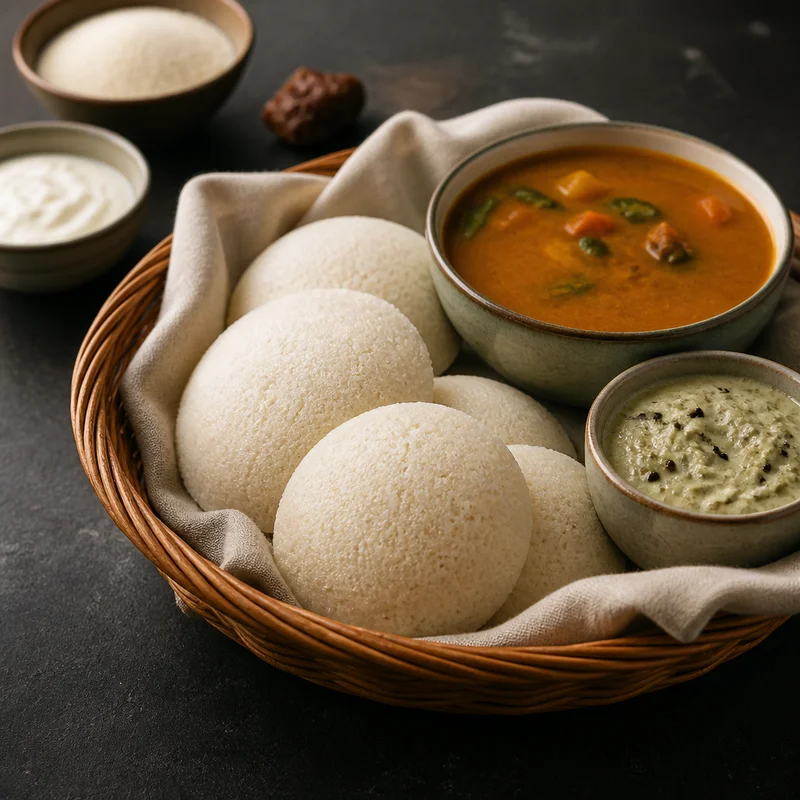
South Indian breakfast without the two-day fermentation project. Store-bought idli rava (coarse rice grits) plus thick yogurt gives you soft, spongy steamed cakes in about an hour, while a proper tamarind-and-toor-dal sambar and a five-minute coconut chutney do the real flavor work. Makes about 16 idli — enough for four hungry people with sambar to spare.
Ingredients
Same-Day Idli
- 2 cups idli rava (coarse rice grits / rice semolina)
- 1 1/2 cups thick whole-milk plain yogurt, slightly sour
- 3/4 cup water, plus more as needed
- 1 1/4 tsp fine sea salt
- 1 tsp fruit salt (ENO, unflavored) or 3/4 tsp baking soda
- 1 tsp lemon juice (only if using baking soda)
- 2 tsp neutral oil, for greasing
Sambar
- 3/4 cup toor dal (split pigeon peas), rinsed
- 3 cups water
- 1/2 tsp ground turmeric
- 1/2 tsp neutral oil
- 1 tbsp tamarind concentrate (or a walnut-size ball of wet tamarind)
- 1 medium carrot, cut into 1/2-inch coins
- 8 small shallots, peeled and left whole (or 1 small onion, in wedges)
- 1 small Japanese or Indian eggplant, cut into 1-inch chunks
- 1 medium tomato, cut into wedges
- 2 1/2 tbsp sambar powder
- 1 tsp jaggery or brown sugar
- 1 1/2 tsp salt, plus more to taste
- 2 cups hot water, plus more to thin
- 3 tbsp chopped cilantro
Sambar Tempering
- 2 tbsp ghee or coconut oil
- 1 tsp black mustard seeds
- 1/4 tsp fenugreek seeds
- 2 dried red chiles, broken
- 12 fresh curry leaves
- 1/4 tsp asafoetida (hing)
Coconut Chutney
- 1 cup frozen grated coconut, thawed (or fresh)
- 3 tbsp roasted chana dal (dalia)
- 1–2 green chiles, stemmed
- 1/2 inch piece fresh ginger, peeled
- 1/4 tsp tamarind concentrate
- 3/4 tsp salt
- 1/2 cup cold water, plus more as needed
- 2 tsp coconut oil
- 1/2 tsp black mustard seeds
- 1 dried red chile, broken
- 8 fresh curry leaves
Instructions
- Start the idli batter first so it can rest. In a large bowl, whisk the yogurt with 3/4 cup water and 1 1/4 tsp salt until smooth. Stir in the idli rava, breaking up any lumps. The mixture should be thick but pourable, like pancake batter; add water 1 tablespoon at a time if it's stiff. Cover and rest at room temperature for 30 minutes (up to 2 hours) while the rava swells and the yogurt tenderizes it.
- Cook the dal for the sambar. Combine the rinsed toor dal, 3 cups water, turmeric, and 1/2 tsp oil in a saucepan. Bring to a boil, skim the foam, then reduce to a low simmer, partly covered, for 35–40 minutes, until the dal is completely soft and falling apart. (Pressure cooker: 8 minutes on high, natural release.) Whisk vigorously until creamy and set aside. Do not salt yet.
- While the dal cooks, make the tamarind base. Stir the tamarind concentrate into 2 cups hot water in a wide pot or deep skillet. If using wet tamarind, soak it in the hot water for 10 minutes, squeeze it out, and discard the solids.
- Add the shallots, carrot, and eggplant to the tamarind water along with the sambar powder, jaggery, and 1 1/2 tsp salt. Bring to a boil, then simmer briskly for 10–12 minutes, uncovered, until the vegetables are tender and the raw smell of the sambar powder is gone. Add the tomato wedges and cook 3 minutes more.
- Pour the whisked dal into the vegetables. Add hot water as needed to reach a pourable, soupy consistency (it should coat a spoon but still run off easily). Simmer gently for 5 minutes, then taste and adjust salt, tamarind, and jaggery. Keep warm over the lowest heat.
- Make the coconut chutney. In a blender, combine the coconut, roasted chana dal, green chiles, ginger, tamarind, salt, and 1/2 cup cold water. Blend to a thick, slightly grainy paste, scraping down and adding water a tablespoon at a time — you want a spoonable dip, not a sauce. Scrape into a bowl.
- Temper the chutney: heat 2 tsp coconut oil in a small skillet over medium-high until shimmering. Add the mustard seeds and cover loosely until they pop, about 20 seconds, then add the dried chile and curry leaves, swirl for 5 seconds, and pour the whole thing over the chutney. Don't stir it in until serving.
- Temper the sambar: in the same small skillet, heat the ghee over medium-high. Add mustard seeds and let them pop, then the fenugreek seeds, dried chiles, and curry leaves. Fry 10–15 seconds until the leaves crackle, kill the heat, stir in the asafoetida, and pour into the sambar. Stir in the cilantro, cover, and let it sit — sambar improves as it stands.
- Set up your steamer. Fill an idli steamer or a wide pot with 1 1/2 inches of water, add a rack, and bring to a rolling boil. Grease idli plates, small stainless bowls, or silicone muffin cups generously with oil.
- Finish the batter. Stir the rested batter; it will have thickened, so loosen it with a few tablespoons of water back to a thick ribbon. Sprinkle the fruit salt (or baking soda plus lemon juice) over the surface and fold gently for 10 seconds only — you'll see it lighten and bubble. Do not beat out the air.
- Immediately fill each mold about three-quarters full. Set the plates in the steamer, cover, and steam over medium-high heat for 12–14 minutes, until the idli are domed and a toothpick inserted in the center comes out clean. Turn off the heat and let them stand, covered, 3 minutes.
- Run a wet spoon around each idli and pop them out. Serve hot, 3–4 idli per person, in shallow bowls with plenty of sambar ladled around them and a spoonful of coconut chutney alongside. Steam the remaining batches while the first plates are being eaten — idli wait for nobody.
Chef's tips
- Idli rava is not the same as regular fine semolina (sooji). Look for "idli rava" or "rice rava" at an Indian grocery or online; if you can only find fine cream of rice, use 1 3/4 cups and expect a slightly denser idli.
- Sour yogurt is your friend here — it does the flavor work that fermentation normally would. If your yogurt is very fresh, leave it out on the counter for 3–4 hours before mixing, or stir in 1/2 teaspoon lemon juice.
- Want the traditional route? Soak 1 cup urad dal 5 hours, grind to a fluffy paste, fold into 2 cups soaked and squeezed idli rava, and ferment 8–12 hours in a warm spot (an oven with the light on works) until doubled. Skip the fruit salt entirely.
- The single most common idli failure is over-mixing after adding the fruit salt, or letting the batter sit once it's in. Have the steamer already boiling before you add it.
- Sambar tastes better on day two. Make it the night before, refrigerate, and reheat with a splash of water while the idli batter rests.
- Leftover idli: halve them, pan-fry in ghee until golden, and toss with a spoon of sambar powder. That's lunch.
Nutrition (per serving, estimated)
580calories
18gprotein
87gcarbs
19gfat
Estimates only — values vary with brands and portions.
Made with Sprig
Same-Day Idli with Vegetable Sambar and Coconut Chutney was created in Sprig — the AI chef that turns any craving into a complete recipe, plans your week, and shops with one smart list.
Free to start · 14-day Pro trial · cancel anytime
Not ready yet? Get the occasional recipe worth cooking — a couple a month at most.
You're on the list — check your inbox!
Unsubscribe anytime. Privacy Policy
More from Sprig Originals
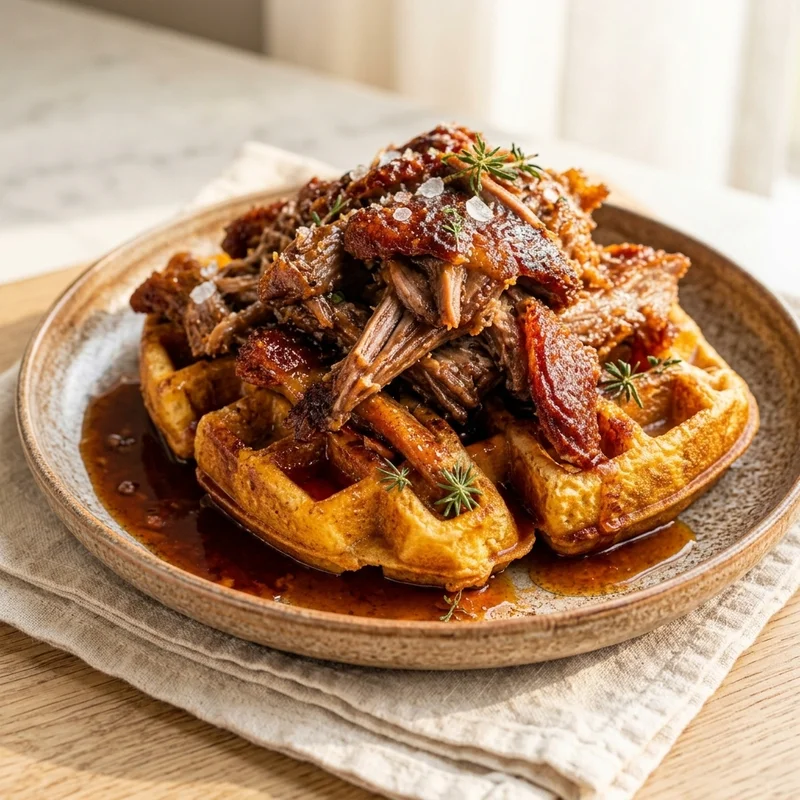
Duck Confit Cornbread Waffles with Cane Syrup Gastrique
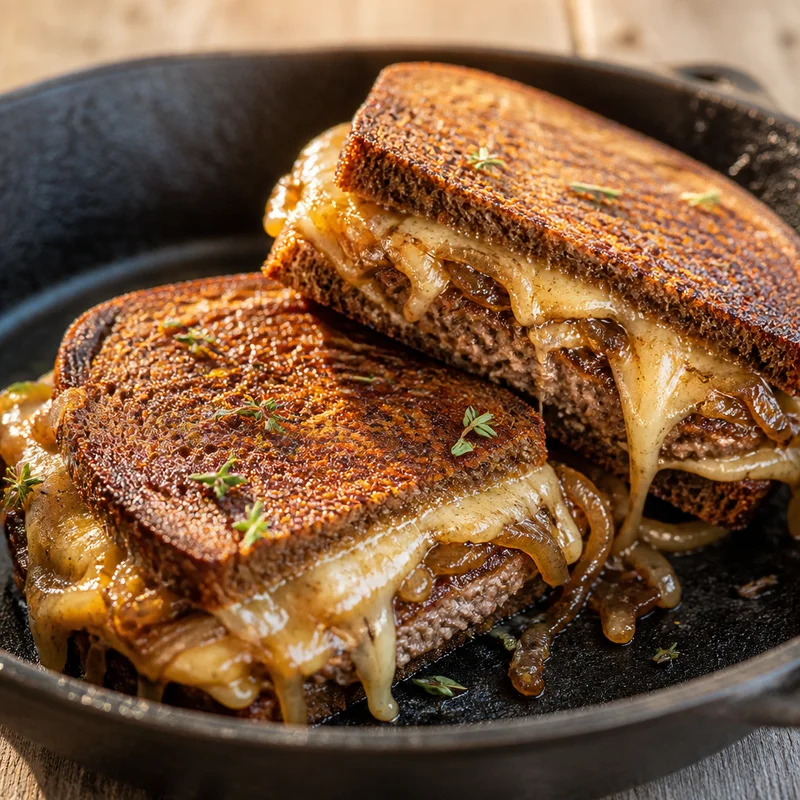
French Onion Patty Melts on Rye

Dark Roux Seafood Gumbo with Quick Shrimp Stock
Are you this recipe's original author or publisher? Report a problem