Sprig Originals's kitchen / Vegetable Kurma with Coconut-Cashew-Poppy Seed Paste
Vegetable Kurma with Coconut-Cashew-Poppy Seed Paste
 By Sprig Originals · cooked up in Sprig
Worked out from this recipe's ingredients. If you're cooking for an allergy, always read the full ingredient list.
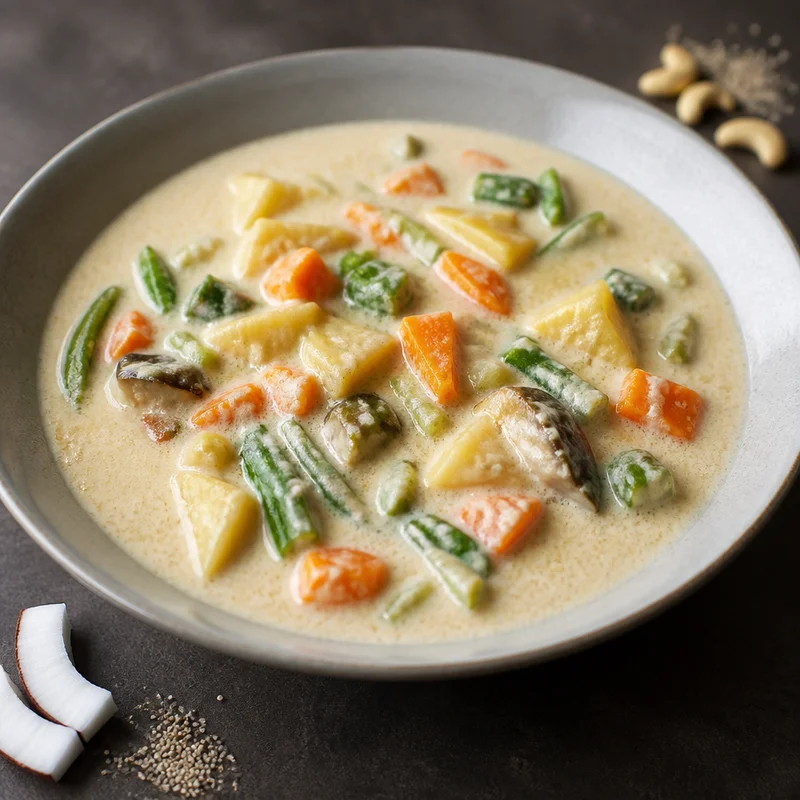
A gentle, ivory-colored South Indian curry where the whole dish lives or dies by one thing: a silky blender paste of fresh coconut, cashews and white poppy seeds. Whole spices bloom in oil, onions and tomato melt down, then the paste goes in and turns everything glossy and thick without a drop of cream. Deliberately mild — fragrant rather than fiery — so it soaks into flaky parotta or a mound of hot rice the way the restaurant versions do.
Ingredients
Coconut-Cashew-Poppy Seed Paste
- 2 tbsp white poppy seeds (khus khus)
- 1/3 cup raw cashews
- 3/4 cup frozen grated coconut, thawed, or fresh grated coconut
- 1 tbsp roasted chana dal (or 1 tbsp additional cashews)
- 2 green chiles, stemmed (seeds removed for mildness)
- 1 tbsp chopped ginger
- 4 cloves garlic
- 1/2 tsp fennel seeds
- 3/4 cup warm water, plus more as needed
Vegetables
- 1 medium Yukon Gold potato, peeled and cut into 3/4-inch cubes
- 1 large carrot, cut into 1/2-inch coins
- 1 cup cauliflower florets, bite-size
- 3/4 cup green beans, cut into 1-inch lengths
- 1/2 cup frozen green peas
Tempering and Base
- 3 tbsp coconut oil or neutral oil
- 1 2-inch cinnamon stick
- 3 green cardamom pods, lightly crushed
- 3 whole cloves
- 1 star anise (optional)
- 1 large red onion, finely chopped
- 12 fresh curry leaves
- 1 medium tomato, finely chopped
- 1/2 tsp ground turmeric
- 1 tsp ground coriander
- 1/2 tsp garam masala
- 1 1/2 tsp kosher salt, plus more to taste
- 1 1/2 cups hot water
To Finish and Serve
- 1/4 cup canned full-fat coconut milk
- 2 tsp lemon juice
- 1/4 cup chopped cilantro
- 1/4 tsp sugar (optional, to round out the tomato)
- Parotta, roti, or hot steamed rice, for serving
Instructions
- Soak the paste: Put the poppy seeds and cashews in a small bowl and cover with 1 cup of very hot water. Let stand 20 minutes while you prep the vegetables — this is what lets a home blender get the paste truly smooth.
- Blend the paste: Drain the poppy seeds and cashews and add them to a blender with the grated coconut, roasted chana dal, green chiles, ginger, garlic, fennel seeds and 3/4 cup warm water. Blend on high for 2 to 3 minutes, stopping to scrape down the sides, until completely smooth with no grit — rub a little between your fingers to check. Add water 1 tablespoon at a time if the blender stalls; you want a thick, pourable paste. Set aside.
- Bloom the whole spices: Heat the coconut oil in a wide Dutch oven or deep skillet over medium heat. Add the cinnamon, cardamom, cloves and star anise and fry 45 seconds, until the spices smell warm and the cardamom puffs slightly.
- Add the onion and curry leaves with a pinch of salt. Cook 8 to 10 minutes over medium heat, stirring often, until the onion is very soft and just turning gold at the edges. Do not brown it hard — kurma should stay pale.
- Add the tomato and cook 4 to 5 minutes, mashing it against the pan, until it breaks down and the oil separates at the edges. Stir in the turmeric, ground coriander and garam masala and fry 30 seconds.
- Add the potato, carrot, cauliflower and green beans along with 1 1/2 teaspoons kosher salt. Stir to coat, then pour in 1 1/2 cups hot water. Bring to a simmer, cover, and cook 10 to 12 minutes, until the potato and carrot are just tender when pierced.
- Stir in the blended paste plus 1/4 cup water swirled through the blender jar to catch every bit. Lower the heat to medium-low and simmer uncovered 10 to 12 minutes, stirring every couple of minutes so the paste does not catch on the bottom. The kurma will thicken noticeably and lose any raw, chalky taste from the cashews and poppy seeds.
- Add the peas and coconut milk and simmer 3 minutes more. The gravy should coat a spoon but still pour; loosen with hot water 1/4 cup at a time if it gets too thick.
- Turn off the heat and stir in the lemon juice, cilantro and the sugar if the tomato left an edge of acidity. Taste and add salt as needed — well-salted is what makes a mild curry taste finished rather than flat. Fish out the cinnamon stick and star anise if you like.
- Let the kurma rest 5 minutes off the heat, then serve hot with parotta, roti, or steamed rice.
Chef's tips
- Frozen grated coconut (in the freezer aisle of Indian and Asian markets) is far better here than dried; if you only have unsweetened desiccated coconut, use 1/2 cup and soak it in the hot water with the cashews.
- White poppy seeds are the signature — they add body and a faint nuttiness you cannot fake. If you truly can't find them, replace with 2 extra tablespoons of cashews and 1 tablespoon of melon seeds, and accept a slightly thinner gravy.
- Blend the paste for longer than feels necessary. A gritty paste is the single most common failure of home kurma, and a full 3 minutes in a standard blender after soaking fixes it.
- Keep the heat low once the paste goes in. Coconut and cashew paste scorches easily, and a browned bottom will tint the whole pot and turn the flavor bitter.
- Kurma thickens a lot in the fridge. Reheat gently with a splash of water and a fresh squeeze of lemon; it's arguably better on day two.
Nutrition (per serving, estimated)
487calories
10gprotein
39gcarbs
35gfat
Estimates only — values vary with brands and portions.
Made with Sprig
Vegetable Kurma with Coconut-Cashew-Poppy Seed Paste was created in Sprig — the AI chef that turns any craving into a complete recipe, plans your week, and shops with one smart list.
Free to start · 14-day Pro trial · cancel anytime
Not ready yet? Get the occasional recipe worth cooking — a couple a month at most.
You're on the list — check your inbox!
Unsubscribe anytime. Privacy Policy
More from Sprig Originals

Are you this recipe's original author or publisher? Report a problem