Sprig Originals's kitchen / Mapo Tofu with Silken Tofu and Toasted Sichuan Peppercorn
Mapo Tofu with Silken Tofu and Toasted Sichuan Peppercorn
 By Sprig Originals · cooked up in Sprig
Worked out from this recipe's ingredients. If you're cooking for an allergy, always read the full ingredient list.
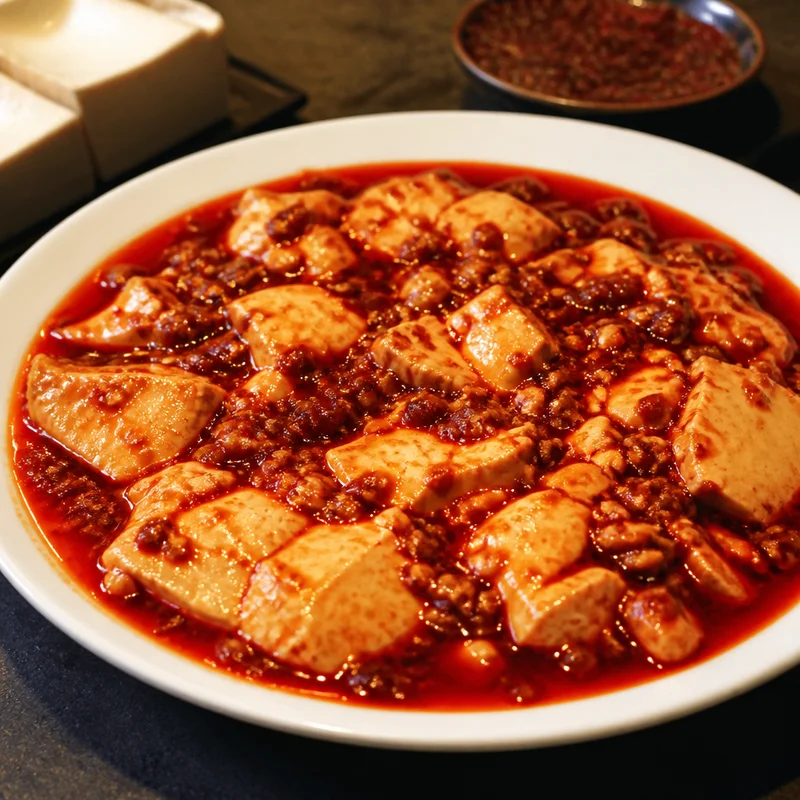
The real thing: fermented chili bean paste fried in oil until it stains everything red, silken tofu slid in whole and barely stirred, and a slurry added in three stages so the sauce clings like lacquer. Buy doubanjiang and Sichuan peppercorns once and this becomes a 25-minute weeknight dish that tastes like the $20 version at a Sichuan restaurant.
Ingredients
Tofu and aromatics
- 1 lb silken or soft tofu, block-style
- 1 tbsp kosher salt (for the blanching water)
- 4 clove garlic, finely minced
- 1 tbsp fresh ginger, finely minced
- 4 scallions, whites sliced thin, greens cut into 1-inch lengths
Sauce and seasoning
- 2 tsp whole Sichuan peppercorns
- 3 tbsp neutral oil, such as canola or peanut
- 6 oz ground pork or ground turkey (omit for vegetarian)
- 2 tbsp Pixian doubanjiang (fermented chili bean paste), roughly chopped
- 1 tbsp douchi (fermented black beans), rinsed and lightly mashed
- 1 tbsp Sichuan chili flakes or gochugaru
- 1 tsp sweet paprika (for color)
- 1 tbsp Shaoxing wine
- 1 1/2 cup low-sodium chicken or mushroom broth
- 2 tsp soy sauce
- 1/2 tsp sugar
- 1 tsp toasted sesame oil
Slurry and finish
- 2 tbsp cornstarch
- 3 tbsp cold water
- Steamed jasmine rice, for serving
Instructions
- Toast the Sichuan peppercorns in a dry skillet over medium heat for 2 to 3 minutes, shaking often, until fragrant and just smoking at the edges. Cool 2 minutes, then grind to a coarse powder in a spice grinder or mortar. Set aside — this goes on at the very end, off the heat, so it keeps its citrusy tingle.
- Cut the tofu into 1-inch cubes while still in the container or on a plate, handling it as little as possible. Bring 4 cups of water and 1 tablespoon kosher salt to a bare simmer in a saucepan (about 180°F, steaming with no bubbles). Slide the tofu in with a spatula and let it sit off the heat for 5 minutes. This firms the surface so the cubes survive the wok. Drain gently in a colander.
- Stir the cornstarch and cold water together in a small bowl until smooth. Set within reach of the stove.
- Heat the neutral oil in a 12-inch skillet or wok over medium-high until it shimmers. Add the ground pork and press it flat; cook undisturbed 2 minutes, then break it up and stir-fry 2 to 3 minutes more until the moisture is gone and the crumbles are lightly browned. (For vegetarian, skip to step 5 and heat the oil alone.)
- Reduce heat to medium. Push the meat to one side and add the doubanjiang, douchi, chili flakes, and paprika to the oil. Fry for 60 to 90 seconds, stirring constantly — the oil will turn deep red and smell toasty. Do not let it scorch or it turns bitter. Add the garlic, ginger, and scallion whites and stir 30 seconds until fragrant.
- Pour in the Shaoxing wine and let it sizzle off for 15 seconds, scraping the pan. Add the broth, soy sauce, and sugar, and bring to a simmer. Taste the sauce now — doubanjiang brands vary a lot in salt. Adjust with a splash more broth if aggressive, or a few more drops of soy if flat.
- Slide the drained tofu into the simmering sauce, spreading it in an even layer. Simmer 4 to 5 minutes without stirring. To move things around, push the pan back and forth on the burner or nudge gently with the back of a spoon — never stir with a spatula, or you'll shred it.
- Thicken in three stages: stir the slurry, drizzle in one-third of it around the edges of the pan, and shake the pan gently for 30 seconds until it returns to a simmer and tightens. Repeat twice more, waiting 30 seconds between additions. Stop when the sauce coats the tofu and holds a line when you draw a spoon through it — you may not need all the slurry.
- Turn off the heat. Add the scallion greens and sesame oil, and shake the pan to combine. Dust the ground Sichuan peppercorn evenly over the top — don't stir it in, let each spoonful pick some up. Serve immediately over steamed jasmine rice, in shallow bowls.
Chef's tips
- Look for Pixian doubanjiang in a red or brown paper-wrapped tub or jar at a Chinese market or online; it's the single ingredient that makes this taste right. One jar lasts months in the fridge and costs less than one restaurant serving.
- Sichuan peppercorns lose their numbing punch after about a year. Buy from a store with turnover, keep them in the freezer, and always toast and grind right before cooking.
- The salted-water soak in step 2 is the difference between silken tofu cubes and tofu scrambled eggs. Don't skip it, and don't let the water boil.
- Thickening in stages lets you stop at exactly the consistency you want. Restaurant mapo is glossy and just barely pourable, not gluey — err on the loose side, since it tightens as it sits.
- No douchi? Leave it out and add an extra teaspoon of soy sauce. The dish loses some depth but is still excellent.
- For a fully vegetarian version, use mushroom broth and stir in 6 ounces of finely chopped shiitake caps in place of the pork, cooking them until browned and dry, about 6 minutes.
Nutrition (per serving, estimated)
321calories
18gprotein
13gcarbs
21gfat
Estimates only — values vary with brands and portions.
Made with Sprig
Mapo Tofu with Silken Tofu and Toasted Sichuan Peppercorn was created in Sprig — the AI chef that turns any craving into a complete recipe, plans your week, and shops with one smart list.
Free to start · 14-day Pro trial · cancel anytime
Not ready yet? Get the occasional recipe worth cooking — a couple a month at most.
You're on the list — check your inbox!
Unsubscribe anytime. Privacy Policy
More from Sprig Originals
Are you this recipe's original author or publisher? Report a problem