Sprig Originals's kitchen / Spicy Gochujang Pork over Warm Tofu Slabs
Spicy Gochujang Pork over Warm Tofu Slabs
 By Sprig Originals · cooked up in Sprig
Worked out from this recipe's ingredients. If you're cooking for an allergy, always read the full ingredient list.
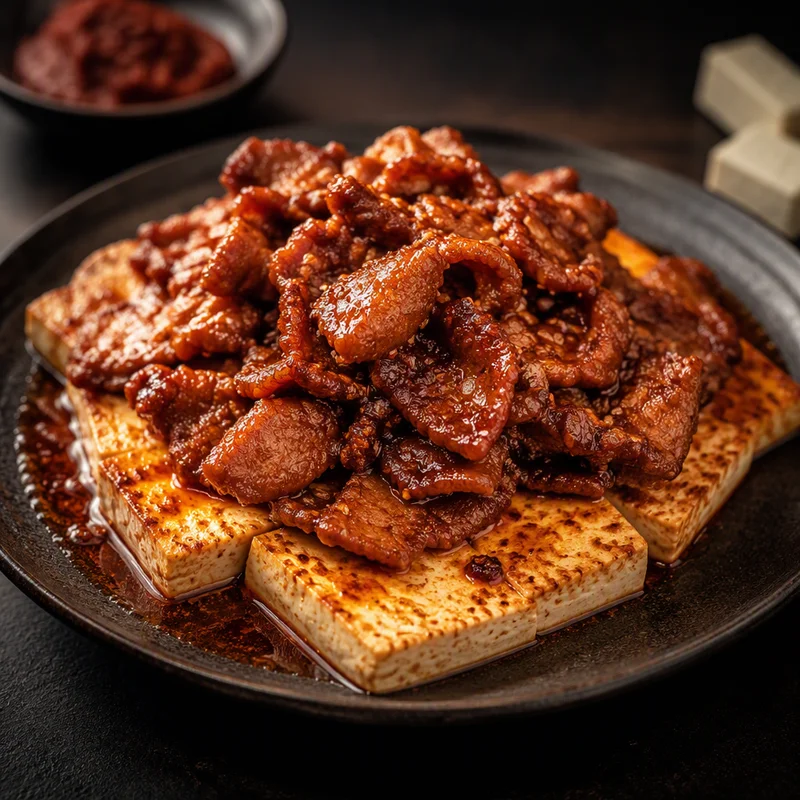
Thin-sliced pork shoulder marinated in gochujang, soy, garlic and toasted sesame, then seared hard in a ripping-hot skillet so the sugars caramelize instead of steaming. It lands on planks of gently poached silken tofu, which act as a cool, custardy counterweight to the chili heat — the whole thing eats like a Korean pub classic but comes together in one pan on a weeknight.
Ingredients
Gochujang marinade
- 3 tbsp gochujang (Korean chili paste)
- 1 tbsp gochugaru (Korean chili flakes)
- 2 tbsp soy sauce
- 1 tbsp granulated sugar
- 1 tbsp honey or rice syrup
- 1 tbsp mirin or dry sherry
- 1 tbsp toasted sesame oil
- 5 cloves garlic, finely grated
- 1 tbsp fresh ginger, finely grated
- 1/2 cup yellow onion, grated with juices (about 1/2 small onion)
- 1/2 tsp freshly ground black pepper
Pork and stir-fry
- 1 1/2 lb boneless pork shoulder, sliced 1/8-inch thick
- 1 medium yellow onion, sliced 1/4-inch thick
- 1 tbsp neutral oil, such as grapeseed or canola
- 4 scallions, cut into 2-inch lengths
- 1 jalapeño or Korean green chili, thinly sliced (optional)
Tofu base and garnish
- 2 14-oz blocks silken or soft tofu
- 1 tsp kosher salt (for the poaching water)
- 1 tbsp toasted sesame seeds
- 1 tsp toasted sesame oil, for finishing
- 2 cups cooked short-grain white rice, for serving
- 1 cup napa kimchi, roughly chopped (optional, for serving)
Instructions
- Firm up the pork for slicing: put the pork shoulder in the freezer for 30 to 45 minutes, until the outside is stiff but a knife still passes through. Slice against the grain into pieces about 1/8 inch thick and 2 inches wide, trimming any thick seams of fat or gristle.
- Whisk all marinade ingredients together in a large bowl until smooth — gochujang, gochugaru, soy sauce, sugar, honey, mirin, sesame oil, garlic, ginger, grated onion with its juices, and black pepper. It should be the consistency of loose barbecue sauce.
- Add the sliced pork and the 1/4-inch sliced onion. Massage with your hands for a full minute so every slice is coated. Cover and refrigerate at least 30 minutes, or up to 24 hours — overnight gives noticeably deeper flavor. Pull it out of the fridge 20 minutes before cooking.
- Prep the tofu: drain each block and slice crosswise into slabs about 3/4 inch thick. Bring 2 inches of water to a bare simmer in a wide skillet or saucepan (about 190°F, with just a few lazy bubbles), add 1 teaspoon salt, and slide in the tofu slabs. Poach 3 to 4 minutes, until heated through. Lift out with a slotted spatula, let drain 15 seconds, and shingle over a warm platter. Leave them there — they'll hold their heat while you cook the pork.
- Heat a 12-inch cast iron or carbon steel skillet over high heat until it just begins to smoke, 3 to 4 minutes. Add 1 tablespoon neutral oil and swirl.
- Add half the pork in a single layer, spreading it out and shaking off excess marinade so the pan doesn't flood. Let it sit undisturbed 90 seconds to catch color, then stir-fry 2 to 3 minutes more until the edges are charred in spots and the marinade has tightened into a glaze. Transfer to a bowl and repeat with the second batch, including any marinade left in the bowl.
- Return the first batch to the pan along with the scallions and sliced chili. Toss over high heat for 60 to 90 seconds, just until the scallions wilt and everything is coated in glossy, slightly sticky sauce. If the pan looks dry, add 2 tablespoons water and scrape up the browned bits into the sauce.
- Spoon the pork and its pan sauce directly over the warm tofu slabs, letting the sauce run down between them. Drizzle with 1 teaspoon sesame oil, scatter with sesame seeds, and serve immediately with hot short-grain rice and kimchi alongside.
Chef's tips
- Pork shoulder is the right cut here — its fat renders into the glaze. Thin-cut pork belly works too; loin and chops turn dry and chalky in a high-heat stir-fry.
- Many Korean markets sell pork shoulder pre-sliced for bulgogi or samgyeopsal, which skips the freezer step entirely.
- Cook in two batches, always. Crowding the pan drops the temperature and the pork boils in its marinade instead of caramelizing.
- Gochujang brands vary a lot in heat and salt. Taste yours first: if it's mild, add an extra teaspoon of gochugaru; if it's fiery, cut the gochugaru in half.
- Swap silken tofu for medium-firm if you want slabs you can pick up cleanly with chopsticks — poach it the same way, 4 minutes.
- Leftover pork is excellent chopped and folded into fried rice, or piled onto lettuce leaves with a smear of ssamjang.
Nutrition (per serving, estimated)
620calories
38gprotein
58gcarbs
25gfat
Estimates only — values vary with brands and portions.
Made with Sprig
Spicy Gochujang Pork over Warm Tofu Slabs was created in Sprig — the AI chef that turns any craving into a complete recipe, plans your week, and shops with one smart list.
Free to start · 14-day Pro trial · cancel anytime
Not ready yet? Get the occasional recipe worth cooking — a couple a month at most.
You're on the list — check your inbox!
Unsubscribe anytime. Privacy Policy
More from Sprig Originals
Are you this recipe's original author or publisher? Report a problem