Sprig Originals's kitchen / Small-Batch Cider Apple Sauce for the Jar
Small-Batch Cider Apple Sauce for the Jar
 By Sprig Originals · cooked up in Sprig
Worked out from this recipe's ingredients. If you're cooking for an allergy, always read the full ingredient list.
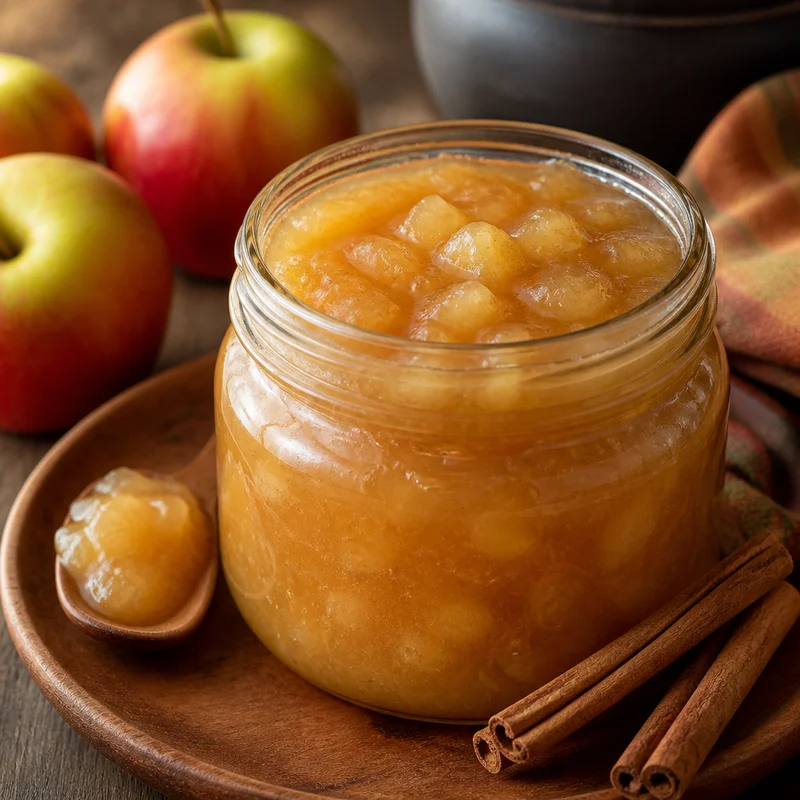
A two-apple blend — one that collapses into velvet, one that holds its shape — simmered down in fresh cider with a cinnamon stick, a split vanilla bean and a squeeze of lemon. Half gets mashed smooth, half stays in soft chunks, so the finished sauce tastes like real fruit rather than baby food. Sweetened only at the end, to taste, and built for jars: it keeps three weeks in the fridge, months in the freezer, or a year on the shelf if you water-bath it.
Ingredients
The Sauce
- 2 lb McIntosh, Cortland or Macoun apples (the softeners)
- 1 1/2 lb Golden Delicious, Gala or Braeburn apples (the holders)
- 1 cup fresh unfiltered apple cider (not vinegar)
- 2 tbsp fresh lemon juice, plus more to finish
- 1 cinnamon stick
- 1/2 vanilla bean, split lengthwise (or 1 tsp vanilla extract, added at the end)
- 1 wide strip lemon zest, peeled with a vegetable peeler
- 1/4 tsp fine sea salt
- 2 tbsp unsalted butter (optional, for a fridge batch only)
To Sweeten, To Taste
- 2 to 6 tbsp light brown sugar, maple syrup or honey
- 1 pinch ground cinnamon or freshly grated nutmeg
For Canning (Optional)
- 4 half-pint canning jars with new two-piece lids
- 2 tbsp bottled lemon juice, for canning acidity
Instructions
- Set up a large bowl of cold water with a splash of the lemon juice. Peel, quarter and core all the apples, dropping them into the acidulated water as you go so they don't brown. Keep the two apple types separate if you can: chop the soft-cooking apples (McIntosh type) into rough 1-inch pieces and the firm apples (Golden Delicious type) into slightly larger 1 1/4-inch chunks.
- Drain the apples. In a wide 5- to 6-quart heavy pot, combine the soft-cooking apples, the cider, 2 tablespoons lemon juice, cinnamon stick, split vanilla bean, lemon zest strip and salt. Bring to a boil over medium-high heat, then reduce to a steady simmer, cover, and cook 12 to 15 minutes, stirring twice, until those apples have slumped into a rough purée.
- Stir in the firm apple chunks. Cover and simmer over medium-low, stirring every 5 minutes and scraping the bottom, for 20 to 25 minutes more, until the firm pieces are fully tender but still recognizable as pieces — a paring knife should slide through with no resistance.
- Fish out the cinnamon stick, vanilla bean and lemon zest. Scrape any remaining seeds from the vanilla pod back into the pot with a knife tip and discard the pod.
- Mash about half the pot directly with a potato masher, pressing hard against the bottom until that portion is smooth, then stir it back through the chunks. For a silkier sauce, blitz 2 cups with an immersion blender or run half through a food mill and stir it back in. Do not blend the whole batch in a stand blender — it turns gluey and pale.
- Taste. Add sugar, maple or honey a tablespoon at a time over low heat, stirring until dissolved, until the sauce tastes like sweet apples rather than dessert. Add a final squeeze of lemon juice to wake it up and a pinch of cinnamon or nutmeg if you like. If the sauce is looser than you want, simmer uncovered 5 to 10 minutes, stirring often, until a spoon dragged across the bottom leaves a brief clean trail.
- For a fridge batch: stir in the butter off the heat until it melts and the sauce turns glossy. Cool 30 minutes, then pack into clean jars, cover and refrigerate up to 3 weeks. Freeze in pint containers, leaving 1 inch of headspace, up to 6 months.
- For shelf-stable jars: skip the butter. Bring 4 half-pint jars and a large deep pot of water to a simmer (jars covered by 1 inch of water). Stir the bottled lemon juice into the hot sauce for safe acidity and keep it at a bare simmer. Ladle hot sauce into hot jars leaving 1/2 inch of headspace, slide a chopstick around the inside to release air bubbles, wipe the rims clean, and apply lids finger-tight.
- Lower the jars into the boiling water, cover, and process at a full rolling boil for 15 minutes (add 5 minutes if you're above 1,000 feet, 10 minutes above 3,000). Turn off the heat, wait 5 minutes, then lift the jars onto a towel and leave them undisturbed for 12 hours. Check that every lid is domed down and doesn't flex; refrigerate any jar that didn't seal and use it first. Label and store sealed jars in a dark cupboard up to 1 year.
Chef's tips
- The two-apple split is the whole trick. One variety alone gives you either soup or a bowl of stubborn cubes; together you get sauce with body. If you can only find one kind, cook two-thirds of it first and add the rest late anyway — the later batch will keep more texture.
- Want rosy pink sauce? Use red-skinned apples, leave the skins on, cook them down, then push everything through a food mill. The skins give color and pectin and the mill catches them.
- Sweeten last, never first. Sugar added early makes the apple pieces firm up and resist breaking down, and cider varies enough in sweetness that a fixed amount is always a guess.
- Simmer wide and shallow, and stir the bottom often — apple sauce scorches quietly and one scorched patch flavors the entire batch.
- Beyond pork chops: a spoonful stirred into oatmeal, swirled into plain yogurt, spread under sharp cheddar on toast, or used to replace half the oil in a batch of muffins.
Nutrition (per serving, estimated)
99calories
0gprotein
21gcarbs
3gfat
Estimates only — values vary with brands and portions.
Made with Sprig
Small-Batch Cider Apple Sauce for the Jar was created in Sprig — the AI chef that turns any craving into a complete recipe, plans your week, and shops with one smart list.
Free to start · 14-day Pro trial · cancel anytime
Not ready yet? Get the occasional recipe worth cooking — a couple a month at most.
You're on the list — check your inbox!
Unsubscribe anytime. Privacy Policy
More from Sprig Originals
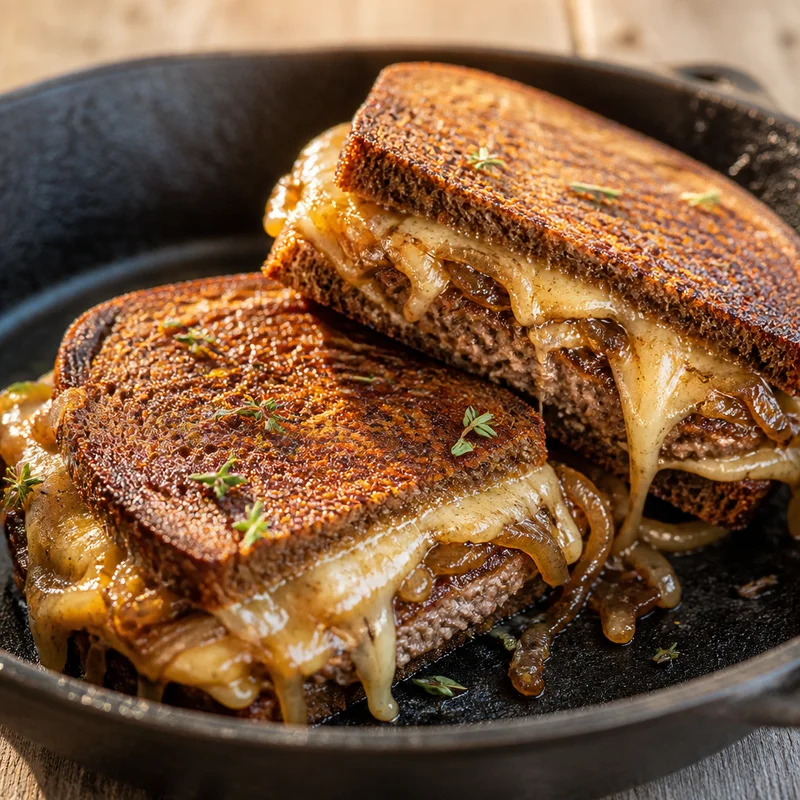
French Onion Patty Melts on Rye
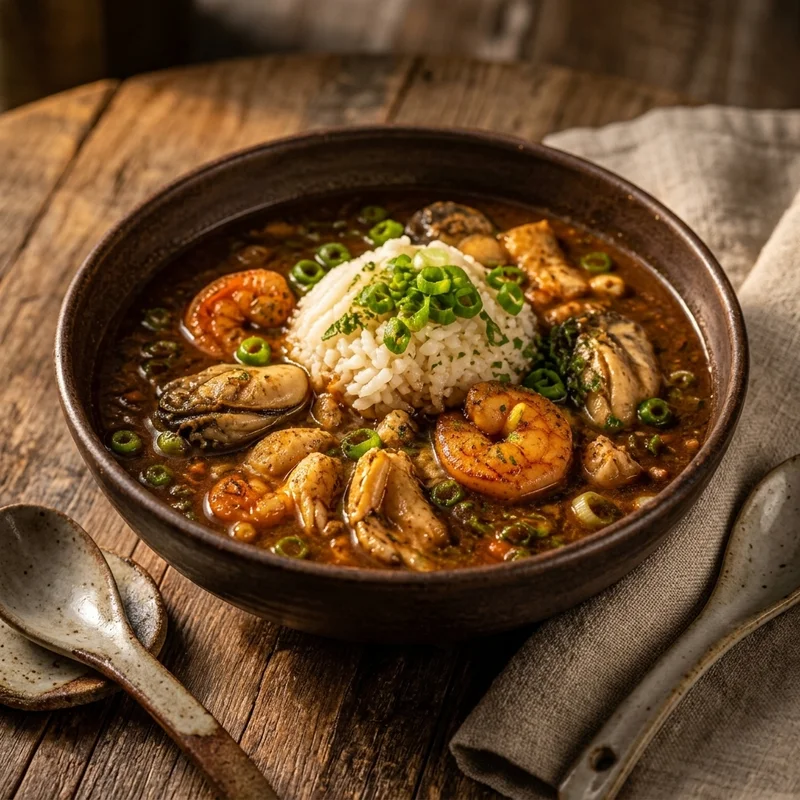
Dark Roux Seafood Gumbo with Quick Shrimp Stock
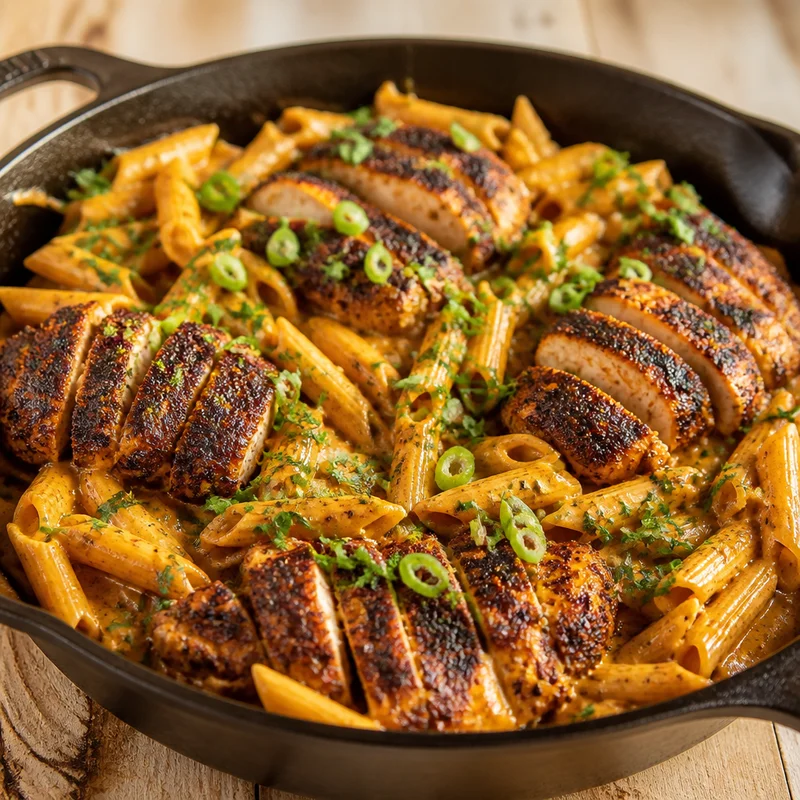
One-Skillet Blackened Cajun Chicken Pasta
Are you this recipe's original author or publisher? Report a problem