Sprig Originals's kitchen / Asian Pear & Gochujang Korean BBQ Sauce
Asian Pear & Gochujang Korean BBQ Sauce
 By Sprig Originals · cooked up in Sprig
Worked out from this recipe's ingredients. If you're cooking for an allergy, always read the full ingredient list.
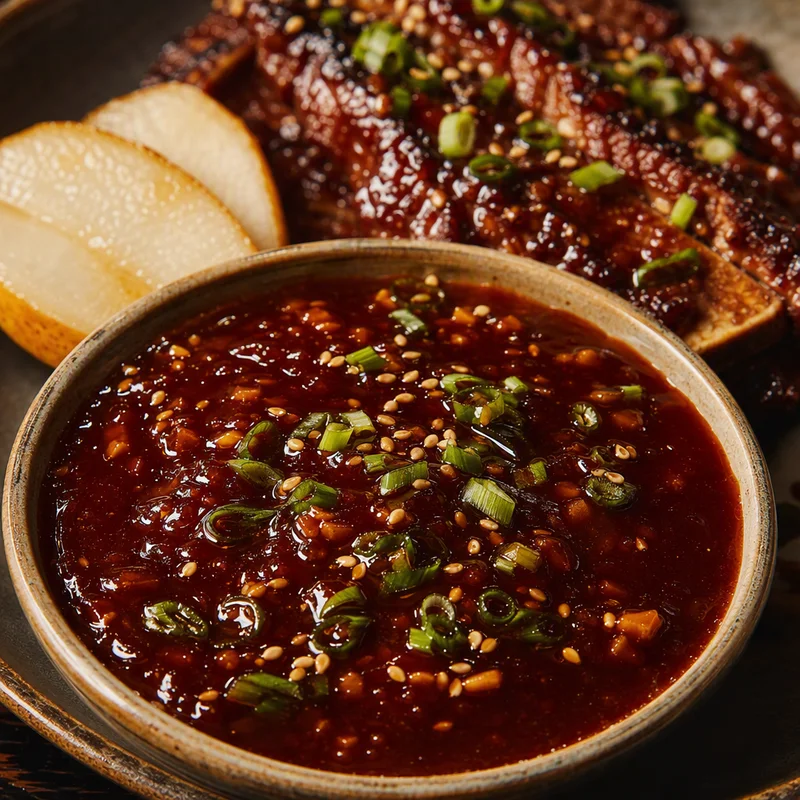
A glossy, deeply savory Korean grilling sauce built the way the good galbi houses do it: grated Asian pear for sweetness and natural tenderizing enzymes, gochujang and soy for fermented depth, toasted sesame oil stirred in off the heat so it stays fragrant. Simmered just long enough to thicken into a brushable glaze, it works three ways — as an overnight marinade for short ribs or chicken thighs, as a last-minute grill glaze, and as a dipping sauce at the table. Makes about 2 cups.
Ingredients
Aromatics
- 1 ripe Asian pear (about 12 oz), peeled and cored
- 1/2 medium yellow onion, peeled
- 8 cloves garlic, peeled
- 2 inch piece fresh ginger, peeled
- 3 scallions, thinly sliced (whites and greens kept separate)
Sauce base
- 3/4 cup soy sauce
- 1/3 cup packed dark brown sugar
- 3 tbsp honey
- 1/4 cup gochujang
- 1 tbsp doenjang or white miso (optional, for depth)
- 3 tbsp unseasoned rice vinegar
- 2 tbsp mirin
- 1/2 cup water or low-sodium chicken stock
- 1 tsp gochugaru (Korean chile flakes), optional
- 1/2 tsp freshly ground black pepper
Finishing
- 1 tbsp toasted sesame oil
- 1 tbsp toasted sesame seeds
- 1 tsp cornstarch (only if you want a thicker glaze)
Instructions
- Cut the Asian pear and onion into rough 1-inch chunks. Combine them in a blender or food processor with the garlic, ginger, and the sliced scallion whites. Pulse, then blend on high for 30 to 45 seconds until you have a smooth, pale purée with no fibrous chunks — scrape down the sides once. You should have roughly 1 1/2 cups.
- Pour the purée into a 3-quart saucepan. Add the soy sauce, brown sugar, honey, gochujang, doenjang or miso if using, rice vinegar, mirin, water or stock, gochugaru, and black pepper. Whisk hard until the gochujang and doenjang fully dissolve and no lumps remain.
- Bring to a simmer over medium heat, whisking occasionally, about 5 minutes. Once it bubbles, reduce the heat to medium-low so it holds a lazy simmer — bubbles breaking every second or two. Aggressive boiling scorches the sugars and turns the pear bitter.
- Simmer uncovered for 15 to 18 minutes, stirring every 3 to 4 minutes and scraping the bottom of the pan. The sauce will darken to a glossy mahogany, reduce by about a quarter, and coat the back of a spoon so a finger drawn through leaves a clean line. If you want a thicker brushing glaze, whisk the cornstarch with 1 tablespoon cold water and stir it in during the last 2 minutes.
- Take the pan off the heat and let it cool for 5 minutes. Stir in the toasted sesame oil and sesame seeds — adding the sesame oil off the heat keeps its aroma intact instead of cooking it flat.
- Taste and balance: add up to 1 tablespoon more vinegar if it tastes flat, 1 to 2 teaspoons more honey if the gochujang is aggressive, or a splash of water if it feels too dense. Stir in the sliced scallion greens if you are serving it as a dipping sauce; leave them out if you plan to grill with it.
- Cool completely, then transfer to a jar. Use it right away or refrigerate up to 3 weeks; freeze in 1/2-cup portions up to 3 months. To marinate, toss 2 to 3 pounds of short ribs, chicken thighs, or pork shoulder with about 1 cup of sauce and refrigerate 4 to 24 hours. To glaze, grill or roast the meat almost fully first, then brush the sauce on over medium heat during the final 3 to 5 minutes, turning and brushing twice so it caramelizes without burning.
Chef's tips
- Asian pear does more than sweeten — its enzymes tenderize meat, so cap marinating time at 24 hours or thin cuts can go mushy. No Asian pear? A ripe Bosc pear or a Fuji apple plus 1 extra tablespoon of vinegar is the closest swap.
- Gochujang brands vary wildly in heat and salt. Start with 1/4 cup, taste at the end of the simmer, and stir in another tablespoon off the heat if you want more fire.
- The sugar in this sauce burns fast over live fire. Grill the meat naked first, then glaze in the last few minutes on a cooler part of the grate, and keep a bowl of sauce reserved for the table so you are never brushing from a bowl that touched raw meat.
- Simmer in a wide, heavy-bottomed pan and stir the bottom often — the pear purée settles and scorches in thin pans, which gives the whole batch an acrid edge.
- Beyond grilling: thin it with a tablespoon of water for a bibimbap drizzle, brush it on salmon before broiling 6 inches from the element for 6 to 8 minutes, or toss it with fried chicken wings straight out of the oil.
Nutrition (per serving, estimated)
70calories
2gprotein
13gcarbs
1gfat
Estimates only — values vary with brands and portions.
Made with Sprig
Asian Pear & Gochujang Korean BBQ Sauce was created in Sprig — the AI chef that turns any craving into a complete recipe, plans your week, and shops with one smart list.
Free to start · 14-day Pro trial · cancel anytime
Not ready yet? Get the occasional recipe worth cooking — a couple a month at most.
You're on the list — check your inbox!
Unsubscribe anytime. Privacy Policy
More from Sprig Originals
French Onion Patty Melts on Rye
Dark Roux Seafood Gumbo with Quick Shrimp Stock
One-Skillet Blackened Cajun Chicken Pasta
Are you this recipe's original author or publisher? Report a problem