Sprig Originals's kitchen / Five-Ingredient Caprese with Real Balsamic Reduction
Five-Ingredient Caprese with Real Balsamic Reduction
 By Sprig Originals · cooked up in Sprig
Worked out from this recipe's ingredients. If you're cooking for an allergy, always read the full ingredient list.
A restaurant-quality caprese lives or dies on three things: ripe tomatoes, salting them properly, and a glaze you reduce yourself instead of squeezing from a bottle. Ten minutes of simmering turns ordinary supermarket balsamic into something glossy and syrupy that clings to each slice. Everything else is just good tomatoes, real mozzarella, torn basil, and olive oil you'd be happy to dip bread in.
Ingredients
Balsamic Reduction
- 3/4 cup balsamic vinegar (a mid-range one, not the aged expensive bottle)
- 1 tsp honey (optional, for supermarket vinegar that tastes sharp)
The Salad
- 1 1/2 lb ripe tomatoes (2 large heirloom, or a mix of heirloom and vine-ripened)
- 1 tsp flaky sea salt, plus more for finishing
- 8 oz fresh mozzarella in water, or 2 balls burrata
- 1 cup fresh basil leaves, loosely packed
- 3 tbsp good extra-virgin olive oil, fruity and green
- freshly cracked black pepper
Instructions
- Choose your tomatoes at the store like this: pick them up. A good tomato feels heavy for its size, gives slightly under thumb pressure near the shoulders, and smells faintly green and sweet at the stem end. Skip anything rock-hard, pale at the shoulders, or refrigerated in the store display. Heirlooms, Campari, and vine-ripened are your best bets; if it's February, cherry or cocktail tomatoes on the vine will beat sad slicers every time.
- Store tomatoes on the counter, stem side down, out of direct sun — never in the fridge, which permanently kills their aroma. If they need a day or two, leave them in a bowl with a banana to speed things along.
- Make the reduction first so it has time to cool. Pour the balsamic vinegar into a small saucepan (stainless or nonstick, not aluminum) and bring to a bare simmer over medium heat. Reduce to medium-low and cook 8 to 12 minutes, swirling occasionally, until reduced by about two-thirds and the volume is roughly 1/4 cup. Open a window — the fumes are sharp for the first few minutes.
- Test for doneness: drag a spoon through it. It should coat the back of the spoon and leave a clear trail, and a drop on a cold plate should hold its shape rather than run. It thickens noticeably as it cools, so pull it while it's still slightly looser than you want. If it tastes harsh, stir in the honey off the heat. Pour into a small bowl and let cool to room temperature, about 15 minutes. Yield: about 1/4 cup.
- Core the tomatoes and slice them 1/3-inch thick with a serrated knife, cutting through the equator (not stem to blossom) so the slices hold together. Cut cherry or cocktail tomatoes in half. Lay the slices in a single layer on a paper-towel-lined plate or a rack set over a sheet pan.
- Sprinkle the tomatoes evenly with the 1 teaspoon flaky salt and let them sit 15 minutes at room temperature. This is the step most home cooks skip: the salt pulls out watery juice that would otherwise flood your plate, and it seasons the tomato all the way through instead of just on top. You'll see beads of liquid on the surface — that's the point.
- Meanwhile, drain the mozzarella and pat it dry. Slice it 1/3-inch thick, or tear it into rough bite-size pieces for a more rustic look. Let it sit out while the tomatoes salt — cold mozzarella is squeaky and flavorless; at room temperature it turns creamy and milky. If using burrata, leave the balls whole and tear them open on the plate at the very end.
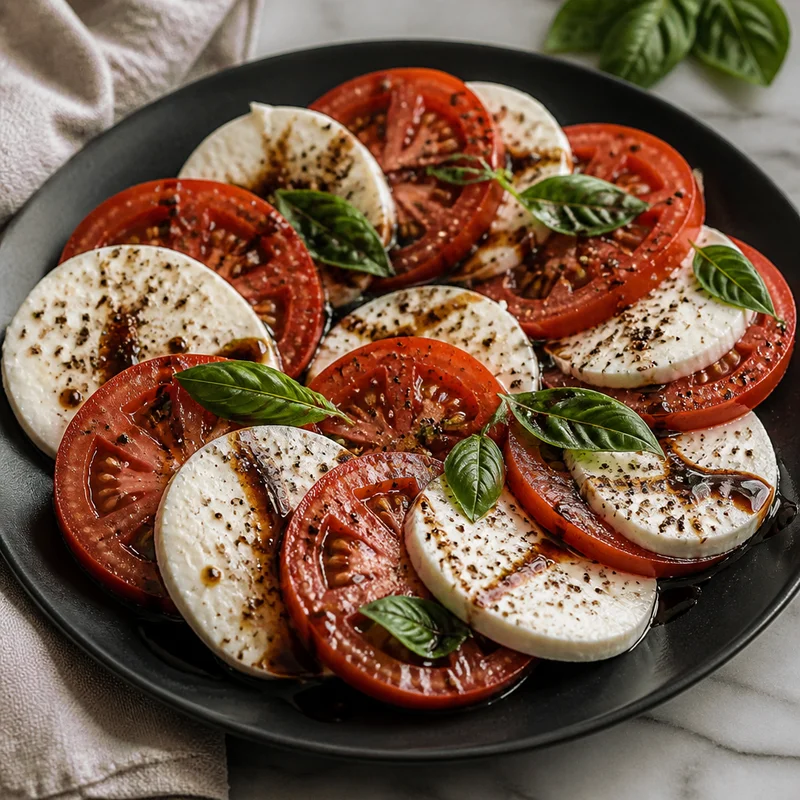
- Blot the tomato slices lightly with a paper towel to take off the surface liquid, but don't rinse away the salt. Arrange them on a large platter, overlapping or shingled with the mozzarella. Tuck basil leaves between the layers — tear the large ones by hand rather than cutting, which bruises and blackens them.
- Drizzle the olive oil over everything first so it coats the tomatoes and basil. Then spoon or drizzle the cooled balsamic reduction over the top in thin ribbons — you want maybe 2 tablespoons total, not a puddle. Finish with a pinch of flaky salt and several cracks of black pepper.
- Serve immediately, at room temperature, with bread for the plate juices. Once dressed, caprese does not hold — the salt and acid keep working and the tomatoes collapse within 20 minutes.
Chef's tips
- Leftover reduction keeps in a jar at room temperature for a month. If it sets too firm, stir in a few drops of warm water or microwave it for 5 seconds.
- If your reduction turns bitter or tastes scorched, you took it past the point of no return — it happens fast in the last two minutes. Start over with fresh vinegar and lower heat.
- Don't use expensive aged balsamic tradizionale for this; it's already syrupy and its nuance is wasted by boiling. A $10 to $12 bottle of Balsamic Vinegar of Modena IGP reduces beautifully.
- Out of season, roast halved cherry tomatoes at 400°F for 20 minutes with olive oil and salt, cool them, and use those instead — concentrated flavor beats a mediocre fresh slicer.
- Fresh mozzarella packed in water tastes far better than the shrink-wrapped low-moisture kind here. If you can only find the firm block, use burrata or fresh ricotta seasoned with salt and olive oil instead.
Nutrition (per serving, estimated)
288calories
11gprotein
29gcarbs
14gfat
Estimates only — values vary with brands and portions.
Made with Sprig
Five-Ingredient Caprese with Real Balsamic Reduction was created in Sprig — the AI chef that turns any craving into a complete recipe, plans your week, and shops with one smart list.
Free to start · 14-day Pro trial · cancel anytime
Not ready yet? Get the occasional recipe worth cooking — a couple a month at most.
You're on the list — check your inbox!
Unsubscribe anytime. Privacy Policy
More from Sprig Originals
French Onion Patty Melts on Rye
Dark Roux Seafood Gumbo with Quick Shrimp Stock
One-Skillet Blackened Cajun Chicken Pasta
Are you this recipe's original author or publisher? Report a problem