Sprig Originals's kitchen / Ikura Gunkan-Maki (Salmon Roe Sushi Battleships)
Ikura Gunkan-Maki (Salmon Roe Sushi Battleships)
 By Sprig Originals · cooked up in Sprig
Worked out from this recipe's ingredients. If you're cooking for an allergy, always read the full ingredient list.
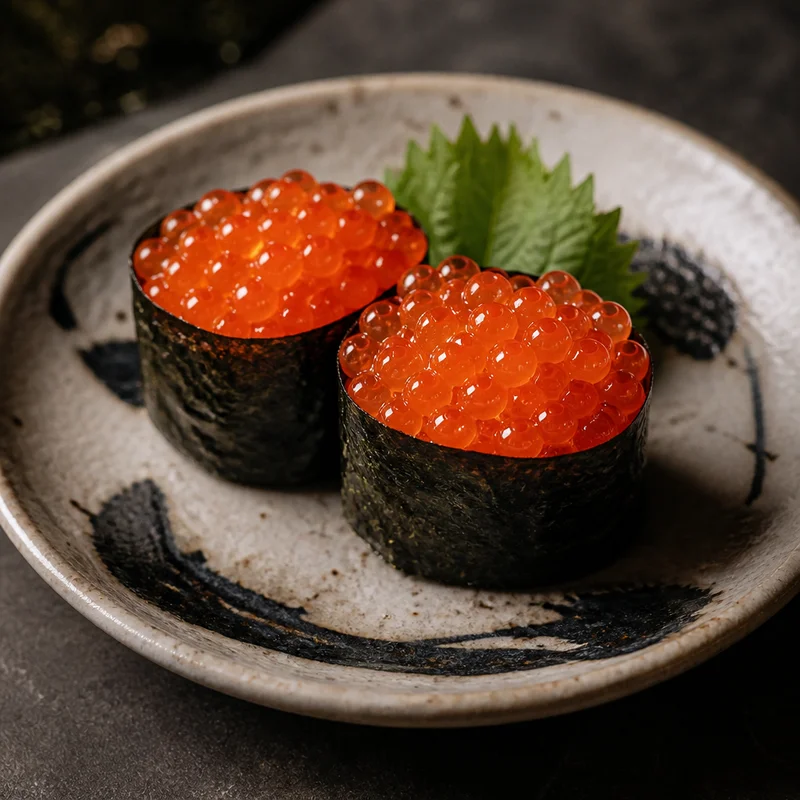
Glossy orange salmon roe piled into little nori-wrapped cups of warm, vinegared rice — the sushi-bar order that costs $12 for two pieces and takes about 25 minutes at home. One jar of ikura, one pot of short-grain rice, and a pair of scissors gets you a dozen restaurant-looking pieces. Nothing to cook but the rice.
Ingredients
Sushi rice
- 1 1/2 cups Japanese short-grain sushi rice (about 300 g)
- 1 2/3 cups cold water
Sushi vinegar (awasezu)
- 3 tbsp unseasoned rice vinegar
- 1 1/2 tbsp granulated sugar
- 1 1/2 tsp fine sea salt
- 1 inch square kombu, optional
Assembly
- 5 oz ikura (salmon roe), well chilled — about 1 jar
- 2 sheets toasted nori
- 1/2 cup water mixed with 1 tsp rice vinegar, for wetting your hands (tezu)
To serve
- 2 tsp grated fresh wasabi or wasabi paste
- 2 tbsp soy sauce
- 2 tbsp pickled ginger (gari)
- 1 tbsp thinly sliced chives or shiso leaves, optional
- 4 quail eggs, optional (1 per plate, cracked over a piece)
Instructions
- Rinse the rice: put it in a bowl, cover with cold water, swish with your fingers for 15 seconds, and pour off the cloudy water. Repeat 3 to 4 times until the water runs nearly clear, then drain in a sieve for 10 minutes.
- Combine the drained rice and 1 2/3 cups cold water in a heavy 2-quart saucepan. Cover, bring to a boil over medium-high heat (about 6 to 8 minutes — listen for the lid to rattle rather than lifting it), then drop the heat to low and cook 12 minutes. Turn off the heat and let it stand, covered and undisturbed, 10 minutes. (Or cook in a rice cooker on the white-rice setting.)
- While the rice cooks, make the sushi vinegar: warm the rice vinegar, sugar, salt, and kombu in a small saucepan over low heat, stirring just until the sugar dissolves, 1 to 2 minutes. Do not boil. Remove the kombu and let cool to room temperature.
- Turn the hot rice out into a wide non-metal bowl or a wooden hangiri. Drizzle the vinegar mixture over the surface, then use a rice paddle or silicone spatula to slice and fold — cutting through the rice at a 45-degree angle and lifting it over, never mashing — until every grain is coated and glossy, about 2 minutes. Fan it or spread it out to bring it down to just-warm body temperature, then cover with a damp towel. Use within an hour; never refrigerate sushi rice.
- Cut the nori: with kitchen scissors, cut each sheet lengthwise (with the grain, so it won't shred) into 6 strips about 1 1/4 inches wide and 7 inches long. You want 12 strips total. Keep them in a dry spot — humidity makes them limp and unwrappable.
- Set the ikura in a small strainer over a bowl for 2 minutes to shed excess brine, then keep it in the refrigerator until the moment you assemble. Do not rinse it with water — that washes away flavor and makes the eggs cloudy.
- Shape the rice: dip your hands in the tezu (vinegar water) and shake off the excess. Scoop about 2 tablespoons of rice (20 g) and gently press it into a firm oval about 1 1/2 inches long and 3/4 inch tall — compact enough to hold, loose enough that you can still see individual grains. Make 12.
- Wrap each oval with a nori strip, shiny side out, so the nori stands about 1/4 inch above the rice like a collar. Seal the overlapping end with a single smashed grain of rice pressed between the layers as glue. Set the pieces on a platter as you go.
- Dab a tiny bit of wasabi on top of the rice inside each collar if you like heat, then spoon the chilled ikura into the cups — about 1 rounded teaspoon each, mounded slightly above the nori. Use a small spoon and let the eggs roll in; don't press or you'll pop them.
- Finish with sliced chives or a shiso leaf tucked behind the roe, and serve immediately with soy sauce and pickled ginger. Dip the rice edge lightly, or skip the soy entirely — the roe is already salty. Eat within 20 minutes, while the nori is still crisp.
Chef's tips
- Buy ikura from a Japanese market or a good fishmonger and look for large, separate, translucent eggs — cloudy or clumped roe means it has been frozen and thawed badly. Once opened, use within 2 to 3 days.
- Upgrade move: marinate the roe. Stir together 1 tbsp soy sauce, 1 tbsp sake, and 1 tsp mirin, simmer 30 seconds to burn off the alcohol, cool completely, then fold into the drained ikura and chill 1 hour. It deepens the color and rounds out the salt.
- Warm rice plus cold roe is the whole point of the dish — the temperature contrast is what you pay for at a sushi counter. Assemble at the last minute rather than making pieces ahead.
- No nori strips that will stand up? Rice is too wet or your hands are too wet. Squeeze out the tezu until your palms are just barely damp.
- Stretch the jar: use half the ikura for gunkan and spoon the rest over a small bowl of the seasoned rice with shredded nori and a raw quail egg yolk for an ikura don.
Nutrition (per serving, estimated)
285calories
13gprotein
44gcarbs
6gfat
Estimates only — values vary with brands and portions.
Made with Sprig
Ikura Gunkan-Maki (Salmon Roe Sushi Battleships) was created in Sprig — the AI chef that turns any craving into a complete recipe, plans your week, and shops with one smart list.
Free to start · 14-day Pro trial · cancel anytime
Not ready yet? Get the occasional recipe worth cooking — a couple a month at most.
You're on the list — check your inbox!
Unsubscribe anytime. Privacy Policy
More from Sprig Originals
Char-Grilled Oysters with Garlic-Worcestershire Butter
French Onion Patty Melts on Rye
Dark Roux Seafood Gumbo with Quick Shrimp Stock
Are you this recipe's original author or publisher? Report a problem