Sprig Originals's kitchen / Weekend Taiwanese Beef Noodle Soup
Weekend Taiwanese Beef Noodle Soup
 By Sprig Originals · cooked up in Sprig
Worked out from this recipe's ingredients. If you're cooking for an allergy, always read the full ingredient list.
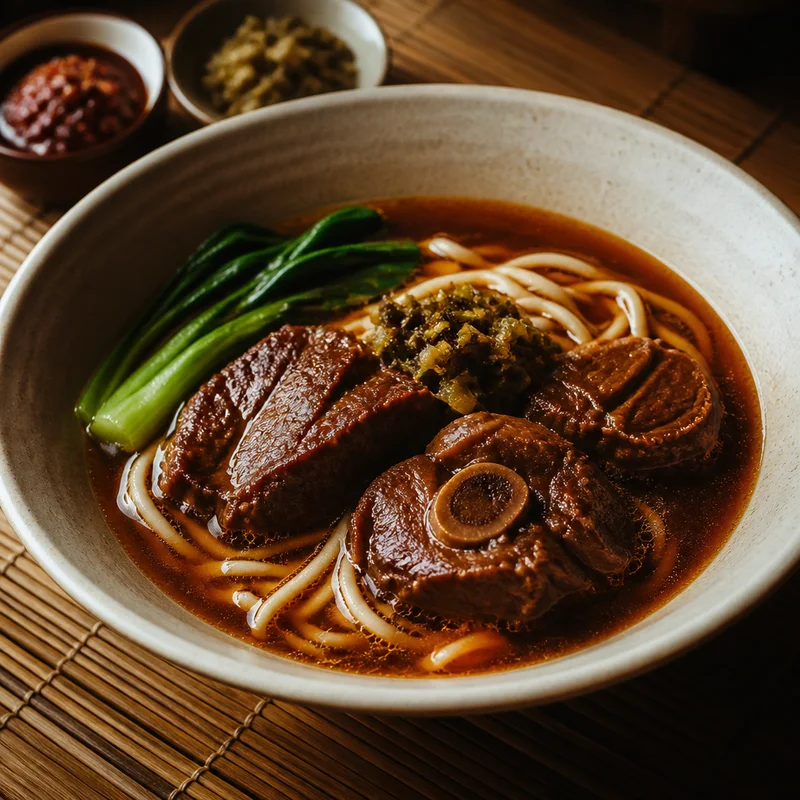
A deeply spiced red-braised beef shank and short rib soup built the way noodle shops do it: braise the beef low and slow on a Saturday, chill it overnight so the flavors settle and the fat lifts off clean, then reheat into steaming weeknight bowls with fresh noodles, blanched greens and a spoonful of pickled mustard greens. The broth gets its backbone from toasted doubanjiang, rock sugar and a whole-spice sachet, and its body from collagen-rich shank.
Ingredients
Beef and blanching
- 2 lb beef shank, cut into 2-inch chunks
- 1.5 lb bone-in beef short ribs
- 3 slices fresh ginger, for blanching
- 2 tbsp Shaoxing wine, for blanching
Spice sachet
- 2 whole star anise
- 1 stick cinnamon (cassia), 3-inch
- 1 tsp Sichuan peppercorns
- 1 tsp fennel seeds
- 3 whole cloves
- 2 whole bay leaves
- 1 piece dried tangerine peel (optional)
- 3 whole dried red chiles
Braise
- 3 tbsp neutral oil
- 6 cloves garlic, smashed
- 2 inch piece fresh ginger, sliced
- 4 whole scallions, cut into 2-inch lengths
- 1 medium yellow onion, quartered
- 3 tbsp doubanjiang (Pixian broad bean chili paste)
- 1 tbsp tomato paste
- 2 medium tomatoes, quartered
- 1/2 cup Shaoxing wine
- 1/2 cup soy sauce
- 2 tbsp dark soy sauce
- 1.5 oz yellow rock sugar (about 3 tbsp crushed)
- 10 cups water or unsalted beef stock
- 1 tsp kosher salt, plus more to taste
To serve
- 1.5 lb fresh wheat noodles (knife-cut or thick ramen-style)
- 1 lb baby bok choy or yu choy, halved
- 1/2 cup suan cai (Taiwanese pickled mustard greens), chopped
- 3 whole scallions, thinly sliced
- 1/4 cup cilantro leaves
- to taste chili oil or chili crisp
- 1 tbsp black vinegar (optional, for the table)
Instructions
- Day 1 — blanch the beef: Put the shank chunks and short ribs in a large pot, cover with cold water by 2 inches, and add 3 ginger slices and 2 tbsp Shaoxing wine. Bring to a boil over high heat and boil 5 minutes, skimming the gray foam. Drain into a colander and rinse each piece under warm running water to remove scum. Pat dry. Wash out the pot.
- Tie the star anise, cinnamon, Sichuan peppercorns, fennel, cloves, bay leaves, tangerine peel and dried chiles in a square of cheesecloth or a large tea filter bag. Toast the sachet in the dry pot over medium heat for 1 minute, until fragrant, then set aside.
- Heat 3 tbsp oil in the same pot (a 7- to 8-quart Dutch oven) over medium-high. Sear the short ribs 3 minutes per side until deeply browned; transfer to a plate. Lower heat to medium and add the garlic, sliced ginger, scallion lengths and onion. Cook 3 minutes, stirring, until fragrant and lightly colored.
- Push the aromatics aside and add the doubanjiang and tomato paste to the bare spot. Fry 60–90 seconds, stirring constantly, until the oil turns red and the raw bean smell cooks off — this step is what makes the broth taste like a noodle shop, so don't rush it, but don't let it scorch.
- Add the tomatoes and cook 2 minutes, then pour in 1/2 cup Shaoxing wine and scrape the bottom of the pot clean. Add both soy sauces, the rock sugar, all the beef, the spice sachet and 10 cups water or stock. The liquid should just cover the meat.
- Bring to a boil, then reduce to the barest simmer (about 195°F, with only a few bubbles breaking the surface). Cover with the lid slightly ajar and cook 2 hours 30 minutes to 3 hours, skimming once or twice, until the shank is fork-tender and the short rib meat pulls from the bone with no resistance.
- Remove and discard the spice sachet, onion, ginger and scallion pieces. Lift out the beef. Pull the short rib meat off the bones in large pieces and discard bones and any hard fat; cut the shank into thick slices across the grain. Taste the broth and season with 1 tsp salt or more — it should be assertively savory since noodles will dilute it. If it tastes thin, simmer uncovered 15–20 minutes to concentrate.
- Make ahead: Return the meat to the broth, cool 30 minutes on the counter, then refrigerate uncovered until cold and cover. Chill at least overnight and up to 4 days (or freeze in portions up to 3 months). Next day, lift off and discard the solid fat cap — save a tablespoon to finish bowls if you like.
- To serve: Bring the braise to a gentle simmer over medium-low heat, 15–20 minutes from cold. Meanwhile bring a large pot of unsalted water to a rolling boil. Blanch the bok choy 60–90 seconds, until the stems are crisp-tender; lift out with a spider and divide among 6 deep bowls.
- Cook the fresh noodles in the same boiling water according to the package, usually 2–4 minutes, stirring so they don't clump. Drain well and divide among the bowls — noodles cooked in clean water, never in the broth, keep the soup clear.
- Ladle about 1.5 cups of hot broth and a generous share of beef over each bowl. Top with chopped pickled mustard greens, sliced scallions and cilantro. Pass chili oil and black vinegar at the table.
Chef's tips
- The braise genuinely tastes better on day two — the spices round out and skimming the chilled fat gives you a cleaner, glossier broth. If you only have one day, chill the pot in an ice bath for 30 minutes and skim what rises.
- Shank is non-negotiable for texture: the sheets of connective tissue turn gelatinous and give the broth body. Chuck works in a pinch but the soup will be leaner and less silky.
- Doubanjiang brands vary wildly in salt. Start with 3 tbsp, and hold back some of the soy sauce until the end if yours tastes very salty.
- No fresh noodles nearby? Dried thick wheat noodles or even udon work. Cook them a minute shy of the package time since they keep softening in hot broth.
- For clear-broth (qing dun) style, skip the doubanjiang, dark soy and tomato, halve the soy sauce, and add 1 tbsp extra salt plus a handful of daikon chunks in the last hour.
Nutrition (per serving, estimated)
820calories
52gprotein
85gcarbs
28gfat
Estimates only — values vary with brands and portions.
Made with Sprig
Weekend Taiwanese Beef Noodle Soup was created in Sprig — the AI chef that turns any craving into a complete recipe, plans your week, and shops with one smart list.
Free to start · 14-day Pro trial · cancel anytime
Not ready yet? Get the occasional recipe worth cooking — a couple a month at most.
You're on the list — check your inbox!
Unsubscribe anytime. Privacy Policy
More from Sprig Originals
Dark Roux Seafood Gumbo with Quick Shrimp Stock
Chilled Watermelon Gazpacho with Cucumber-Chile Relish
French Onion Patty Melts on Rye
Are you this recipe's original author or publisher? Report a problem