Low-and-Slow Chitterlings with Cider Vinegar and Aromatics
 By Sprig Originals · cooked up in Sprig
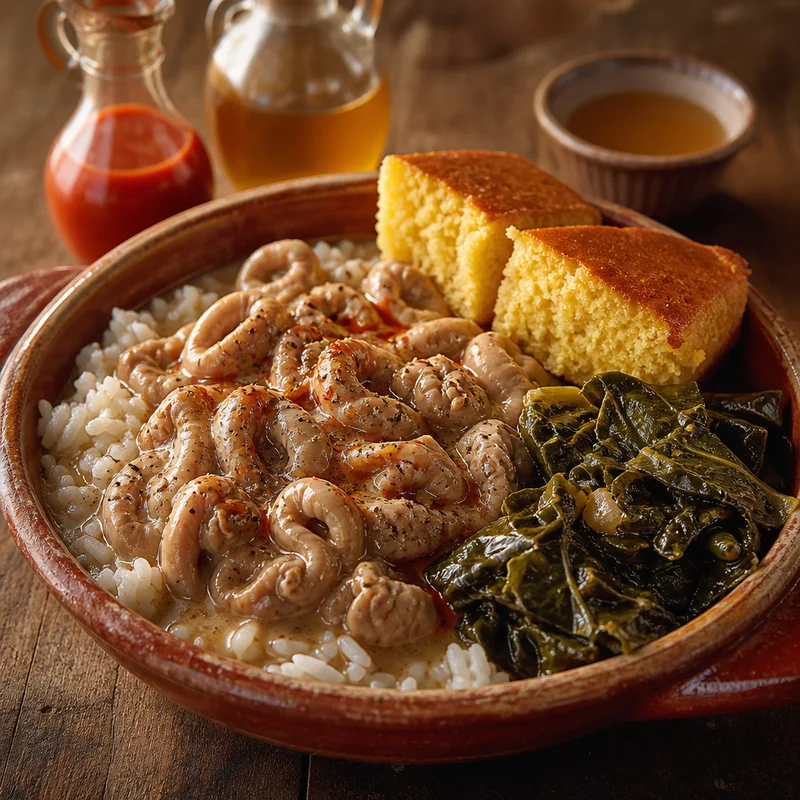
A soul-food classic done the honest way: 10 pounds of pre-cleaned chitterlings, rinsed until the water runs clear, then simmered for hours with cider vinegar, onion, celery, garlic and bay until they're silky and tender. This is a full-afternoon project with real cleaning work and a smell that fills the house — the vinegar and aromatics in the pot are what tame it. Serve them soft and steaming with hot sauce, more vinegar, cornbread and greens, the way a $30 plate at a Sunday-table restaurant does it.
Ingredients
- 10 lb pre-cleaned frozen chitterlings (one bucket)
- 2 lb hog maws, optional (for extra body and chew)
- 1 cup distilled white vinegar, for the rinse water
- 2 tbsp kosher salt, for the rinse water
- 1 lemon, halved (for rubbing hands and cutting board)
- 2 large yellow onions, quartered
- 4 celery ribs, cut into 3-inch pieces
- 1 green bell pepper, quartered and seeded
- 1 head garlic, cloves peeled and smashed
- 3/4 cup apple cider vinegar
- 3 bay leaves
- 2 tsp crushed red pepper flakes
- 1 tbsp black peppercorns
- 1 tbsp kosher salt, plus more to taste
- 1 tsp whole allspice berries, optional
- 1 large russet potato, peeled and halved (odor tamer, discarded later)
- 2 quarts water, plus more as needed
- 2 tbsp apple cider vinegar, for finishing
- 1 tsp freshly ground black pepper
- Louisiana-style hot sauce, for serving
- cider vinegar or hot pepper vinegar, for the table
- cornbread, collard greens and white rice, for serving
- 1 cup all-purpose flour
- 1 tsp cayenne pepper
- 4 cups peanut or vegetable oil, for frying
Instructions
- Plan the day and set up your station. Thaw the bucket of chitterlings in the refrigerator for 2 full days, or in a sink of cold running water for 2 to 3 hours. Before you open the bucket, clear the counters, put away all other food, and set out a dedicated cutting board, a colander, a large bowl of ice water, and a trash bag. Chitterlings can carry Yersinia and other bacteria, so treat this like handling raw poultry times ten: no children or other cooks in the kitchen, and no other food prep until cleanup is done. Wear disposable gloves if you have them.
- Boil first, clean second — this is the safety step that matters. Put the thawed chitterlings in a large stockpot (12 quarts or bigger), cover with cold water, bring to a full boil over high heat, and boil hard for 5 minutes. Drain in a colander in the sink and rinse under cold water until cool enough to handle, about 3 minutes. This kills surface bacteria before you start touching them and makes the membranes easier to see.
- Clean them, one piece at a time. Working in a large bowl of cold water with 1/2 cup white vinegar and 1 tablespoon salt stirred in, pull each chitterling open lengthwise with your fingers and run your thumb down the inside. Strip away any yellow-brown fat, gritty specks, feed matter, or slick membrane and drop the waste straight into the trash bag. Trim off anything that looks bruised or discolored. Even bagged pre-cleaned chitterlings will give up debris — expect 30 to 60 minutes of real work for 10 pounds. Do the hog maws the same way if using, scraping the inner lining well.
- Rinse until the water is truly clear. Transfer cleaned pieces to a second bowl and rinse them in at least five changes of cold water, swishing hard and lifting the chitterlings out each time rather than pouring, so grit stays behind. When the fifth bowl of water looks like tap water with no cloudiness, film, or specks, you're done. Cut the chitterlings into 2- to 3-inch pieces with kitchen shears.
- Sanitize before you cook. Rinse and wash the sink, colander, cutting board, shears, and counters with hot soapy water, then wipe surfaces with a bleach solution (1 tablespoon bleach per gallon of water). Rub your hands and the board with the cut lemon, then wash your hands with soap for a full 20 seconds. Change your gloves or apron.
- Build the pot. Return the chitterlings (and hog maws) to the clean stockpot with the onions, celery, bell pepper, garlic, 3/4 cup cider vinegar, bay leaves, red pepper flakes, peppercorns, 1 tablespoon salt, allspice if using, the halved potato, and 2 quarts water — enough to cover by 1 inch. Bring to a boil over high heat, uncovered, and skim off the gray foam that rises for the first 5 minutes.
- Simmer low and long. Reduce the heat to maintain a bare simmer at around 200°F, with just a few bubbles breaking the surface, and cook uncovered for 3 to 4 hours. Stir every 30 to 40 minutes and top up with hot water as needed to keep the pieces submerged. Open a window and run the exhaust fan; the smell peaks in the first hour and eases as the vinegar and aromatics take over.
- Test for doneness at the 3-hour mark. A piece should be pale, translucent at the edges, and tender enough to cut with the side of a spoon or bite through with no rubbery snap — chitterlings go from chewy to silky fairly suddenly. If they still resist, keep simmering and check every 20 minutes; older chitterlings can take up to 5 hours.
- Finish and season. Fish out and discard the potato, bay leaves, and the spent onion, celery, and pepper (or chop the onion fine and stir it back in, cook's choice). Stir in the remaining 2 tablespoons cider vinegar and the fresh black pepper, then taste the broth and add salt until it's boldly seasoned. Let the pot sit off the heat for 10 minutes so the chitterlings soak up the liquor.
- Serve them hot and wet. Ladle chitterlings with a few spoonfuls of their broth over rice or alongside cornbread and collards, with hot sauce and a cruet of vinegar on the table so everyone can hit their own bowl. Leftovers keep 3 days refrigerated in their broth.
- Optional fried finish: drain 2 pounds of the cooked, cooled chitterlings well and pat very dry. Toss with the flour, cayenne, and 1 teaspoon salt. Fry in 350°F oil, 1 1/2 inches deep, in small batches for 3 to 4 minutes until blistered and golden, then drain on a rack and salt immediately. Expect spattering — they hold moisture, so keep a lid nearby and stand back.
Chef's tips
- Buy pre-cleaned chitterlings and still clean them yourself. "Pre-cleaned" and "triple-cleaned" mean the bulk work is done, not that the job is finished — every bucket gives up more fat and grit at the sink.
- The 5-minute boil before cleaning is the single most important safety step; it also firms the chitterlings so membranes strip off in longer, easier ribbons.
- 10 pounds raw cooks down to roughly 5 pounds, or six generous plates. If it's your first time, buy the full bucket anyway and freeze half the cooked chitterlings in their broth for up to 3 months.
- The vinegar isn't just for flavor — acid plus the potato and aromatics cuts the smell dramatically. Some cooks add a splash of lemon juice or a cinnamon stick to the pot for the same reason.
- Don't boil hard. A rolling boil makes chitterlings tough and shrinks them; a 200°F bare simmer is what gives you that soft, spoon-tender texture.
- Never taste the broth or nibble a piece before the chitterlings are fully cooked through, and wash any spoon that touches the pot in the first hour before it goes near anything else.
Nutrition (per serving, estimated)
Made with Sprig
Low-and-Slow Chitterlings with Cider Vinegar and Aromatics was created in Sprig — the AI chef that turns any craving into a complete recipe, plans your week, and shops with one smart list.
More from Sprig Originals
Are you this recipe's original author or publisher? Report a problem