Sunrise Orange Juice with Tangerine, Lemon and a Zest-Oil Finish
 By Sprig Originals · cooked up in Sprig
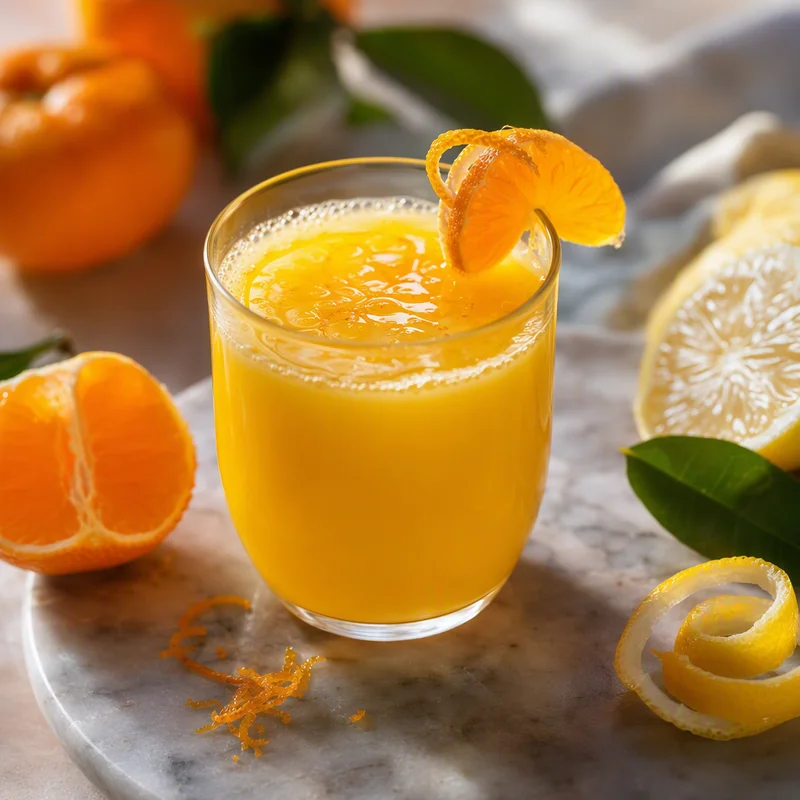
Real orange juice tastes nothing like the carton — it's floral, faintly bitter at the edges, and shockingly sweet when the fruit is right. This is a juice-bar-quality pitcher built from a blend: Valencias for body and sugar, a couple of tangerines for perfume, and a whisper of lemon to keep it from tasting flat. The finishing move is free: you twist a strip of orange peel over the pitcher so the aromatic oil lands on the surface, which is exactly what makes a hand-squeezed glass smell like an orange grove. No juicer required — a citrus reamer, a sieve and cold hands are enough.
Ingredients
- 4 lb Valencia oranges (about 10–12 medium), well chilled
- 2 tangerines or clementines
- 1 lemon
- 1 pinch fine sea salt
- 1 to 2 tsp honey or simple syrup, only if the fruit is tart
- ice cubes, preferably made from orange juice
- 4 orange wheels or peel twists, for garnish
- chilled sparkling water, for a lighter split-glass version
Instructions
- Chill the fruit first. Put all the oranges, tangerines and the lemon in the refrigerator for at least 2 hours (overnight is better). Cold fruit yields juice that tastes brighter and starts separating more slowly, and it means you never have to dilute the glass with much ice. Put your serving glasses and a 2-quart pitcher in the fridge too.
- Scrub 1 orange and the lemon under cool running water and dry them — these are the two you'll take peel from. With a vegetable peeler, remove 3 strips of orange zest about 2 inches long, taking only the colored layer and as little white pith as possible. Set the strips aside on the cutting board.
- Roll each piece of fruit firmly under your palm on the counter for 5 to 10 seconds before cutting. This ruptures the juice sacs and reliably gets you 10 to 20 percent more juice per fruit.
- Cut the oranges in half across the equator, not through the stem end — halves cut this way sit flat on a reamer and release juice from every segment. Halve the tangerines the same way and cut the lemon in half.
- Ream the oranges over a medium-mesh sieve set in a bowl, pressing and twisting with steady moderate pressure. Stop when the membranes go pale and floppy; grinding hard into the white pith pushes bitter compounds into your juice. Discard each spent half as you go so you don't lose count. You should end up with about 4 cups (32 oz) of juice.
- Ream the tangerines into the same sieve. Then squeeze in 2 to 3 teaspoons of lemon juice — start with 2, you can always add more. Add the pinch of salt, which doesn't make the juice salty but noticeably sharpens the sweetness.
- Decide on pulp. Whatever sits in the sieve is pulp and pulp-bound juice: press it lightly with a flexible spatula to extract the liquid, then either discard it (for a smooth, juice-bar-style glass) or stir 2 to 3 tablespoons back into the pitcher for extra-pulp texture. Discard any seeds.
- Taste. If the fruit was underripe and the juice tastes thin or sour, stir in honey or simple syrup 1 teaspoon at a time until it tastes like fruit rather than sugar — most good Valencias need nothing at all. If it tastes flat and heavy, add another ½ teaspoon lemon juice.
- Finish with zest oil: hold a strip of orange peel colored-side down about 2 inches above the pitcher and pinch it sharply in half so the oil sprays across the surface. Repeat with a second strip, then rub the rim of each serving glass with the third strip and drop it into the pitcher.
- Stir once, cover, and refrigerate 15 to 20 minutes so the aromas settle in. Stir again just before pouring — fresh juice separates within minutes, and that's a sign it's real. Pour into chilled glasses, over ice only if you like it very cold, and garnish with an orange wheel. For a lighter drink, fill glasses two-thirds with juice and top with chilled sparkling water.
Chef's tips
- Valencias are the workhorse juicing orange: thin-skinned, heavy for their size, deep orange juice. Navels taste great fresh but their juice turns bitter within an hour or two because of a compound called limonin, so if navels are all you have, drink the juice immediately and don't try to store it.
- No reamer? Squeeze halves in your fist over a sieve, or set a sturdy fork in the flesh and twist the fruit around it. Avoid the blender for whole oranges — the pith and membrane blitz into the juice and turn it bitter and foamy.
- Buy by weight, not by count: 4 pounds of good juice oranges gives about 4 cups of juice. Fruit that feels light for its size is dry inside.
- Freeze a tray of the juice as ice cubes and use them in the next batch. The juice stays cold without ever getting watery.
- Store in a full, tightly sealed glass jar in the fridge for up to 3 days — the less air space, the longer the flavor holds. Shake hard before pouring.
- Leftover spent halves are worth 5 minutes: simmer a few in water with a cinnamon stick for a fragrant stovetop steam, or pack them in a jar with white vinegar for 2 weeks to make citrus cleaning spray.
Nutrition (per serving, estimated)
Made with Sprig
Sunrise Orange Juice with Tangerine, Lemon and a Zest-Oil Finish was created in Sprig — the AI chef that turns any craving into a complete recipe, plans your week, and shops with one smart list.
More from Sprig Originals

Are you this recipe's original author or publisher? Report a problem