Cured Spanish Pork Loin Board with Manchego, Olives and Toasts
 By Sprig Originals · cooked up in Sprig
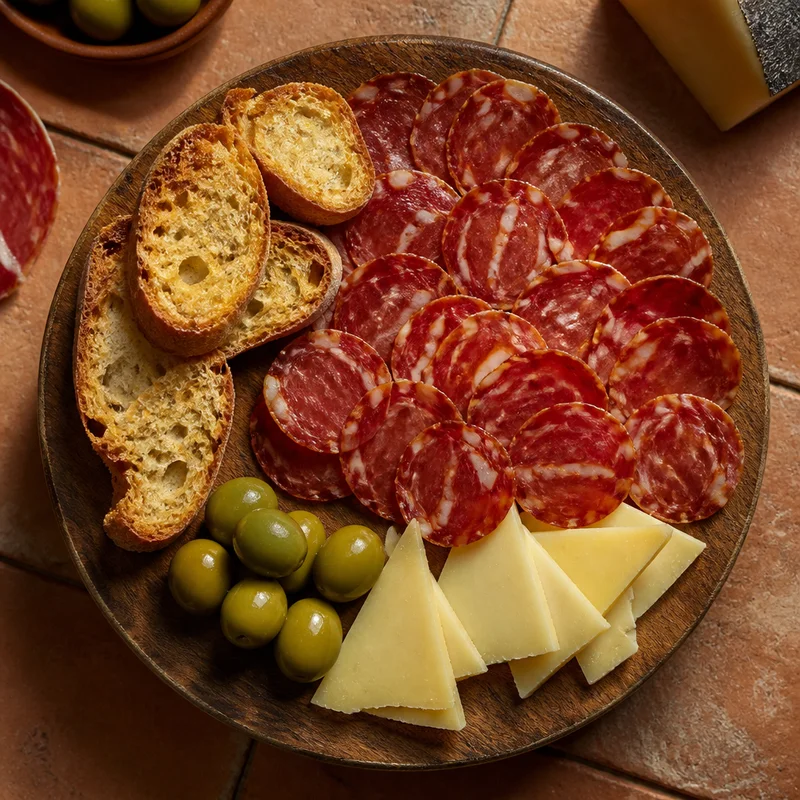
A tapas plate that lives or dies on the slicing. Lomo embuchado — pork loin cured with pimentón and garlic — is leaner and sweeter than jamón, and it needs to be shaved almost translucent so it melts on the tongue instead of chewing like deli meat. Nothing gets cooked: you chill the lomo, sharpen a knife, cut on a hard bias, and build the plate around it with Manchego, warm marinated olives, marcona almonds and crisp bread. Twenty minutes of knife work and arranging turns a $12 restaurant tapa into a board that feeds four.
Ingredients
- 6 oz whole cured Spanish lomo embuchado (or lomo ibérico), in one piece
- 5 oz Manchego cheese, aged 6–12 months, rind on
- 2 oz thinly sliced jamón serrano (optional, for contrast)
- 1 1/4 cups mixed Spanish olives (Manzanilla, Gordal, Arbequina), drained
- 3 tbsp extra-virgin olive oil, preferably Spanish
- 2 garlic cloves, smashed
- 2 wide strips orange zest
- 1 tsp fennel seeds
- 1 sprig fresh rosemary
- 1/4 tsp crushed red pepper flakes
- 1 baguette or rustic country loaf
- 2 tbsp extra-virgin olive oil, for the bread
- 1/2 cup marcona almonds
- 1 ripe tomato, halved (optional, for rubbing on toast)
- flaky sea salt
- 1 tbsp finishing extra-virgin olive oil
- 1/4 tsp sweet pimentón de la Vera (smoked Spanish paprika)
- 2 tbsp quince paste (membrillo), cut into small wedges
- 4 piquillo peppers or a few cornichons (optional)
- 1 long thin-bladed knife (slicing or carving knife), freshly sharpened
Instructions
- Chill the lomo: 45 to 60 minutes before serving, put the whole piece of lomo in the coldest part of the refrigerator, or in the freezer for exactly 15 minutes. Firm, cold cured meat shaves cleanly; room-temperature lomo drags and tears. If your piece still has a casing, peel it off with your fingers or a paring knife before slicing.
- Make the warm olives: combine the olive oil, smashed garlic, orange zest, fennel seeds, rosemary and red pepper flakes in a small skillet over medium-low heat. Warm for 3 to 4 minutes, just until the garlic sizzles faintly and smells sweet — do not let it brown. Add the drained olives, swirl to coat, and heat 2 minutes more until warmed through. Slide into a small bowl and let sit at room temperature; they are best served warm, not hot.
- Toast the bread: slice the baguette on a sharp bias into 1/4-inch pieces. Brush both sides lightly with olive oil and toast in a dry skillet over medium heat for 2 minutes per side, or on a sheet pan at 400°F for 8 to 10 minutes, until golden and crisp at the edges but still slightly chewy in the center. For a pa amb tomàquet touch, rub the cut face of the tomato over the warm toasts and sprinkle with flaky salt.
- Slice the lomo paper-thin: set the chilled piece on a cutting board with the long side facing you. Holding your sharpened knife at a shallow 20- to 30-degree angle to the board, draw the blade through the meat in one long pull rather than sawing — you want slices you can almost see through, about 1/16 inch. Aim for 24 to 30 slices from 6 ounces. Wipe the blade with a paper towel every few slices so the fat does not gum up the edge.
- Lay the slices out immediately in a single layer on a chilled plate, barely overlapping, and let them sit at room temperature for 10 to 15 minutes before serving. This tempering step is what unlocks the aroma; ice-cold lomo tastes flat and waxy.
- Break down the Manchego: cut the wedge into thin triangles about 1/8 inch thick, leaving the rind attached as a handle (do not eat the rind). If the cheese is well aged and crumbly, snap it into irregular shards instead — it looks better than forced neat slices.
- Build the board: drape the lomo in loose ruffles across one side of a large platter or wooden board, arranging the slices so air gets between them rather than pressing them flat. Fan the Manchego alongside, add the jamón serrano in a separate ribbon if using, then fill the gaps with the warm olives, marcona almonds, wedges of membrillo and the piquillo peppers.
- Finish and serve: drizzle a thread of good olive oil over the lomo only, dust it with a whisper of pimentón from 10 inches above the plate, and add a few flakes of sea salt to the Manchego. Tuck the toasts in a napkin-lined basket on the side and serve right away, with a chilled fino sherry, dry cava or a light Garnacha.
Chef's tips
- Buying: look for lomo embuchado or lomo ibérico de bellota at a Spanish deli or online specialty grocer — a whole piece costs more per pound than pre-sliced but yields far better texture, since packaged slices are usually cut too thick and dry out. The surface should be deep brick-red from pimentón with a fine white bloom of mold, which is normal and can be wiped off with a cloth dampened in olive oil.
- No slicing knife? A mandoline is too dangerous for cured meat, but a very sharp chef's knife works if you commit to the shallow angle and one continuous pull. Whatever you use, run it over a honing rod first — a dull blade will crush the fat instead of cutting it.
- Do not confuse lomo embuchado (dry-cured, eaten raw) with lomo asado or fresh pork loin. If the label says fresh, uncured or raw-to-cook, it is the wrong product for this plate.
- Cut only what you will eat. Wrap the remaining piece tightly in parchment and then a loose layer of plastic — never sealed plastic alone — and keep it in the fridge for up to 3 weeks; the cut end will dry slightly and can be trimmed away.
- Scaling for a party: figure 1 1/2 ounces of lomo and 1 1/4 ounces of cheese per person as part of a larger spread. Slice within 30 minutes of serving, since thin cured slices oxidize and dull in color if they sit out for hours.
- Save the olive marinating oil after the olives are gone — it is excellent brushed on the next batch of toast or spooned over roasted vegetables.
Nutrition (per serving, estimated)
Made with Sprig
Cured Spanish Pork Loin Board with Manchego, Olives and Toasts was created in Sprig — the AI chef that turns any craving into a complete recipe, plans your week, and shops with one smart list.
More from Sprig Originals


Are you this recipe's original author or publisher? Report a problem