Sprig Originals's kitchen / Glass-Puffed Pork Crackling with Salt & Vinegar Dust
Glass-Puffed Pork Crackling with Salt & Vinegar Dust
 By Sprig Originals · cooked up in Sprig
Worked out from this recipe's ingredients. If you're cooking for an allergy, always read the full ingredient list.
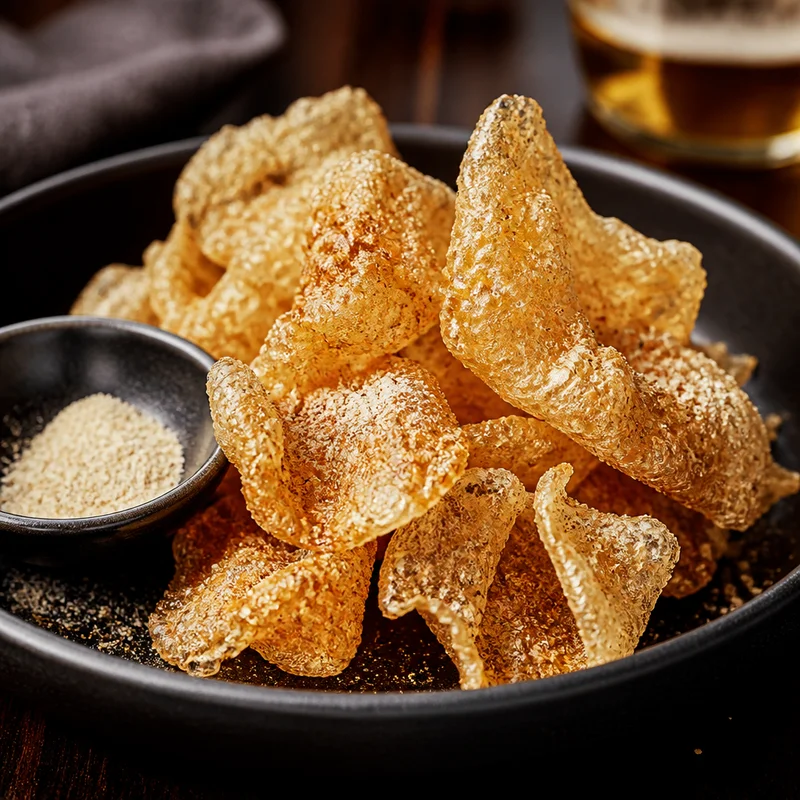
The bar-snack crackling that shatters instead of shatters your teeth: pork skin is simmered until gelatinous, scraped clean, dried low and slow into amber glass, then flash-fried so every piece puffs into an airy, blistered cloud. Finished with a tangy salt-and-vinegar dust, it out-crunches any bagged pork rind and keeps for a week in a jar.
Ingredients
Pork skin & simmer
- 1 1/2 lb pork skin, in large sheets (from the butcher, or peeled off a skin-on pork belly)
- 2 tbsp kosher salt
- 1 tsp baking soda
- 2 bay leaves
- 4 garlic cloves, smashed
- 1 tbsp black peppercorns
For frying
- 6 cups peanut or canola oil (or reserved rendered pork fat)
Salt & vinegar dust
- 2 tsp fine sea salt
- 2 tsp malt vinegar powder (or apple cider vinegar powder)
- 1/2 tsp sugar
- 1/4 tsp citric acid (optional, for extra pucker)
- 1/2 tsp smoked paprika
- 1/4 tsp finely ground black pepper
Instructions
- Rinse the pork skin and lay it flat on a board. If there is a thick pad of fat on the underside, trim the worst of it off with a sharp knife, leaving no more than about 1/4 inch — you'll scrape the rest away later. Cut the skin into pieces roughly 4 inches wide so they fit comfortably in a pot.
- Put the skin in a large pot with the kosher salt, baking soda, bay leaves, garlic and peppercorns. Cover with cold water by 2 inches, bring to a boil, then reduce to a bare simmer. Cook uncovered at 200–205°F for 1 1/2 to 2 hours, until a piece is floppy and a paring knife slides through it with no resistance. Top up with hot water if the skin pokes above the surface.
- Lift the skin onto a rimmed baking sheet with tongs and let it cool 15 minutes, until it's warm but handleable. Discard the simmering liquid (or chill it and lift off the cap of pork fat to fry in later).
- Lay each piece fat-side up and scrape the underside firmly with the back of a spoon or a dull-edged knife, working in long strokes, until you're down to a smooth, translucent, gelatin-clear layer. This is the single most important step: leftover fat steams instead of puffing and makes chewy spots. Blot both sides dry with paper towels.
- Cut the scraped skin into snack-size pieces, about 1 1/2 by 2 inches. They will roughly double in size when they puff, so keep them small. Trim off any ragged, thin edges.
- Arrange the pieces scraped-side down on a wire rack set in a rimmed baking sheet, not touching. Dry in a 200°F oven for 2 1/2 to 4 hours, flipping once at the halfway point, until the pieces are hard, amber, and glassy — they should snap like brittle plastic with no give at all. Any flexibility means they need more time. (A dehydrator at 155°F for 8–10 hours works too, as does a rack in the fridge overnight followed by 2 hours in the oven.)
- Cool the dried skins completely. At this stage they keep in an airtight jar at room temperature for up to 2 weeks, so you can fry them to order.
- Whisk all the salt-and-vinegar dust ingredients together in a small bowl and set it next to the stove with a large bowl and a paper-towel-lined tray.
- Pour the oil into a heavy 4- to 5-quart pot to a depth of about 2 inches and heat to 400°F on a deep-fry thermometer. Have a splatter screen or a pot lid within reach — the pieces pop energetically for the first few seconds.
- Fry in small batches of 5 or 6 pieces. Slide them in and they should balloon and blister within 10 to 30 seconds; press any stubborn piece under with a spider skimmer to keep it submerged. Pull them out the moment they stop bubbling hard and are fully puffed and pale gold, before they take on much color — about 45 seconds total. Let the oil come back to 400°F between batches.
- Drain each batch on paper towels for 10 seconds, then tip into the large bowl and dust generously with the salt-and-vinegar mix while still glistening, tossing to coat. Serve within a few hours for peak crunch; store cooled cracklings in a loosely closed paper bag or jar at room temperature for up to 5 days.
Chef's tips
- Ask your butcher for pork belly skin or fatback skin in whole sheets — it's often free or a couple of dollars a pound. Skin from the shoulder works but is thinner and puffs less dramatically.
- The baking soda in the simmer water raises the pH, which helps the collagen relax so the skin dries flat and puffs evenly. Don't add more than a teaspoon or you'll get a faintly soapy taste.
- If a piece comes out with hard, dense, glassy patches, the culprit is almost always fat left on the underside or incomplete drying — not the frying. Scrape harder, dry longer.
- No malt vinegar powder? Season with plain fine salt, then spritz the finished cracklings very lightly with cider vinegar from a spray bottle and eat immediately, or swap the dust for 2 tsp salt with 1 tsp each of chili powder, lime zest and toasted ground cumin.
- Cracklings soften in humidity. Re-crisp them for 4 to 5 minutes in a 300°F oven and cool before serving again.
- Strain and save the frying oil — it picks up a subtle pork flavor and is excellent for frying eggs or potatoes.
Nutrition (per serving, estimated)
320calories
11gprotein
1gcarbs
29gfat
Estimates only — values vary with brands and portions.
Made with Sprig
Glass-Puffed Pork Crackling with Salt & Vinegar Dust was created in Sprig — the AI chef that turns any craving into a complete recipe, plans your week, and shops with one smart list.
Free to start · 14-day Pro trial · cancel anytime
Not ready yet? Get the occasional recipe worth cooking — a couple a month at most.
You're on the list — check your inbox!
Unsubscribe anytime. Privacy Policy
More from Sprig Originals
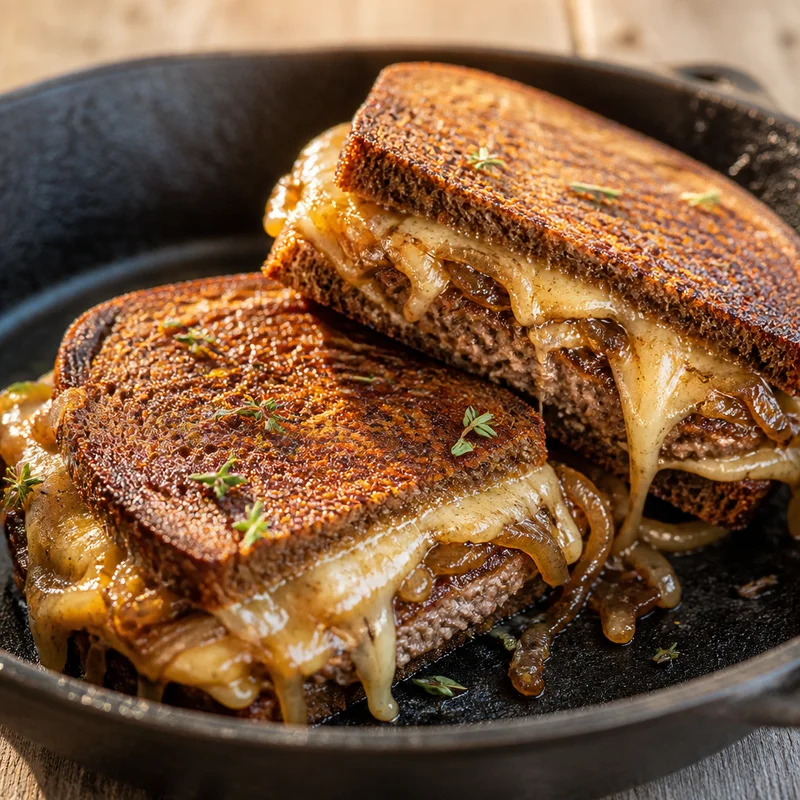
French Onion Patty Melts on Rye
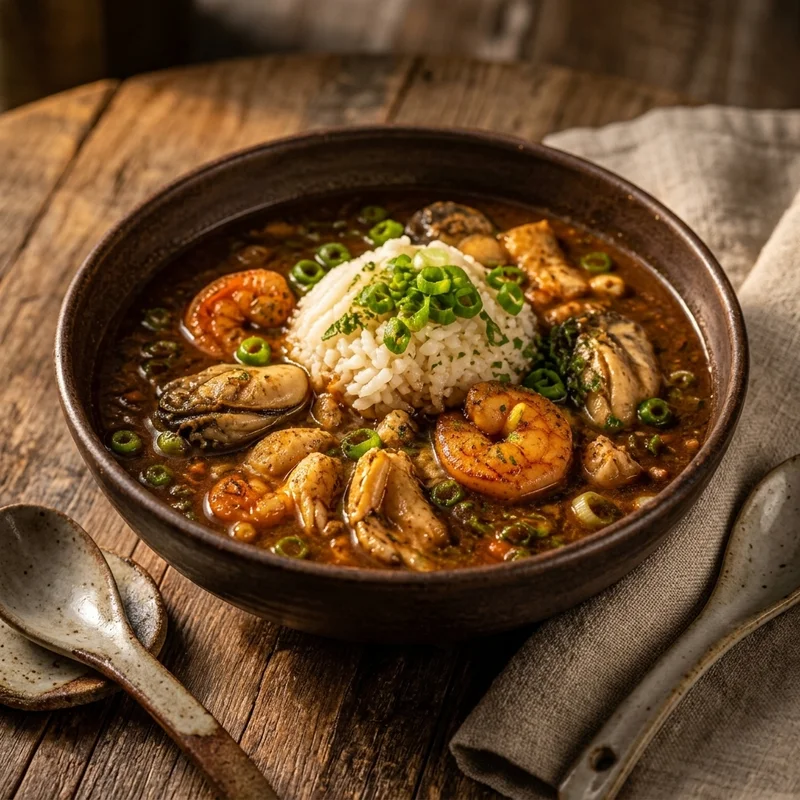
Dark Roux Seafood Gumbo with Quick Shrimp Stock
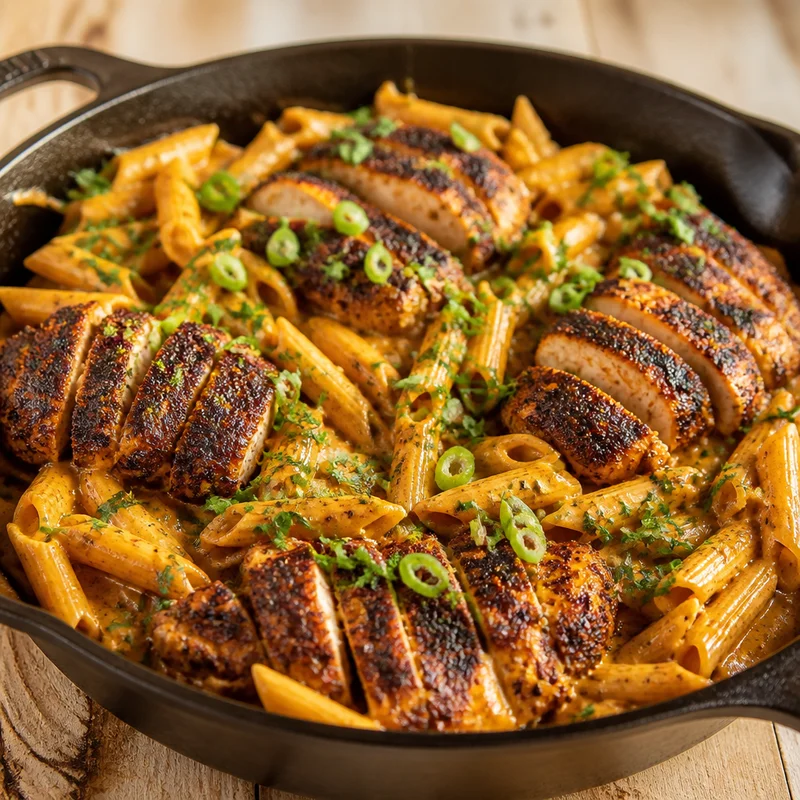
One-Skillet Blackened Cajun Chicken Pasta
Are you this recipe's original author or publisher? Report a problem