Sprig Originals's kitchen / Classic Steakhouse Béarnaise
Classic Steakhouse Béarnaise
 By Sprig Originals · cooked up in Sprig
Worked out from this recipe's ingredients. If you're cooking for an allergy, always read the full ingredient list.
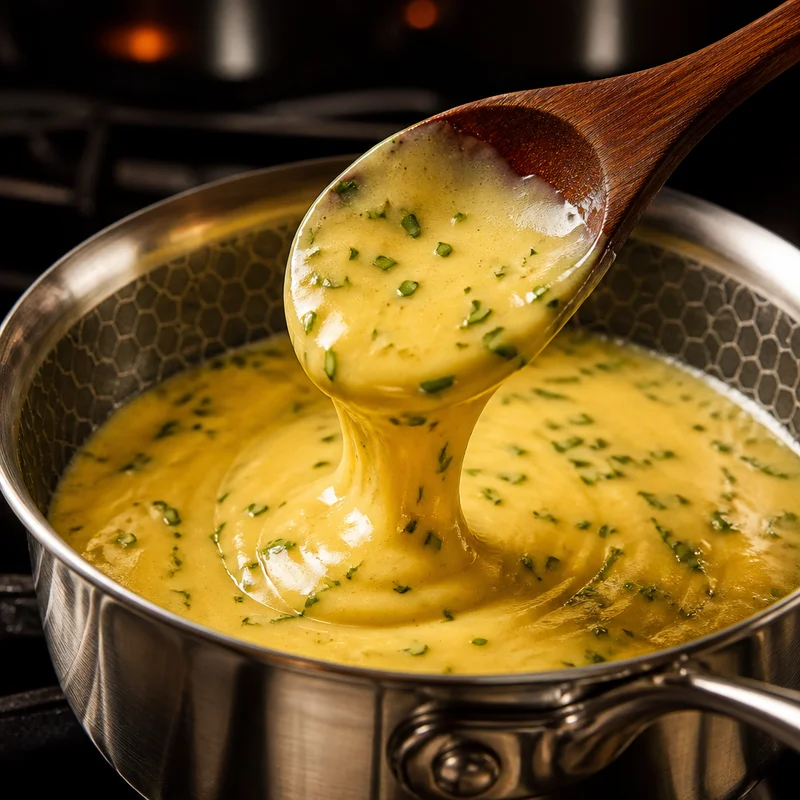
The tarragon-scented cousin of hollandaise, and the single best thing you can spoon over a seared ribeye. A sharp white wine and vinegar reduction with shallot, tarragon stems and cracked pepper gets strained, then whisked into egg yolks over gentle heat before warm butter is streamed in drop by drop. The result is thick, glossy and just barely pourable, with a bright anise finish that cuts steakhouse richness. Done by hand in about 25 minutes, with a rescue plan if it breaks.
Ingredients
Tarragon reduction
- 1/4 cup dry white wine (Sauvignon Blanc or unoaked Chardonnay)
- 1/4 cup white wine vinegar
- 1 medium shallot, minced fine
- 1/2 tsp black peppercorns, cracked
- 1/2 bunch fresh tarragon (stems for the reduction, leaves reserved)
- 2 sprigs fresh chervil or flat-leaf parsley, optional
Emulsion
- 3 large egg yolks
- 1 tbsp cold water
- 10 tbsp unsalted butter
Finish
- 2 tbsp fresh tarragon leaves, chopped (reserved from above)
- 1 tbsp fresh chives or chervil, chopped
- 3/4 tsp fine sea salt, plus more to taste
- 1 pinch cayenne pepper
- 1 tsp lemon juice, optional
Instructions
- Pull the leaves off the tarragon and set aside 2 tablespoons chopped leaves for finishing. Keep the stems — they carry most of the perfume and go into the reduction.
- Combine the white wine, white wine vinegar, minced shallot, cracked peppercorns, tarragon stems and optional chervil sprigs in a small saucepan. Simmer over medium heat for 6 to 8 minutes, until reduced to about 2 tablespoons of syrupy liquid. Strain through a fine-mesh sieve into a small bowl, pressing hard on the solids, then discard them. You should have 2 tablespoons; if you have less, top up with a splash of water.
- Melt the butter in a small saucepan over low heat until fully liquid but not sizzling, then let it sit off the heat for 3 to 4 minutes. It should feel warm, not hot — around 130 to 140°F. Butter hotter than that will scramble the yolks. If you want a firmer, more classic sauce, spoon off and discard the white milky foam and leave the watery layer behind in the pan.
- Bring 1 inch of water to a bare simmer in a saucepan — you want lazy bubbles, not a rolling boil. Set a medium stainless or glass bowl on top; it should not touch the water.
- Off the heat, whisk the egg yolks with the cold water and the strained reduction in the bowl for 30 seconds until pale and slightly frothy. Set the bowl over the simmering water and whisk constantly, scraping the sides and bottom, for 2 to 4 minutes. The yolks will thicken to the point where the whisk leaves visible ribbons and you can see the bottom of the bowl for a moment. That's about 160°F. Lift the bowl off the heat any time it feels like it's tightening too fast.
- Take the bowl off the heat and set it on a folded towel to keep it steady. Whisking hard and constantly, add the warm butter a few drops at a time for the first 2 tablespoons. Once the sauce looks thick and unified, you can move to a thin, steady stream. Adding butter too quickly is the number one cause of a broken béarnaise — take a full 3 to 4 minutes.
- When all the butter is in, the sauce should coat the back of a spoon and hold a soft ribbon. If it's thicker than you want, whisk in warm water 1 teaspoon at a time.
- Whisk in the reserved chopped tarragon, the chives, salt, cayenne and the lemon juice if using. Taste — it should be assertively tangy and herbal, since it gets diluted by whatever it's spooned over. Serve within 30 minutes, spooned over grilled steak, roasted asparagus, poached eggs or seared fish.
Chef's tips
- Holding it: keep the finished sauce in the bowl set over the pan of hot water with the heat OFF, covered with a plate, for up to 30 minutes. Whisk before serving. Above about 150°F it will break; below 100°F the butter starts to set.
- If it breaks: put 1 tablespoon of hot water (or a fresh egg yolk for a bad break) in a clean bowl and whisk the broken sauce into it a spoonful at a time. It comes back almost every time.
- Butter temperature is the whole game. If you melted it too far ahead and it's cool, warm it gently — cold butter won't emulsify; boiling butter will scramble.
- No fresh tarragon? Use 1 1/2 teaspoons dried tarragon in the reduction and finish with fresh parsley and chives, but know that the dried version loses most of the anise brightness that makes this sauce.
- For a Choron variation, whisk 1 tablespoon of tomato paste into the finished sauce — excellent on beef tenderloin.
- Doubling works, but reduce the wine mixture in a wider pan so it still concentrates properly, and use a large enough bowl that your whisk can move freely.
Nutrition (per serving, estimated)
198calories
2gprotein
1gcarbs
21gfat
Estimates only — values vary with brands and portions.
Made with Sprig
Classic Steakhouse Béarnaise was created in Sprig — the AI chef that turns any craving into a complete recipe, plans your week, and shops with one smart list.
Free to start · 14-day Pro trial · cancel anytime
Not ready yet? Get the occasional recipe worth cooking — a couple a month at most.
You're on the list — check your inbox!
Unsubscribe anytime. Privacy Policy
More from Sprig Originals
French Onion Patty Melts on Rye
Dark Roux Seafood Gumbo with Quick Shrimp Stock
One-Skillet Blackened Cajun Chicken Pasta
Are you this recipe's original author or publisher? Report a problem