Sprig Originals's kitchen / Spicy Pork Bulgogi with Rice and Lettuce Wraps
Spicy Pork Bulgogi with Rice and Lettuce Wraps
 By Sprig Originals · cooked up in Sprig
Worked out from this recipe's ingredients. If you're cooking for an allergy, always read the full ingredient list.
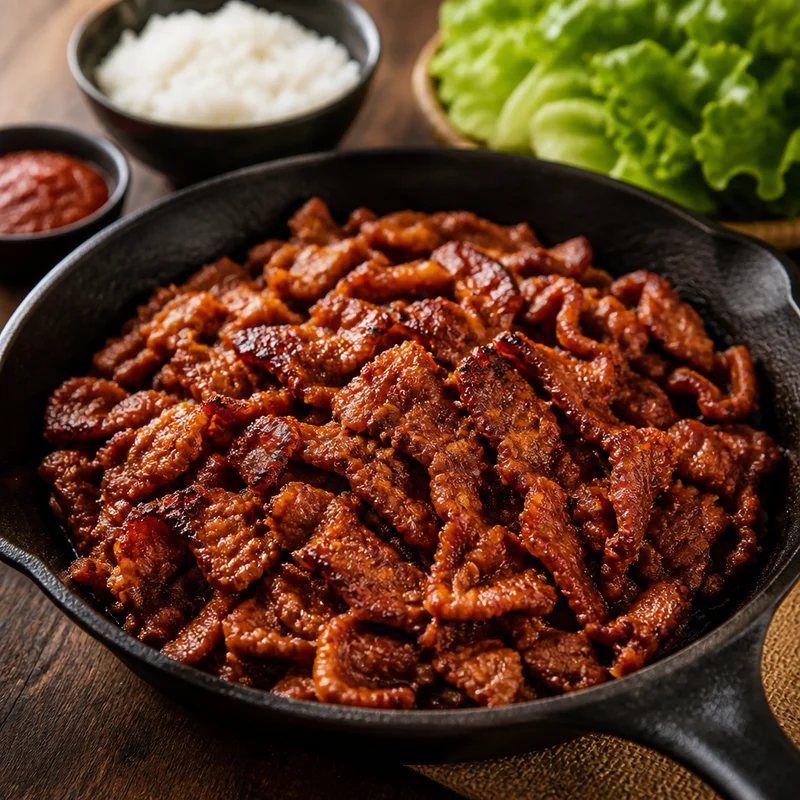
Thin-sliced pork shoulder soaks in a punchy gochujang, soy and pear marinade, then hits a screaming-hot skillet so the sugars caramelize into charred edges instead of steaming in their own juices. Serve it with short-grain rice, crisp lettuce leaves and a swipe of ssamjang for wrapping at the table.
Ingredients
Pork and Marinade
- 1.5 lb boneless pork shoulder, sliced 1/8-inch thick
- 3 tbsp gochujang
- 2 tbsp soy sauce
- 1 tbsp gochugaru (Korean chile flakes)
- 1.5 tbsp light brown sugar
- 1 tbsp toasted sesame oil
- 1 tbsp mirin or dry sherry
- 1/2 cup grated Asian pear (or Bosc pear), with juices
- 4 cloves garlic, finely grated
- 1 tbsp finely grated fresh ginger
- 1/2 medium yellow onion, thinly sliced
- 3 stalks scallions, cut into 2-inch lengths
- 1/4 tsp freshly ground black pepper
For Cooking
- 2 tbsp neutral oil, such as grapeseed or canola
- 1 tsp toasted sesame seeds
To Serve
- 3 cups cooked short-grain white rice
- 1 head red leaf or butter lettuce, leaves separated
- 6 perilla leaves (optional)
- 1/3 cup ssamjang or 3 tbsp doenjang mixed with 1 tbsp gochujang
- 1 kirby cucumber, sliced into coins
- 2 stalks scallions, slivered lengthwise, for garnish
Instructions
- If your pork is not pre-sliced, freeze the shoulder for 45 to 60 minutes until firm at the edges but not solid, then slice against the grain as thinly as you can manage, about 1/8 inch. Aim for pieces roughly 2 by 3 inches; trim any thick pockets of fat but leave the thin marbling.
- In a large bowl, whisk together the gochujang, soy sauce, gochugaru, brown sugar, sesame oil, mirin, grated pear with its juices, garlic, ginger and black pepper until smooth. It should be the consistency of loose barbecue sauce.
- Add the pork, sliced onion and 2-inch scallion pieces. Use your hands or tongs to massage the marinade into every slice, separating any pieces that clump together. Cover and refrigerate at least 30 minutes, or up to 12 hours for deeper flavor.
- While the pork marinates, cook the rice, wash and dry the lettuce leaves thoroughly, slice the cucumber, and set out the ssamjang. Pull the pork from the fridge 15 minutes before cooking so it is not ice cold going into the pan.
- Heat a 12-inch cast-iron or heavy stainless skillet over high heat for 3 to 4 minutes, until a drop of water vaporizes on contact almost instantly. Turn on your hood fan or open a window — this dish is meant to smoke a little. Add 1 tablespoon of the neutral oil and swirl to coat.
- Lift about a third of the pork from the bowl, letting excess marinade drip off, and lay it in the pan in a single loose layer with space between pieces. Do not stir for 90 seconds to 2 minutes: you want the edges to darken and the sugars to lacquer. Flip and cook 60 to 90 seconds more, until charred in spots and just cooked through. Crowding the pan is the one mistake that turns this into gray stew meat.
- Transfer the batch to a plate and repeat with the remaining pork in two more batches, adding the second tablespoon of oil as needed and letting the pan reheat for 30 to 60 seconds between batches. If the pan builds up dark residue that smells scorched, wipe it quickly with a wadded paper towel held in tongs.
- Return all the cooked pork plus any accumulated juices to the hot skillet along with 2 tablespoons of the leftover marinade. Toss over high heat for 45 seconds, just until the sauce tightens and glazes the meat. Take it off the heat immediately — pork shoulder this thin goes from juicy to tough fast.
- Scatter with sesame seeds and slivered scallions and bring the skillet straight to the table. Let everyone build wraps: a lettuce leaf, a spoon of rice, a few slices of pork, a dab of ssamjang and a cucumber coin.
- Cook a portion of the pork straight from the pan for a taste check before the final glaze — marinades vary in salt and sweetness, and you may want a splash more soy or a pinch more sugar in the reserved marinade.
Chef's tips
- Ask the butcher counter to slice a pork shoulder on the deli slicer at 1/8 inch, or buy pre-sliced pork belly or shoulder from a Korean or Asian market labeled for bulgogi — it saves 20 minutes and the freezer step.
- The grated pear is not optional flavor-wise or texture-wise: its enzymes tenderize the shoulder while its sugars help the char. If you can't find Asian pear, use a ripe Bosc pear or 1/3 cup unsweetened applesauce.
- Don't marinate longer than 12 hours. The pear enzymes will keep working and the pork turns mushy.
- No hood fan? Cook it outdoors on a gas grill using a cast-iron skillet or a grill-safe perforated pan set over high heat, in the same small batches.
- Leftovers are excellent chopped and fried into rice with a runny egg, or stuffed into a toasted roll with mayo and shredded cabbage.
Nutrition (per serving, estimated)
720calories
38gprotein
85gcarbs
25gfat
Estimates only — values vary with brands and portions.
Made with Sprig
Spicy Pork Bulgogi with Rice and Lettuce Wraps was created in Sprig — the AI chef that turns any craving into a complete recipe, plans your week, and shops with one smart list.
Free to start · 14-day Pro trial · cancel anytime
Not ready yet? Get the occasional recipe worth cooking — a couple a month at most.
You're on the list — check your inbox!
Unsubscribe anytime. Privacy Policy
More from Sprig Originals

Are you this recipe's original author or publisher? Report a problem