Sprig Originals's kitchen / One-Pan Tteokbokki with Fish Cake and Jammy Eggs
One-Pan Tteokbokki with Fish Cake and Jammy Eggs
 By Sprig Originals · cooked up in Sprig
Worked out from this recipe's ingredients. If you're cooking for an allergy, always read the full ingredient list.
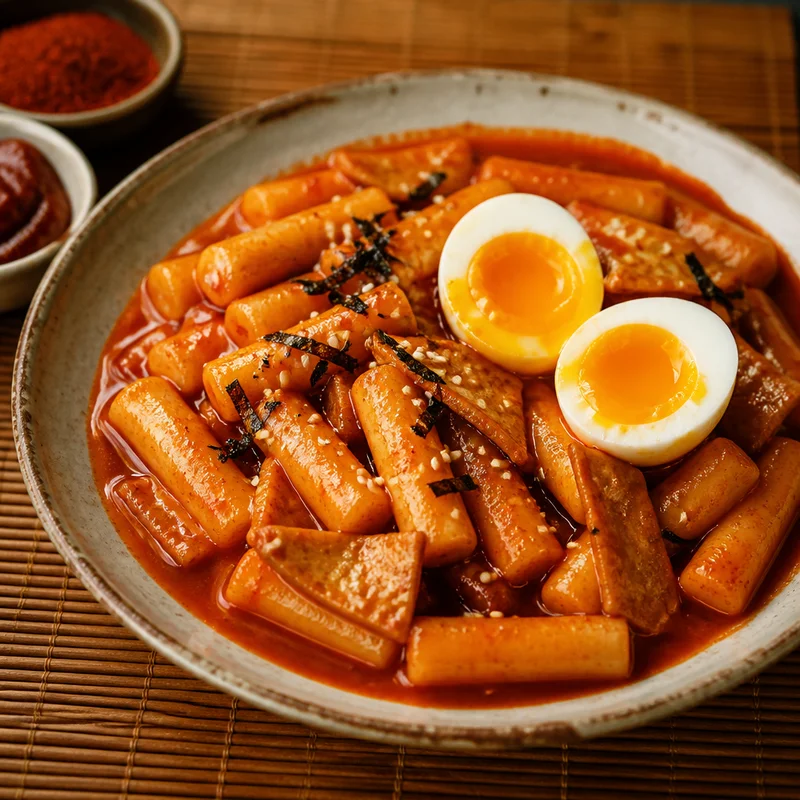
Chewy cylinder rice cakes simmered in a glossy gochujang-gochugaru sauce built on a quick anchovy-kelp broth (or an easy vegetarian swap). The sauce reduces in the same pan until it clings like lacquer, then folded-over fish cake sheets, scallions and halved jammy eggs go on top. The only real trick is soaking refrigerated rice cakes before they hit the heat so they turn tender instead of chalky.
Ingredients
Broth
- 4 cup water
- 1 piece dried kelp (dashima), about 4x5 inches
- 1/2 cup dried anchovies, heads and guts removed (or 4 dried shiitake mushrooms for vegetarian)
- 1/2 yellow onion, quartered
Sauce
- 3 tbsp gochujang
- 1 tbsp gochugaru (Korean chile flakes)
- 1 tbsp soy sauce
- 1 1/2 tbsp sugar
- 1 tbsp corn syrup or honey (optional, for extra gloss)
- 3 clove garlic, finely grated
- 1 tsp toasted sesame oil
Main
- 1 1/2 lb cylinder rice cakes (tteok), fresh or refrigerated
- 6 oz Korean fish cake sheets (eomuk), cut into 1-inch strips
- 4 scallions, cut into 2-inch lengths
- 1/4 green cabbage, cut into 1-inch ribbons (about 2 cups)
To finish
- 4 large eggs
- 2 tsp toasted sesame seeds
- 1 sheet roasted seaweed (gim), torn or scissor-cut into strips (optional)
Optional add-ins
- 4 oz low-moisture mozzarella, shredded
- 1 packet instant ramyeon noodles, seasoning discarded
Instructions
- If your rice cakes are refrigerated, vacuum-sealed at room temperature, or frozen, soak them first: cover with warm tap water and let stand 20 to 30 minutes (thaw frozen cakes in cool water for 30 minutes), until they bend slightly and feel pliable. Drain and separate any that are stuck together. Freshly made, soft rice cakes can go straight into the pan.
- Make the broth: combine the water, kelp, dried anchovies (or shiitake), and onion in a wide 12-inch skillet or shallow pot. Bring to a bare simmer over medium heat, about 8 minutes. Pull out the kelp as soon as the water simmers so it doesn't turn slimy, then simmer 5 minutes more. Strain out the solids and return the broth to the pan; you want about 3 cups.
- While the broth steeps, boil the eggs: lower them into a small pot of already-boiling water and cook exactly 7 minutes at a steady boil for jammy yolks. Transfer to ice water for 5 minutes, then peel and halve lengthwise. Set aside.
- Whisk the gochujang, gochugaru, soy sauce, sugar, corn syrup, garlic and sesame oil into the warm broth until no lumps of gochujang remain.
- Add the drained rice cakes and cabbage. Bring to a strong simmer over medium-high heat and cook, stirring and turning the rice cakes every couple of minutes so they don't stick, for 8 to 10 minutes.
- Add the fish cake strips and the white parts of the scallions. Continue simmering 5 to 7 minutes, stirring often, until the sauce has reduced by about half, turns visibly glossy, and coats a rice cake in a thick, clinging layer. The rice cakes should be chewy-tender all the way through with no chalky center.
- If using, scatter the mozzarella over one side of the pan, cover, and let it melt off the heat for 2 minutes. If using ramyeon noodles, add them along with the fish cake and 1/2 cup extra broth or water.
- Kill the heat, stir in the scallion greens, and nestle the halved jammy eggs on top, cut side up. Finish with sesame seeds and torn seaweed and serve straight from the pan while the sauce is still loose enough to spoon.
- Taste before serving: if it reads flat, add a splash of soy sauce; if it's too sharp, another teaspoon of sugar rounds it out. Sauce thickens as it sits, so loosen with a few tablespoons of the reserved broth if needed.
Chef's tips
- The number-one tteokbokki failure is hard centers. Refrigerated rice cakes must soak in warm water for at least 20 minutes before cooking, and even then they need a full 13 to 15 minutes of simmering. Bite one to check before you serve.
- Keep the pan wide and shallow. Reduction is what makes the sauce gloss; a deep pot traps steam and leaves you with soup.
- Vegetarian version: swap dried shiitake for the anchovies, keep the kelp, skip the fish cake, and add 8 ounces of quartered mushrooms or firm tofu cubes with the cabbage.
- Gochujang brands vary wildly in heat and salt. Start with 3 tablespoons, taste at the end of the simmer, and stir in more gochugaru if you want it hotter without making it sweeter.
- Leftovers firm up in the fridge. Reheat in a pan with 1/3 cup water or broth over medium heat, stirring, until the rice cakes soften again — microwaving alone makes them rubbery.
Nutrition (per serving, estimated)
621calories
28gprotein
89gcarbs
18gfat
Estimates only — values vary with brands and portions.
Made with Sprig
One-Pan Tteokbokki with Fish Cake and Jammy Eggs was created in Sprig — the AI chef that turns any craving into a complete recipe, plans your week, and shops with one smart list.
Free to start · 14-day Pro trial · cancel anytime
Not ready yet? Get the occasional recipe worth cooking — a couple a month at most.
You're on the list — check your inbox!
Unsubscribe anytime. Privacy Policy
More from Sprig Originals
South Louisiana Rice Dressing (Dirty Rice)
French Onion Patty Melts on Rye
Dark Roux Seafood Gumbo with Quick Shrimp Stock
Are you this recipe's original author or publisher? Report a problem