Sprig Originals's kitchen / Overnight Rosemary Focaccia with Caponata
Overnight Rosemary Focaccia with Caponata
 By Sprig Originals · cooked up in Sprig
Worked out from this recipe's ingredients. If you're cooking for an allergy, always read the full ingredient list.
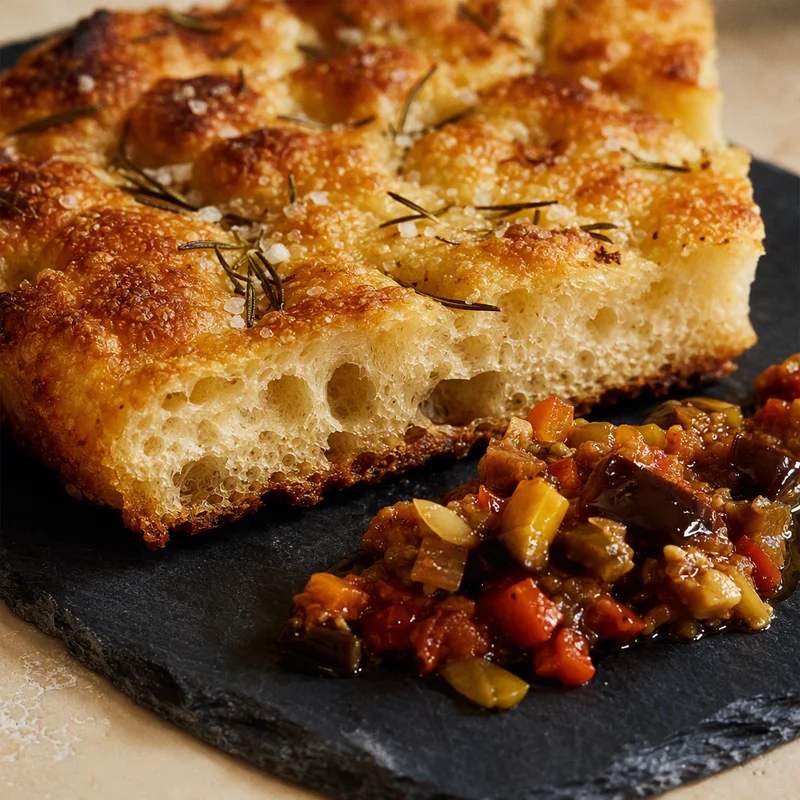
A no-knead dough rests overnight in the fridge, then relaxes into a sheet pan where you dimple it with a generous flood of olive oil. The result is a bread with an open, custardy crumb, a shattering fried bottom crust, and rosemary and flaky salt on top — the kind of loaf a wood-fired coastal Italian kitchen sends out with a spoonful of sweet-sour eggplant caponata on the side.
Ingredients
Overnight No-Knead Dough
- 500 g bread flour (about 4 cups, spooned and leveled)
- 400 g lukewarm water (about 1 2/3 cups, 95°F)
- 1 tsp instant yeast
- 2 tsp fine sea salt
- 1 tsp honey
- 2 tbsp extra-virgin olive oil
Pan and Topping
- 6 tbsp extra-virgin olive oil, divided (use a good peppery one)
- 2 tbsp fresh rosemary leaves, roughly chopped
- 1 clove garlic, very thinly sliced (optional)
- 1 tbsp flaky sea salt
- 2 tbsp warm water
Caponata
- 1 lb globe eggplant, cut into 3/4-inch cubes
- 1 tsp kosher salt
- 5 tbsp olive oil, divided
- 1 medium yellow onion, diced
- 2 stalks celery, diced
- 1 red bell pepper, diced
- 2 cloves garlic, minced
- 1 cup canned crushed tomatoes
- 3 tbsp red wine vinegar
- 1 tbsp sugar
- 2 tbsp green olives, pitted and chopped
- 1 tbsp capers, rinsed
- 2 tbsp golden raisins
- 2 tbsp fresh basil, torn
- 2 tbsp toasted pine nuts (optional)
Instructions
- Make the dough the night before: in a large bowl, whisk the 500 g bread flour, 1 tsp instant yeast, and 2 tsp fine sea salt together. Stir the honey into the 400 g lukewarm water until dissolved, then pour it over the flour along with 2 tbsp olive oil.
- Mix with a sturdy spatula or your hand for 60–90 seconds, just until no dry flour remains. The dough will be shaggy, very wet, and sticky — do not knead it. Cover the bowl tightly and let it sit at room temperature for 45 minutes.
- With a wet hand, reach under one side of the dough, stretch it up, and fold it over the center. Rotate the bowl a quarter turn and repeat three more times. Cover and refrigerate 12 to 24 hours (18 hours is the sweet spot; the cold ferment is what builds the blistered crumb and flavor).
- The next day, pour 4 tbsp olive oil into a 9x13-inch metal baking pan (or quarter sheet pan) and swirl to coat the bottom and sides generously — this oil fries the bottom crust, so don't skimp. Scrape the cold dough directly into the pan, turning it once so both sides are slicked with oil.
- Gently stretch the dough toward the corners. It will spring back — that's fine. Cover loosely and let it sit at warm room temperature for 2 1/2 to 4 hours, stretching toward the corners once an hour, until the dough fills the pan and looks pillowy and jiggly.
- While the dough proofs, make the caponata: toss the eggplant cubes with 1 tsp kosher salt and let drain in a colander for 20 minutes, then pat dry. Heat 3 tbsp olive oil in a large skillet over medium-high and fry the eggplant, undisturbed at first, for 8–10 minutes until deeply browned and collapsed. Transfer to a plate.
- Add the remaining 2 tbsp olive oil to the same skillet over medium heat and cook the onion, celery, and bell pepper for 8 minutes until softened. Stir in the garlic for 30 seconds, then add the crushed tomatoes, vinegar, sugar, olives, capers, and raisins. Simmer 10 minutes, return the eggplant, and cook 5 minutes more until glossy and jammy. Season with salt and pepper, cool to room temperature, then fold in the basil and pine nuts.
- At least 45 minutes before baking, place a rack in the lower third of the oven and heat to 450°F. Stir the remaining 2 tbsp olive oil with 2 tbsp warm water in a small cup to make a loose emulsion.
- Drizzle the oil-water mixture over the proofed dough. Oil your fingers, spread them wide, and press straight down through the dough to the pan bottom all over the surface — 30 to 40 firm dimples. Scatter the rosemary, optional garlic slices, and flaky salt across the top.
- Bake for 22–28 minutes, rotating the pan at the 15-minute mark, until the top is deep golden and the edges are lacquered and crisp. Lift a corner with a spatula: the underside should be evenly browned and audibly crunchy. If it's pale, bake 3–5 minutes longer.
- Immediately slide the focaccia out of the pan onto a wire rack so the bottom crust stays crackly. Rest 10 minutes, then cut into squares with a serrated knife and serve warm with the caponata alongside for spooning.
Chef's tips
- The dough must be cold going into the pan — cold dough holds gas better and gives you those big irregular holes. Never let it come to room temperature in the bowl before panning.
- A dark metal or aluminum pan browns the bottom far better than glass or ceramic. Glass will give you a soft, pale underside.
- If your kitchen is cold and the dough isn't puffy after 4 hours, set the covered pan on top of the stove with the oven preheating below it.
- Caponata tastes noticeably better on day two — make it a day ahead and pull it from the fridge 30 minutes before serving, never cold.
- Leftover focaccia: revive squares cut-side down in a dry skillet over medium heat for 2 minutes, or 5 minutes in a 400°F oven. Never microwave it.
Nutrition (per serving, estimated)
387calories
8gprotein
50gcarbs
19gfat
Estimates only — values vary with brands and portions.
Made with Sprig
Overnight Rosemary Focaccia with Caponata was created in Sprig — the AI chef that turns any craving into a complete recipe, plans your week, and shops with one smart list.
Free to start · 14-day Pro trial · cancel anytime
Not ready yet? Get the occasional recipe worth cooking — a couple a month at most.
You're on the list — check your inbox!
Unsubscribe anytime. Privacy Policy
More from Sprig Originals
South Louisiana Rice Dressing (Dirty Rice)
French Onion Patty Melts on Rye
Dark Roux Seafood Gumbo with Quick Shrimp Stock
Are you this recipe's original author or publisher? Report a problem