Sprig Originals's kitchen / Sweet & Spicy Korean Fried Chicken (Yangnyeom)
Sweet & Spicy Korean Fried Chicken (Yangnyeom)
 By Sprig Originals · cooked up in Sprig
Worked out from this recipe's ingredients. If you're cooking for an allergy, always read the full ingredient list.
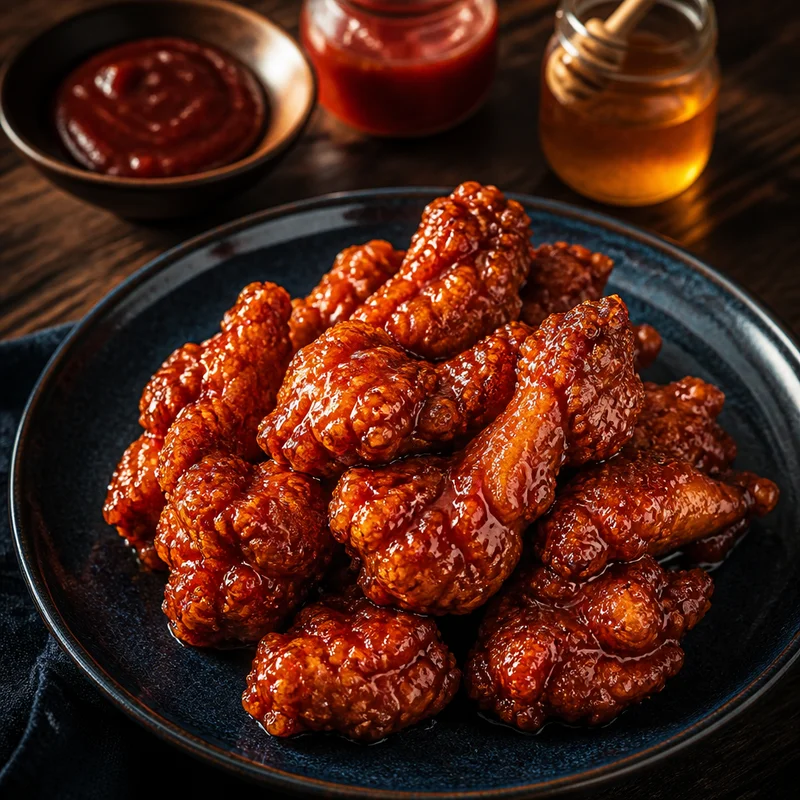
Double-fried chicken with a shatteringly crisp potato-starch crust, tossed at the very last second in a glossy gochujang-ketchup-honey-garlic sauce. One sauce, three heat levels — mild enough for kids or hot enough to make you sweat — and a frying method that keeps the crunch audible right through dinner.
Ingredients
Chicken & marinade
- 2 1/2 lb chicken wings, split into flats and drumettes (or boneless thighs cut into 2-inch pieces)
- 1 tbsp soy sauce
- 1 tbsp grated fresh ginger
- 1 tsp kosher salt
- 1/2 tsp freshly ground black pepper
- 1 tbsp mirin or dry sherry
Crust
- 3/4 cup potato starch
- 1/4 cup all-purpose flour
- 1/2 tsp baking powder
- 1/2 tsp kosher salt
- 5 tbsp cold water
- 2 qt neutral frying oil (peanut, canola or vegetable)
Yangnyeom sauce (with heat dial)
- 3 tbsp gochujang (see heat dial in tips)
- 1/4 cup ketchup
- 3 tbsp honey
- 2 tbsp brown rice syrup or light corn syrup
- 1 tbsp soy sauce
- 1 tbsp rice vinegar
- 6 cloves garlic, finely minced or grated
- 1 tsp toasted sesame oil
- 1 tsp gochugaru (Korean chile flakes), optional for extra heat
- 2 tbsp water
- 1 tbsp neutral oil
To serve
- 1 tbsp toasted sesame seeds
- 2 scallions, thinly sliced
- Pickled daikon cubes (chicken-mu), for serving
- Steamed short-grain rice, for serving
Instructions
- Pat the chicken very dry with paper towels. In a large bowl, toss it with the soy sauce, ginger, mirin, 1 tsp kosher salt and the black pepper. Let it sit at room temperature for 20 minutes (or refrigerate up to 4 hours). Drain off any liquid that pools and blot the pieces dry again — surface moisture is the enemy of crunch.
- Make the sauce first so it is ready before the chicken comes out of the oil. In a small saucepan over medium heat, warm 1 tbsp neutral oil and cook the minced garlic for 60–90 seconds, stirring constantly, just until fragrant and barely golden — do not let it brown.
- Add the gochujang, ketchup, honey, rice syrup, soy sauce, rice vinegar, gochugaru (if using) and 2 tbsp water. Whisk smooth and simmer gently for 3–4 minutes, until the sauce thickens enough to coat the back of a spoon and looks glossy. Stir in the sesame oil, then turn off the heat and leave it in the pan. Taste and adjust: more honey to soften, more vinegar to brighten, a splash of water if it tightens too much.
- Whisk the potato starch, flour, baking powder and 1/2 tsp salt in a wide bowl. Drizzle in 5 tbsp cold water and rub the mixture with your fingertips until it looks like coarse, shaggy wet sand — those clumps become the craggy crust.
- Add the chicken and press the coating firmly onto every piece, turning until each one is thickly and evenly covered. Set the coated pieces on a wire rack and let them stand 10 minutes so the starch hydrates and grips.
- Pour the oil into a heavy Dutch oven to a depth of about 2 1/2 inches and heat over medium to 325°F on a clip-on thermometer. Line a second rack or a sheet pan with paper towels.
- Fry in 3 batches so the temperature never drops below about 300°F: lower in the pieces, fry 8–9 minutes, turning once or twice, until pale gold and cooked through (165°F at the bone). Drain on the rack. Let all the chicken rest at least 5 minutes — up to 30 minutes is fine.
- Raise the oil to 375°F. Fry each batch a second time for 2–3 minutes, until deep amber, blistered and loud when tapped. Drain on the rack, never in a bowl.
- Rewarm the sauce over low heat for 30 seconds. Working with half the chicken at a time and moving fast, tip the hot chicken into a large bowl, spoon over just enough sauce to lacquer it (about 3 tbsp per batch), and toss 5–6 times with a rubber spatula — that's it. Over-tossing or over-saucing steams the crust.
- Pile onto a platter, shower with sesame seeds and scallions, and serve immediately with pickled daikon, rice and any extra sauce on the side for dipping.
Chef's tips
- HEAT DIAL: Mild — 1 1/2 tbsp gochujang plus 1 extra tbsp ketchup, no gochugaru. Medium — 3 tbsp gochujang, no gochugaru. Hot — 4 tbsp gochujang plus 1–2 tsp gochugaru and a pinch of cayenne. Brands vary a lot in heat, so taste your gochujang before committing.
- Potato starch (not cornstarch) is what gives Korean fried chicken its glassy, long-lasting crunch. Find it in the baking or Asian aisle; tapioca starch is the next best swap.
- Half-sauce it: toss only half the chicken and leave the rest plain (that's the classic 'banban' order). Plain pieces stay crisp for latecomers.
- The 5-minute rest between fries lets internal steam escape so the second fry crisps instead of just browning. Don't skip it, and don't cover the chicken.
- Leftovers: reheat uncovered on a rack in a 400°F oven or air fryer for 6–8 minutes to bring back the crust.
- Strain the cooled frying oil through a coffee filter or fine sieve and refrigerate it — it's good for two or three more fries.
Nutrition (per serving, estimated)
780calories
39gprotein
72gcarbs
39gfat
Estimates only — values vary with brands and portions.
Made with Sprig
Sweet & Spicy Korean Fried Chicken (Yangnyeom) was created in Sprig — the AI chef that turns any craving into a complete recipe, plans your week, and shops with one smart list.
Free to start · 14-day Pro trial · cancel anytime
Not ready yet? Get the occasional recipe worth cooking — a couple a month at most.
You're on the list — check your inbox!
Unsubscribe anytime. Privacy Policy
More from Sprig Originals
Are you this recipe's original author or publisher? Report a problem