Sprig Originals's kitchen / Toasted-Chile Rendang Paste (Bumbu Rendang)
Toasted-Chile Rendang Paste (Bumbu Rendang)
 By Sprig Originals · cooked up in Sprig
Worked out from this recipe's ingredients. If you're cooking for an allergy, always read the full ingredient list.
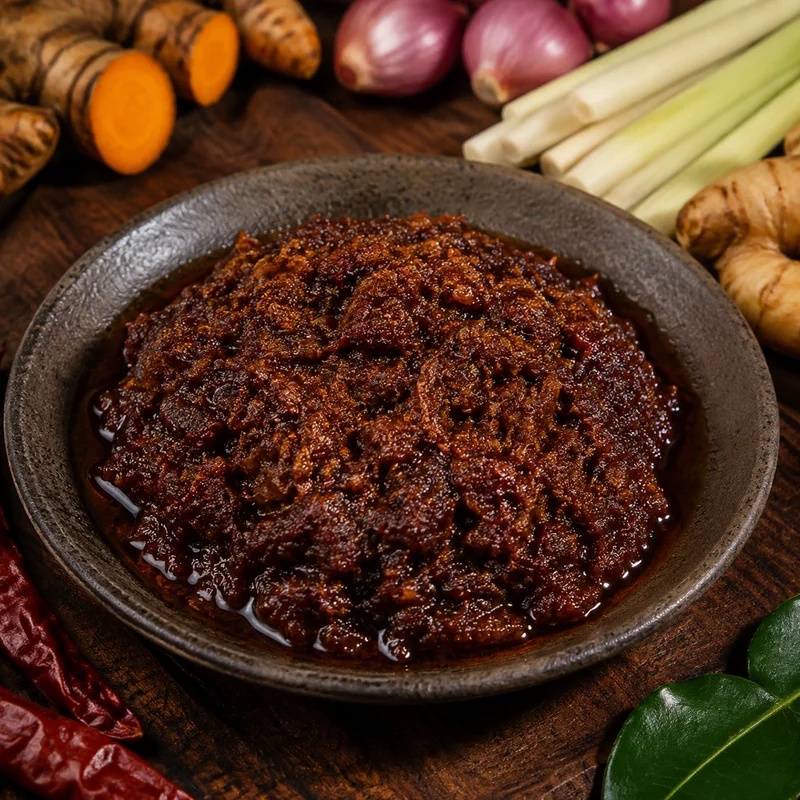
The dark, perfumed spice paste that makes a real Sumatran-style rendang: dried chiles soaked and blended with galangal, lemongrass, fresh turmeric and shallots, then fried slowly in coconut oil until it darkens and the oil breaks out. Toasting and grinding your own coriander, cumin and fennel is what separates this from a jarred paste. One batch makes enough for about three rendangs — cook it down, portion it, freeze it, and a legendary braise is a weeknight decision.
Ingredients
Dried Chile Base
- 12 large dried mild red chiles, such as guajillo or Kashmiri (about 1½ oz)
- 6 dried red árbol chiles, or more to taste
- 2 cups boiling water
Toasted Whole Spices
- 1 tbsp coriander seeds
- 1 tsp cumin seeds
- 1 tsp fennel seeds
- 1 tsp black peppercorns
- 4 whole cloves
- 1 star anise
- 1 inch cinnamon stick, preferably cassia, broken up
- 1/4 tsp freshly grated nutmeg
Fresh Aromatics
- 12 oz shallots, peeled and roughly chopped (about 2½ cups)
- 12 garlic cloves, peeled
- 3 oz fresh or frozen galangal, peeled and thinly sliced (about ⅔ cup)
- 1 oz fresh ginger, peeled and sliced
- 2 oz fresh turmeric, peeled and sliced, or 1 tbsp ground turmeric
- 4 lemongrass stalks, tough tops and outer layers removed, tender cores thinly sliced
- 1/4 cup raw macadamia nuts or blanched almonds (candlenut substitute)
For Frying & Finishing
- 1/2 cup coconut oil or neutral oil
- 6 makrut lime leaves, spines removed, very thinly sliced
- 2 tbsp tamarind concentrate, or 1 tbsp tamarind pulp dissolved in 2 tbsp hot water
- 1 tbsp palm sugar or dark brown sugar
- 2 tsp kosher salt
- 1 tsp shrimp paste (terasi or belacan), optional
Instructions
- Stem the dried chiles, tear them open and shake out most of the seeds. Toast them in a dry skillet over medium heat for 60–90 seconds per side, pressing them flat, just until they smell smoky and turn slightly pliable — do not let them blacken or the paste will turn bitter. Transfer to a bowl, cover with the 2 cups boiling water, weigh down with a small plate and soak 20 minutes.
- Wipe out the skillet and set it over medium-low heat. Add the coriander, cumin, fennel, peppercorns, cloves, star anise and cinnamon and toast, shaking constantly, for 2–3 minutes until the coriander turns a shade darker and the kitchen smells like a spice shop. Tip onto a plate to cool completely, then grind to a fine powder in a spice grinder or mortar with the nutmeg.
- Drain the chiles, reserving 1 cup of the soaking liquid. Combine the chiles in a blender with the shallots, garlic, galangal, ginger, turmeric, lemongrass, macadamia nuts and ½ cup of the reserved soaking liquid.
- Blend on high for 2–3 full minutes, stopping to scrape down the sides and adding soaking liquid a tablespoon at a time only if the blades stall. You want a thick, completely smooth purée with no fibrous threads of lemongrass or galangal — this is the single biggest difference between good and great rendang. A small blender jar or a food processor run for 5 minutes both work; just keep going until it is smooth.
- Heat the coconut oil in a wide 12-inch skillet or Dutch oven over medium heat until it shimmers. Scrape in the blended paste (it will spit — stand back and use a splatter screen). Stir in the ground toasted spices and the shrimp paste, if using.
- Fry the paste, stirring and scraping the bottom every minute or two, for 20–25 minutes. It will go from bright red-orange and wet, to a matte brick red at around 12 minutes, to a deep russet brown that pulls away from the pan in one mass with a slick of clear reddish oil pooling at the edges. That oil separating out (pecah minyak) is the finish line — if it starts sticking or smells scorched before then, drop the heat to medium-low.
- Stir in the sliced lime leaves, tamarind, palm sugar and salt and fry 2 minutes more, until the sugar dissolves and the lime leaves are fragrant. Taste carefully with a clean spoon: it should be intense, savoury, faintly sweet-sour and salty. Adjust salt and tamarind now.
- Cool completely in the pan. You will have about 2 cups. Pack into a clean jar with a thin film of coconut oil on top and refrigerate up to 3 weeks, or freeze in ⅔-cup portions (one portion per 2 lb of meat) for up to 6 months.
- To cook a rendang with one portion: brown 2 lb of cubed beef chuck or short rib, add ⅔ cup paste and fry together 2 minutes, then add one 13.5-oz can full-fat coconut milk, 1 cup water, 2 bruised lemongrass stalks and 3 lime leaves. Simmer uncovered, stirring every 15 minutes, for 2½–3 hours, until the liquid has cooked away and the meat is frying in its own dark oil and spice. Season with salt and a squeeze of lime and serve with steamed rice.
Chef's tips
- Frozen galangal (sold in blocks or slices at most Asian markets) is far better here than dried galangal powder, which tastes like sawdust. If you can only find powder, use 1 tablespoon and add it with the ground spices instead.
- Do not skip the 20-minute fry. Raw blended paste tastes harsh and thin; the long fry caramelises the shallot sugars and is what gives finished rendang its dark, roasted depth.
- Grind the whole spices only after they cool — grinding them warm makes the oils gum up the grinder and dulls the aroma.
- Toasted chiles that go bitter are the most common failure. Aim for fragrant and slightly darkened, not smoking, and pull them off the heat early if in doubt.
- Skip the shrimp paste for a vegetarian batch; the paste is excellent with jackfruit, mushrooms or waxy potatoes and eggs cooked the same way.
- Freeze portions flat in zip-top bags rather than in cubes — flat sheets thaw in minutes and can be snapped in half if you only want a small batch.
Nutrition (per serving, estimated)
148calories
2gprotein
10gcarbs
12gfat
Estimates only — values vary with brands and portions.
Made with Sprig
Toasted-Chile Rendang Paste (Bumbu Rendang) was created in Sprig — the AI chef that turns any craving into a complete recipe, plans your week, and shops with one smart list.
Free to start · 14-day Pro trial · cancel anytime
Not ready yet? Get the occasional recipe worth cooking — a couple a month at most.
You're on the list — check your inbox!
Unsubscribe anytime. Privacy Policy
More from Sprig Originals
French Onion Patty Melts on Rye
Dark Roux Seafood Gumbo with Quick Shrimp Stock

One-Skillet Blackened Cajun Chicken Pasta
Are you this recipe's original author or publisher? Report a problem