Sprig Originals's kitchen / Two-Ingredient Roti (Puffed Whole Wheat Flatbread)
Two-Ingredient Roti (Puffed Whole Wheat Flatbread)
 By Sprig Originals · cooked up in Sprig
Worked out from this recipe's ingredients. If you're cooking for an allergy, always read the full ingredient list.
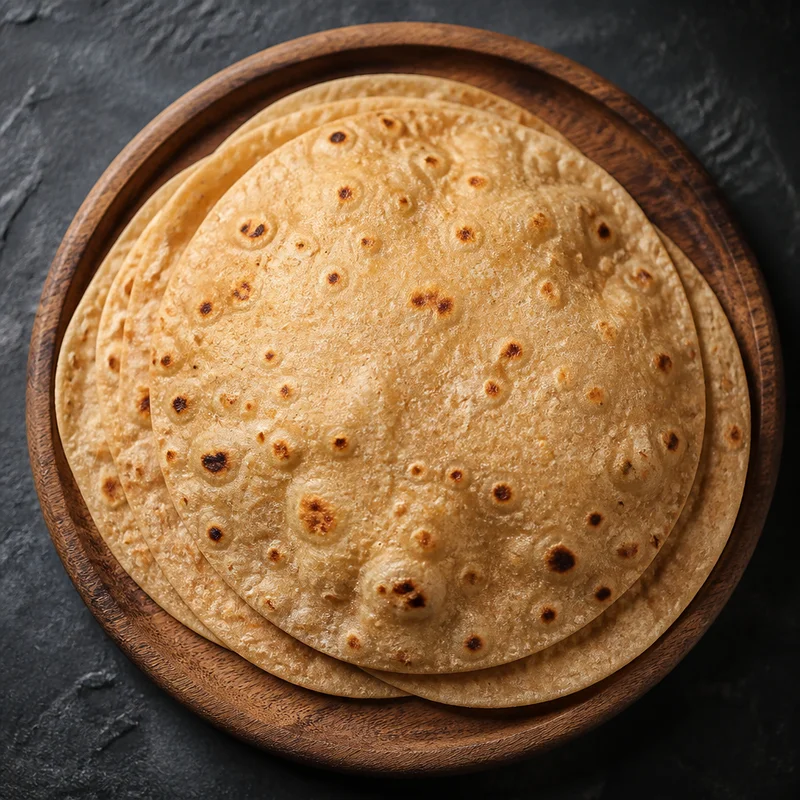
Nothing but atta and water becomes a stack of soft, blistered rotis. You'll knead a slack dough, rest it, roll thin circles, and cook them on a bone-dry skillet — then finish each one directly over the flame so it balloons into a steam pillow. Wrapped in a clean towel, they stay pliable for hours.
Ingredients
Dough
- 2 cups atta (Indian whole wheat flour), plus more for dusting
- 3/4 cup warm water, plus 2–4 tbsp more as needed
- 1/2 tsp fine salt (optional)
To finish
- 2 tbsp ghee or unsalted butter, melted (optional)
Instructions
- Put 2 cups atta (and salt, if using) in a wide bowl. Add 3/4 cup warm water in a steady stream while stirring with your fingers until the flour comes together in shaggy lumps. Add more water 1 tablespoon at a time — atta drinks a lot, and you want a dough that is noticeably softer than pizza dough, just barely tacky.
- Knead in the bowl or on an unfloured counter for 6–8 minutes, pressing with the heel of your hand and folding, until completely smooth and it springs back slowly when poked. If it sticks to your palm in wet patches, dust with 1 teaspoon flour; if it feels stiff, wet your hands and keep kneading.
- Smear the dough with 1/2 teaspoon ghee or oil, cover the bowl with a plate or damp towel, and rest 30 minutes at room temperature. This hydration rest is what lets the rotis roll thin without tearing — don't skip it.
- Set a cast-iron skillet, carbon steel pan, or tawa over medium-high heat and let it preheat 5 full minutes, completely dry (no oil). It's ready when a pinch of flour dropped on it browns in about 5 seconds.
- Knead the rested dough for 30 seconds, then divide into 8 pieces (about 55 g each). Roll each into a tight ball between your palms and keep them covered.
- Flatten one ball, dip both sides in dry atta, and roll into a 6–7 inch circle, rotating a quarter turn after every couple of passes and pressing with even, light strokes so the center doesn't get thicker than the edges. Aim for about 1.5 mm — thin enough to see the counter's texture through it. Brush off excess flour, which would otherwise burn on the pan.
- Lay the roti on the hot dry skillet. After 25–30 seconds the surface will look dry and a few small bubbles will rise — flip it. Cook the second side 40–50 seconds, until pale brown spots form and the roti starts to puff in patches.
- For the puff: using tongs, lift the roti off the pan and set it directly on a medium-high gas flame, first-cooked side down. Within 3–8 seconds it should balloon into a full dome; flip and give the other side 3–5 seconds, then remove. No gas stove? Leave the roti on the pan and press all over — especially the edges — with a folded kitchen towel or flat spatula for 10–15 seconds; the trapped steam will inflate it.
- Immediately brush the puffed roti with a little ghee if you like, and stack it in a clean kitchen towel inside a bowl or insulated container, folding the towel over completely. The stack steams itself soft — this is the difference between bakery-soft roti and a leathery one.
- Repeat with the remaining dough, adjusting the heat down slightly if the rotis are scorching before they puff or up if they're drying out without spotting. Serve warm, straight from the towel.
Chef's tips
- Atta is stone-ground durum whole wheat and is finer and thirstier than American whole wheat flour — it's the single biggest factor in soft roti. If you must substitute, use 1 3/4 cups regular whole wheat flour plus 1/4 cup all-purpose and add extra water.
- A dough that's too stiff is the usual reason rotis won't puff. It should feel like a soft earlobe; err wetter and dust with flour while rolling.
- Uneven thickness traps steam only in the thin spots. If your circles come out thick in the middle, ease up on pressure as your pin crosses the center.
- Never add oil to the pan while cooking — fat prevents the surface from sealing, and the roti will fry instead of inflate. Ghee goes on after.
- Make dough up to 24 hours ahead: refrigerate airtight, then let it sit out 30 minutes before rolling. Leftover cooked rotis reheat in 20 seconds on a dry hot pan, sprinkled with a few drops of water.
Nutrition (per serving, estimated)
231calories
8gprotein
37gcarbs
8gfat
Estimates only — values vary with brands and portions.
Made with Sprig
Two-Ingredient Roti (Puffed Whole Wheat Flatbread) was created in Sprig — the AI chef that turns any craving into a complete recipe, plans your week, and shops with one smart list.
Free to start · 14-day Pro trial · cancel anytime
Not ready yet? Get the occasional recipe worth cooking — a couple a month at most.
You're on the list — check your inbox!
Unsubscribe anytime. Privacy Policy
More from Sprig Originals
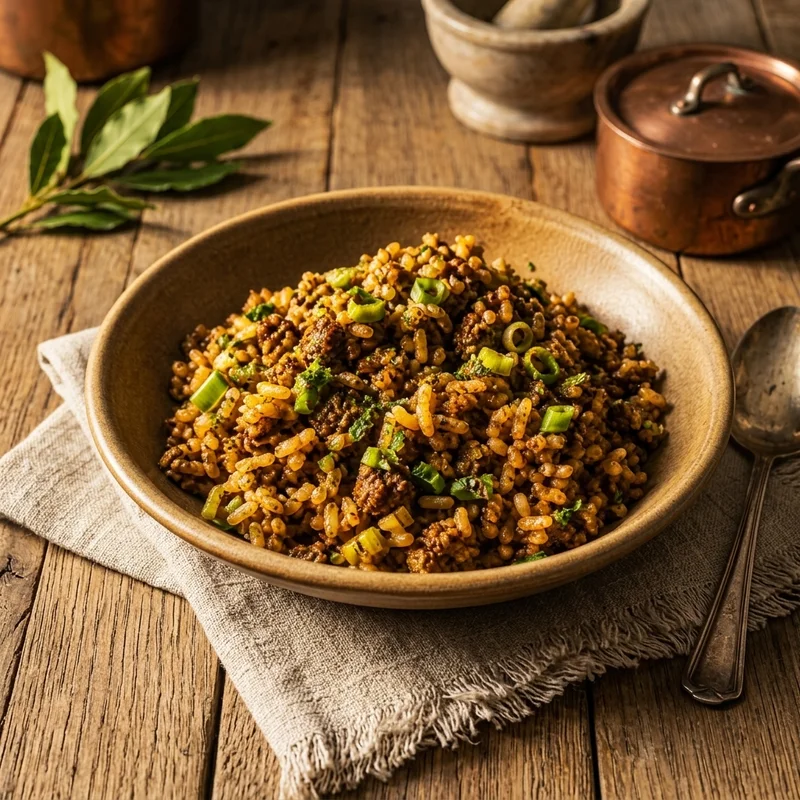
South Louisiana Rice Dressing (Dirty Rice)

French Onion Patty Melts on Rye

Dark Roux Seafood Gumbo with Quick Shrimp Stock
Are you this recipe's original author or publisher? Report a problem