Sprig Originals's kitchen / 30-Minute Sour Kimchi Stew with Pork Belly
30-Minute Sour Kimchi Stew with Pork Belly
 By Sprig Originals · cooked up in Sprig
Worked out from this recipe's ingredients. If you're cooking for an allergy, always read the full ingredient list.
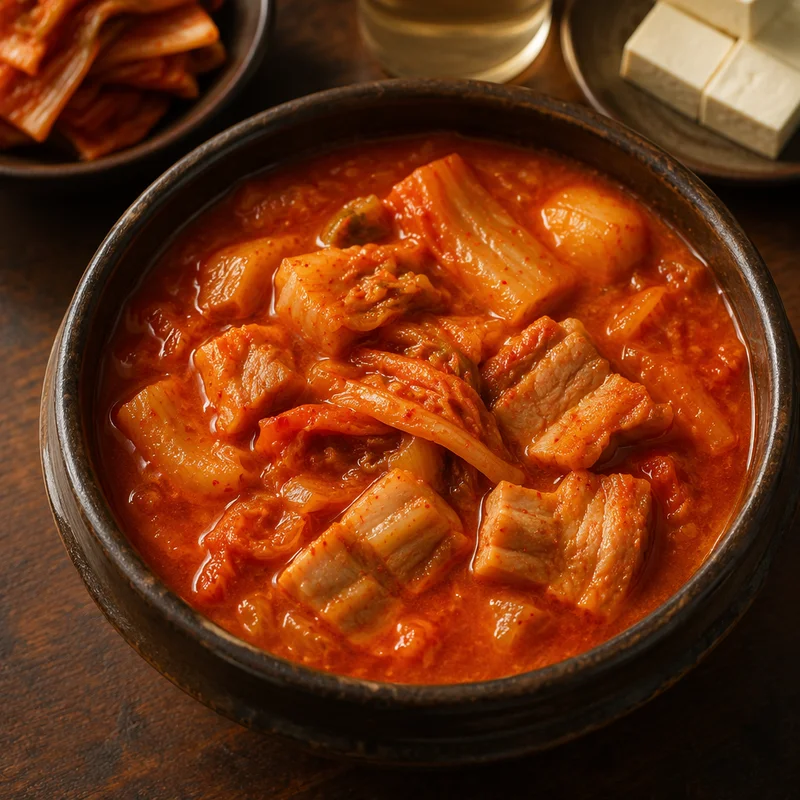
The whole point of a great kimchi jjigae is old kimchi — the sour, fizzy, past-its-prime stuff at the back of the fridge — plus every drop of its brine. Fry it in pork fat until the edges caramelize, then simmer with a little anchovy stock and soft tofu, and you get a stew that tastes like it cooked for hours in about 30 minutes. Serve with short-grain rice and, if you want a feast, a few slices of bulgogi on the side.
Ingredients
Stew Base
- 3 cups well-fermented (sour) napa cabbage kimchi, roughly chopped into 1-inch pieces
- 1/2 cup kimchi brine from the jar
- 12 oz skinless pork belly or pork shoulder, sliced 1/4-inch thick and cut into 1-inch strips
- 1 tbsp neutral oil
- 1 medium yellow onion, sliced 1/4-inch thick
- 4 cloves garlic, minced
- 1 tsp sugar
- 1 tbsp gochugaru (Korean red pepper flakes)
- 1 tbsp gochujang
- 1 tsp doenjang (Korean soybean paste), optional but recommended
- 1 tbsp soy sauce
- 3 cups anchovy-kelp stock or water (see tips)
- 14 oz soft or medium-firm tofu, cut into 1-inch slabs
- 3 scallions, cut into 2-inch lengths
- 1 tsp toasted sesame oil
- Salt or fish sauce, to taste
Optional Anchovy-Kelp Stock
- 4 cups water
- 10 dried anchovies, heads and guts removed
- 1 4-inch piece dried kelp (dashima/kombu)
To Serve
- 4 cups cooked short-grain white rice
- 1 lb thin-sliced marinated bulgogi, cooked (optional side)
Instructions
- If making stock, bring 4 cups water, the dried anchovies, and the kelp to a bare simmer in a saucepan over medium heat. Pull out the kelp after 10 minutes so it doesn't turn slimy, simmer the anchovies 5 minutes more, then strain. You'll need 3 cups; top up with water if short. (Plain water works too — the kimchi does most of the heavy lifting.)
- Taste your kimchi. It should be distinctly sour and softened, not fresh and crunchy. If it's too young, stir it with its brine and 1 teaspoon sugar in a bowl and let it sit at room temperature while you prep everything else. Chop it into 1-inch pieces and reserve 1/2 cup of brine from the jar.
- Heat 1 tablespoon neutral oil in a heavy 4-quart pot or Dutch oven over medium-high. Add the pork belly in a single layer and cook without stirring for 3 minutes, then toss and cook 3 to 4 minutes more until the edges are browned and a good slick of fat has rendered.
- Add the onion and garlic and cook 2 minutes, stirring, until fragrant. Add the chopped kimchi and 1 teaspoon sugar and stir-fry for 5 to 6 minutes over medium-high heat — this is the most important step. The kimchi should darken, lose its raw smell, and start sticking and caramelizing on the bottom of the pot.
- Push the kimchi to one side, add the gochugaru, gochujang, and doenjang to the fat in the cleared space, and stir for 30 seconds to bloom the chile in the oil. Stir everything together with the soy sauce.
- Pour in the 1/2 cup reserved kimchi brine and scrape the bottom of the pot to lift all the browned bits. Add the 3 cups stock, bring to a boil, then reduce to a steady simmer. Cover partially and cook 15 minutes, until the kimchi is fully tender and the broth turns deep red-orange.
- Taste and adjust: it should be sour, salty, and a little sweet. Add salt or a splash of fish sauce if flat, or a pinch more sugar if it's aggressively sour.
- Nestle the tofu slabs into the stew, spooning broth over them. Simmer gently 5 minutes without stirring so the tofu stays intact and heats through.
- Scatter the scallions over the top, drizzle with the sesame oil, and simmer 1 minute more. Bring the pot to the table and serve straight from it, with bowls of hot short-grain rice and bulgogi on the side if you're going big.
Chef's tips
- Kimchi that's been open in the fridge for a month or more is the goal — sour, deflated, fizzy when you open the jar. Fresh supermarket kimchi makes a thin, one-note stew. If yours is young, leave the jar on the counter for 2 to 3 days to speed up fermentation.
- Never rinse the kimchi and never pour off the brine. That liquid is concentrated fermented flavor and it's what shortcuts a long simmer.
- No pork belly? Use pork shoulder, thick-cut bacon (skip the added oil), or a 6-ounce can of drained tuna added in the last 5 minutes for the classic canned-tuna variation.
- For a richer pot, crack an egg into the simmering broth in the final 3 minutes and let it poach, or add a handful of enoki mushrooms with the tofu.
- Leftovers are better on day two. Reheat gently and add a splash of water, since the stew thickens as it sits. It keeps 4 days refrigerated.
Nutrition (per serving, estimated)
847calories
43gprotein
87gcarbs
38gfat
Estimates only — values vary with brands and portions.
Made with Sprig
30-Minute Sour Kimchi Stew with Pork Belly was created in Sprig — the AI chef that turns any craving into a complete recipe, plans your week, and shops with one smart list.
Free to start · 14-day Pro trial · cancel anytime
Not ready yet? Get the occasional recipe worth cooking — a couple a month at most.
You're on the list — check your inbox!
Unsubscribe anytime. Privacy Policy
More from Sprig Originals
Dark Roux Seafood Gumbo with Quick Shrimp Stock
Chilled Watermelon Gazpacho with Cucumber-Chile Relish
French Onion Patty Melts on Rye
Are you this recipe's original author or publisher? Report a problem