Sprig Originals's kitchen / Pounded-from-Scratch Thai Red Curry Paste
Pounded-from-Scratch Thai Red Curry Paste
 By Sprig Originals · cooked up in Sprig
Worked out from this recipe's ingredients. If you're cooking for an allergy, always read the full ingredient list.
The paste that every red curry lives or dies by, built the long way: dried chilies soaked until supple, galangal and lemongrass sliced paper-thin against the grain, and everything pounded in a mortar until it turns glossy and almost fudgy. It tastes nothing like a can — brighter, more floral, deeply chili-red rather than orange. Makes about 1 cup, enough for four curries that each serve four, and it freezes beautifully.
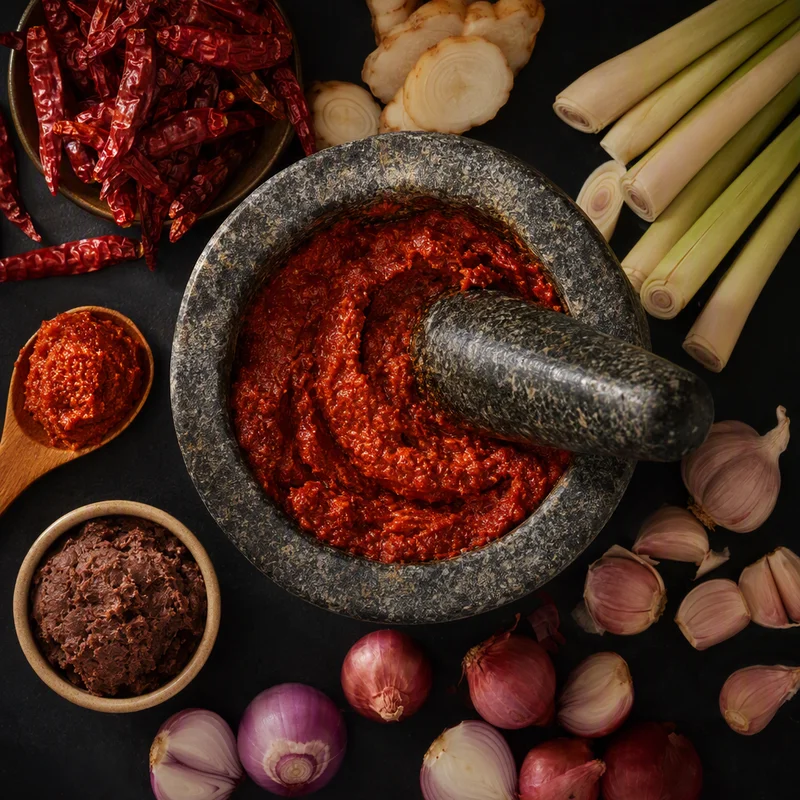
Ingredients
Chilies
- 10 large dried red chilies, such as guajillo or Thai long dried chilies (about 1 oz)
- 6 small dried red Thai chilies (prik haeng), or more to taste
- 1 tsp kosher salt
Toasted Spices
- 1 tbsp coriander seeds
- 1 tsp cumin seeds
- 1/2 tsp white peppercorns
- 3 green cardamom pods, seeds only (optional)
Fresh Aromatics
- 2 fat lemongrass stalks
- 2 tbsp thinly sliced fresh or frozen galangal
- 1 tsp finely grated makrut lime zest, or zest of 1 regular lime
- 1/4 cup chopped cilantro roots and lower stems (about 1 bunch worth)
- 1/3 cup chopped Asian shallots or regular shallot
- 10 garlic cloves, chopped
Seasoning
- 1 tbsp Thai shrimp paste (kapi)
- 1 tsp neutral oil, only if using a food processor
To Cook It Into a Curry (Optional, Serves 4)
- 1/4 cup curry paste from this recipe
- 1 can (13.5 oz) full-fat coconut milk, unshaken
- 1 lb boneless chicken thighs, sliced, or peeled shrimp
- 1 1/2 tbsp fish sauce
- 2 tsp palm sugar or light brown sugar
- 3 makrut lime leaves, torn
- 1 cup Thai basil leaves
Instructions
- Snip the stems off all the dried chilies, slit them open with scissors, and shake out and discard most of the seeds — this is what keeps the paste red and fragrant rather than bitter and blisteringly hot. Tear the large chilies into 1-inch pieces.
- Toast the torn chilies in a dry skillet over medium-low heat for 2 to 3 minutes, tossing constantly, just until they smell warm and smoky. Do not let them darken or scorch. Tip them into a bowl, cover with hot water, and soak 20 to 30 minutes until fully soft and leathery.
- Meanwhile, toast the coriander seeds in the same dry skillet over medium-low heat for 2 minutes until fragrant and one shade darker; transfer to a plate. Toast the cumin for 45 seconds and the white peppercorns and cardamom seeds for 30 seconds, keeping each separate as they burn at different rates. Cool completely, then grind to a fine powder in a spice grinder or mortar. Set aside.
- Prep the fibrous aromatics obsessively — this is the whole job. Trim the lemongrass to the pale bottom 4 inches, peel off the dry outer layers, and slice into paper-thin coins (you want about 1/3 cup). Slice the galangal as thin as you possibly can, then chop it fine. Scrub the cilantro roots well and chop fine.
- Drain the chilies, squeeze them dry, and chop coarsely. Combine chilies and the 1 teaspoon salt in a heavy granite mortar and pound with a rhythmic, firm motion for 4 to 5 minutes, scraping down the sides, until they break into a coarse rough pulp.
- Add ingredients in hardest-to-softest order, pounding each fully into the mass before adding the next: lemongrass (3 to 4 minutes), galangal (2 minutes), lime zest, cilantro root (2 minutes), then garlic and shallot (3 minutes). By now you should have a thick, cohesive paste with no visible fibers. Total pounding time is 15 to 20 minutes.
- Pound in the ground toasted spices, then the shrimp paste, working until the paste is uniform, glossy, and deep brick red. It should hold a peak on the pestle. Taste a fleck on the tip of a spoon: it should be sharply aromatic and salty, not raw-garlicky.
- Food processor shortcut: combine everything at once with the neutral oil and 1 to 2 tablespoons of the chili soaking liquid and process 4 to 6 minutes, scraping down every minute, until as smooth as the machine will manage. It will be slightly looser and less fragrant than a pounded paste but still far better than store-bought.
- Transfer to a clean jar, press the surface flat, and refrigerate up to 3 weeks or freeze in ice cube trays (each cube is about 1 tablespoon) for up to 6 months.
- To cook a curry: spoon the thick coconut cream from the top of the unshaken can into a wide pan over medium heat and simmer 3 to 5 minutes until it splits and you see clear oil pooling. Add 1/4 cup paste and fry, stirring, for 3 to 4 minutes until it darkens, smells sweet, and the oil turns red.
- Add the chicken and toss to coat for 2 minutes, then pour in the remaining coconut milk plus 1/2 cup water. Add fish sauce, palm sugar, and lime leaves and simmer 10 to 12 minutes (2 to 3 minutes for shrimp) until the sauce is slightly reduced and the meat is cooked through. Off the heat, stir in the Thai basil and serve with jasmine rice.
Chef's tips
- The pounding order matters more than the pounding force: fibrous things first while there's still grit and salt to shred them, soft wet things last so they don't cushion the blows.
- No galangal? Frozen sliced galangal from an Asian market is genuinely good and better than the dried chips. Ginger is not a substitute — it changes the dish's identity — but if you must, use half the amount and add an extra teaspoon of lime zest.
- For a vegan paste, swap the shrimp paste for 2 teaspoons white miso plus 1 teaspoon soy sauce, and season the finished curry with light soy or salt instead of fish sauce.
- Cilantro roots are usually trimmed off in US supermarkets. Use the bottom 3 inches of the stems instead — chop them very fine and use a generous 1/4 cup.
- Always fry the paste in split coconut cream or a few tablespoons of oil before adding liquid. Unbloomed paste tastes flat and raw no matter how long the curry simmers.
- Halve the small Thai chilies for a medium-heat paste; the large mild chilies are there for color and fruitiness, so don't cut those.
Nutrition (per serving, estimated)
18calories
1gprotein
3gcarbs
1gfat
Estimates only — values vary with brands and portions.
Made with Sprig
Pounded-from-Scratch Thai Red Curry Paste was created in Sprig — the AI chef that turns any craving into a complete recipe, plans your week, and shops with one smart list.
Free to start · 14-day Pro trial · cancel anytime
Not ready yet? Get the occasional recipe worth cooking — a couple a month at most.
You're on the list — check your inbox!
Unsubscribe anytime. Privacy Policy
More from Sprig Originals
French Onion Patty Melts on Rye
Dark Roux Seafood Gumbo with Quick Shrimp Stock
One-Skillet Blackened Cajun Chicken Pasta
Are you this recipe's original author or publisher? Report a problem