Sprig Originals's kitchen / Vietnamese Caramel-Braised Pork Spare Ribs
Vietnamese Caramel-Braised Pork Spare Ribs
 By Sprig Originals · cooked up in Sprig
Worked out from this recipe's ingredients. If you're cooking for an allergy, always read the full ingredient list.
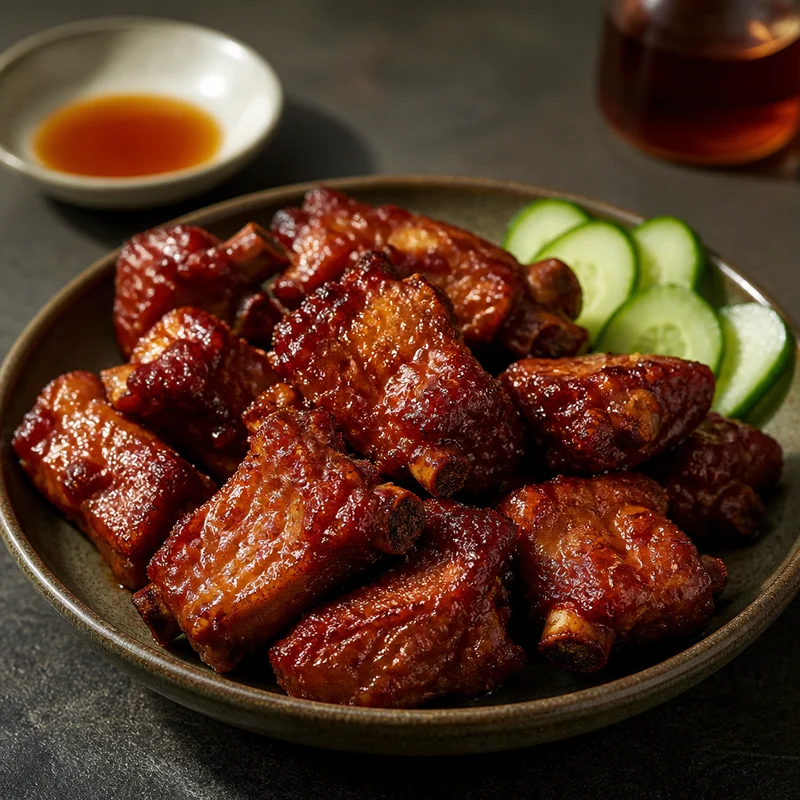
Cut-up spare ribs braised in a homemade Vietnamese caramel — sugar cooked to a deep amber, then bloomed with fish sauce — until the sauce reduces to a sticky, savory-sweet glaze that clings to every rib. This is the single most useful technique in a Vietnamese kitchen: nước màu (caramel water) gives braises their mahogany color and bittersweet backbone. Restaurant versions run past $20 a plate; the whole thing costs a few dollars at home and rewards you with a pot of rice-flattening sauce.
Ingredients
Pork and marinade
- 3 lb pork spare ribs, cut crosswise into 1 1/2- to 2-inch riblets
- 1 tbsp kosher salt (for blanching)
- 3 tbsp fish sauce
- 4 cloves garlic, finely minced
- 2 shallots, finely minced
- 1 tbsp light brown sugar
- 1 tsp coarsely ground black pepper
Caramel sauce (nước màu)
- 1/3 cup granulated sugar
- 2 tbsp water
- 1/3 cup hot water
- 2 tbsp fish sauce
Braise
- 1 tbsp neutral oil
- 1 1/2 cups unsweetened coconut water (or plain water)
- 2 scallions, white parts smashed, greens sliced for garnish
- 1 Thai chili, split (optional)
- 1/2 tsp coarsely ground black pepper, plus more to finish
To serve
- 4 cups hot steamed jasmine rice
- 1 cucumber, sliced
- cilantro sprigs
Optional dipping salt
- 1 tsp kosher salt
- 1/2 tsp black pepper
- 1 lime, cut into wedges
Instructions
- Ask the butcher to run a rack of spare ribs through the band saw crosswise into 1 1/2- to 2-inch pieces (this cut is often labeled riblets or 'cut for braising'). At home, separate the pieces and trim any loose flaps of fat.
- Put the ribs in a large pot, cover with cold water by 2 inches, add the 1 tablespoon salt, and bring to a boil over high heat. Boil 4 to 5 minutes, skimming the gray foam. Drain, rinse each piece under cold running water to wash off the scum, and pat very dry. This 5-minute step is what makes the finished sauce glossy instead of cloudy.
- Toss the dry ribs with 3 tablespoons fish sauce, the garlic, shallots, brown sugar, and 1 teaspoon black pepper. Let marinate at room temperature 20 minutes (or refrigerate up to overnight).
- Make the caramel: in a dry, heavy 5- to 6-quart Dutch oven, stir together the granulated sugar and 2 tablespoons water. Set over medium heat and cook without stirring, swirling the pan occasionally, 5 to 8 minutes. The syrup will bubble, thicken, turn straw, then honey, then the color of an old penny with wisps of smoke just starting — pull it off the heat there, at about 340–350°F. One shade darker is bitter.
- Off the heat, stand back and pour in the 1/3 cup hot water — it will erupt in steam. Swirl until smooth, then stir in 2 tablespoons fish sauce. Return to low heat for 30 seconds to dissolve any hardened sugar. You now have nước màu: dark, bittersweet, and thin.
- Push the caramel to one side, add the oil, raise the heat to medium-high, and add the ribs in a single layer along with all their marinade. Sear and turn for 6 to 8 minutes, until the pieces are lacquered mahogany on all sides.
- Add the coconut water, the smashed scallion whites, the chili if using, and 1/2 teaspoon black pepper. The liquid should come about two-thirds up the ribs. Bring to a boil, then reduce to the barest simmer, cover, and cook 55 to 65 minutes, stirring every 20 minutes, until a rib gives easily when pressed with tongs and the meat pulls back from the bone.
- Uncover, raise the heat to medium, and reduce, turning the ribs often, 12 to 18 minutes, until the sauce is syrupy and coats the back of a spoon and the ribs look glazed rather than soupy. It should be sticky, not dry — stop while about 1/2 cup of thick sauce still pools in the pot.
- Taste the sauce: it should be salty-sweet with a faint caramel bitterness. Adjust with a splash of fish sauce for salt or a teaspoon of sugar for roundness. Fish out the scallion whites.
- Pile the ribs over hot jasmine rice, spoon the sauce generously over the rice, and scatter with scallion greens and cilantro. Serve with cucumber slices and, if you like, a small dish of salt and pepper with lime wedges for squeezing and dipping.
Chef's tips
- Judge the caramel by color and smell, not the clock: penny-brown with the first hint of smoke is perfect. If it goes black or smells acrid, dump it, wipe the pot, and start over — 1/3 cup of sugar is cheap and bitter caramel ruins the whole braise.
- Adding water to hot caramel spatters violently. Use hot (not cold) water, hold the pot handle, keep your face away, and have the lid nearby.
- Make a double batch of caramel and keep the extra in a jar at room temperature for months; a tablespoon gives instant color and depth to thịt kho, braised chicken, or fish.
- No band-sawed ribs? Buy a rack of St. Louis spare ribs, cut between the bones into individual ribs, then have the butcher (or a heavy cleaver and a firm hand) halve the long ones. Country-style pork ribs cut into 2-inch chunks also work.
- This is better the next day. Cool, refrigerate up to 4 days, then reheat gently with a splash of water to loosen the glaze.
- For a fattier, richer pot in the southern style, throw in 4 halved hard-boiled eggs during the last 15 minutes of the covered braise so they stain brown and soak up the sauce.
Nutrition (per serving, estimated)
1180calories
52gprotein
135gcarbs
49gfat
Estimates only — values vary with brands and portions.
Made with Sprig
Vietnamese Caramel-Braised Pork Spare Ribs was created in Sprig — the AI chef that turns any craving into a complete recipe, plans your week, and shops with one smart list.
Free to start · 14-day Pro trial · cancel anytime
Not ready yet? Get the occasional recipe worth cooking — a couple a month at most.
You're on the list — check your inbox!
Unsubscribe anytime. Privacy Policy
More from Sprig Originals
Are you this recipe's original author or publisher? Report a problem