Sprig Originals's kitchen / Small-Batch Cinchona Tonic Syrup & Homemade Tonic Water
Small-Batch Cinchona Tonic Syrup & Homemade Tonic Water
 By Sprig Originals · cooked up in Sprig
Worked out from this recipe's ingredients. If you're cooking for an allergy, always read the full ingredient list.
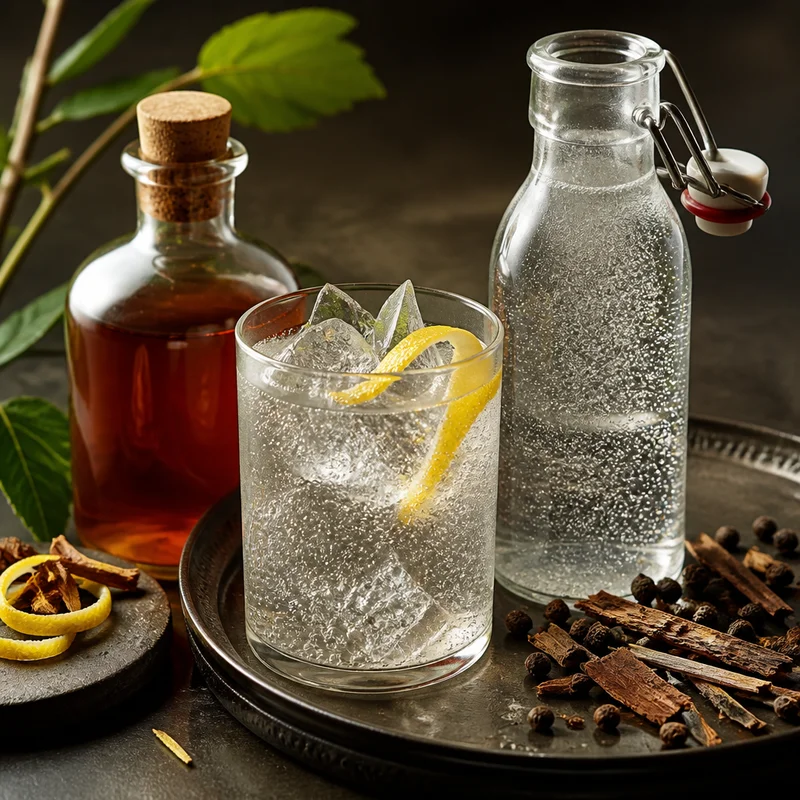
Bottled tonic is basically sugar, bubbles and a whisper of quinine. Make it yourself and it becomes something else entirely: a citrus-and-lemongrass decoction of cinchona bark, tart with citric acid, faintly bitter and floral, that turns plain seltzer into a tonic water with real snap. One saucepan, about an hour, and enough syrup for sixteen tall glasses. Zero alcohol — the bark is simmered in water, not tinctured in spirits.
Ingredients
Cinchona decoction
- 4 cups filtered water
- 1/4 cup cut or chipped cinchona bark (about 20 g) — not powdered
- 1 stalk lemongrass, tough top trimmed, bruised and sliced
- 2 lemons, zest peeled in wide strips
- 2 limes, zest peeled in wide strips
- 1 orange, zest peeled in wide strips
- 1 tsp whole allspice berries
- 1/2 tsp coriander seeds, lightly crushed
- 1 tsp dried culinary lavender (optional)
- 1/4 tsp fine sea salt
Finishing the syrup
- 2 cups granulated sugar (adjust to match strained liquid volume)
- 1 tbsp citric acid
- 2 tbsp fresh lime juice
- 1 tbsp light agave nectar (optional, for body)
To serve (per glass)
- 1 oz tonic syrup (2 tbsp)
- 5 oz cold seltzer or club soda
- 1 wedge lime or a strip of grapefruit peel
- ice cubes
Instructions
- Read this first: cinchona bark contains quinine, and quinine is a drug as well as a flavor. Use cut/chipped bark in the quantity given, never more, and treat 1 oz of finished syrup as one serving. Skip this recipe if you are pregnant, nursing, taking heart or blood-thinning medication, or have ever reacted badly to quinine.
- Combine the 4 cups water, cinchona bark, lemongrass, lemon, lime and orange peels, allspice, coriander, lavender (if using) and salt in a 3-quart non-reactive saucepan. Bring to a bare boil over medium-high heat, then immediately drop to low so the liquid barely trembles — about 200°F.
- Simmer uncovered at that low bubble for 20 minutes. The liquid will turn cloudy and reddish-brown and smell like citrus peel and old-fashioned bitters.
- Kill the heat, cover, and let everything steep 20 minutes more as it cools. Do not walk away for an hour — over-steeping pushes the bitterness past pleasant and increases quinine extraction.
- Strain through a fine-mesh sieve into a bowl, pressing gently on the solids. Discard the spent bark and peels.
- Now strain again for clarity — this is the step that separates good tonic from gritty tonic. Line the sieve with a double layer of damp cheesecloth or a paper coffee filter set in a funnel and let the liquid drip through. It's slow (10–15 minutes per filter) and you may need two filters. Some fine sediment will remain; that's normal.
- Measure the strained liquid. You should have roughly 2 cups. Return it to the clean saucepan and add an equal volume of granulated sugar (2 cups sugar for 2 cups liquid). Warm over medium-low, stirring, just until the sugar fully dissolves — 3 to 4 minutes. Do not let it boil.
- Off the heat, stir in the citric acid, lime juice, and agave if using. Taste on a spoon: it should be assertively sweet, sharply tart, and finish with a clean bitter edge. Add citric acid 1/4 teaspoon at a time if it tastes flabby.
- Cool to room temperature, then funnel into a clean glass bottle or jar. Refrigerate at least 2 hours before using; the flavors settle and knit as it chills. Keeps 3 weeks refrigerated.
- To build a glass: fill a highball with ice, pour in 1 oz syrup, top with 5 oz cold seltzer, and stir once from the bottom with a bar spoon to combine without killing the bubbles. Garnish with a lime wedge or an expressed strip of grapefruit peel.
- Adjust to taste — 3/4 oz syrup to 5 oz seltzer gives you a dry, European-style tonic; a full 1 1/2 oz makes a sweeter, softer soda that kids and quinine skeptics tend to prefer.
Chef's tips
- Buy cut or chipped cinchona bark, not powder. Powdered bark is nearly impossible to filter out, extracts far more quinine, and leaves a chalky texture — it's the single most common reason homemade tonic goes wrong. Look for it from herbal apothecaries or online spice merchants labeled 'cinchona succirubra' or 'red cinchona.'
- Your syrup will glow blue-violet under a black light. So will the finished drink. It's the quinine fluorescing and it's a genuinely fun party trick.
- The cloudiness in homemade tonic is a feature, not a flaw — commercial tonic is filtered to invisibility. If you want it clearer, refrigerate the strained decoction overnight before adding sugar and pour off the liquid from the sediment.
- For sharper carbonation, chill the syrup and seltzer separately to 38°F before mixing, and pour the seltzer down the side of a tilted glass. Warm syrup flattens bubbles on contact.
- The same syrup makes an excellent bitter lemon soda: swap the citric acid down to 2 teaspoons and add 1 tablespoon of finely grated lemon zest to the finished warm syrup, steeping 10 minutes before bottling.
- Freeze leftover syrup in an ice cube tray if you won't finish the bottle in three weeks; one cube plus seltzer is roughly one drink.
Nutrition (per serving, estimated)
52calories
0gprotein
14gcarbs
0gfat
Estimates only — values vary with brands and portions.
Made with Sprig
Small-Batch Cinchona Tonic Syrup & Homemade Tonic Water was created in Sprig — the AI chef that turns any craving into a complete recipe, plans your week, and shops with one smart list.
Free to start · 14-day Pro trial · cancel anytime
Not ready yet? Get the occasional recipe worth cooking — a couple a month at most.
You're on the list — check your inbox!
Unsubscribe anytime. Privacy Policy
More from Sprig Originals
French Onion Patty Melts on Rye
Dark Roux Seafood Gumbo with Quick Shrimp Stock
One-Skillet Blackened Cajun Chicken Pasta
Are you this recipe's original author or publisher? Report a problem