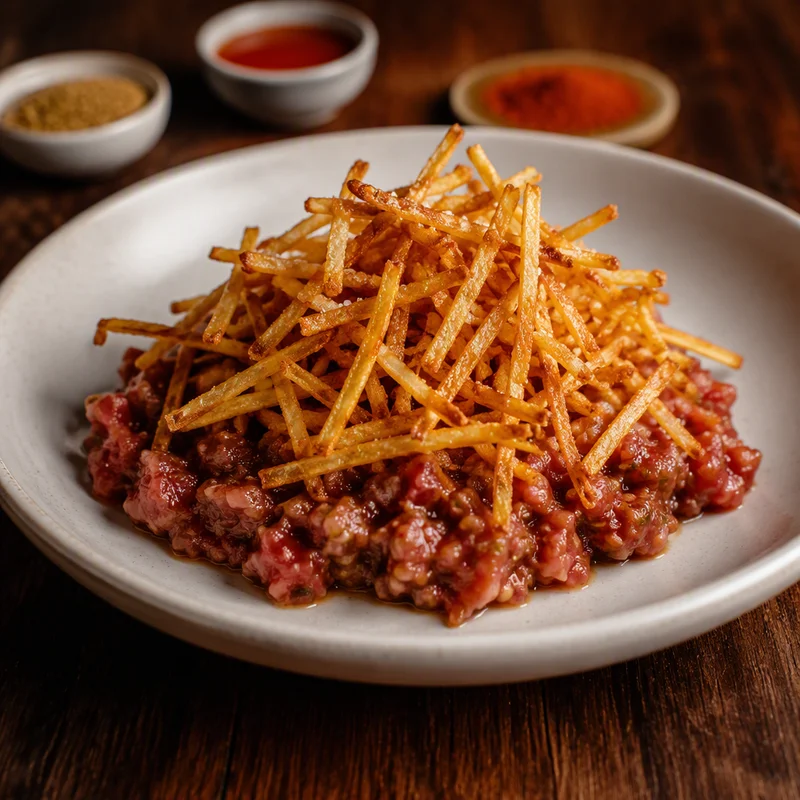
Hand-Chopped Beef Tartare with Crispy Potato Strings
 By Sprig Originals · cooked up in Sprig
An ice-cold tartare of hand-chopped beef tenderloin seasoned the Southern way — smoked paprika, a splash of vinegary hot sauce, whole-grain mustard and sweet pickle relish — under a haystack of shoestring potatoes fried until they shatter. The whole point is temperature and texture: the beef never warms up, the knife does all the work (no grinder, no food processor), and the potatoes go on at the very last second so they're still crackling when the first cracker hits the plate. Restaurant versions of this run about $25 for a few ounces; at home the money goes entirely into one beautiful, very fresh piece of tenderloin.
Ingredients
- 12 oz center-cut beef tenderloin, trimmed of all fat and silverskin
- 1/2 tsp kosher salt
- 1/4 tsp freshly cracked black pepper
- 2 tbsp shallot, minced very fine
- 1 tbsp cornichons or bread-and-butter pickles, minced
- 1 tbsp whole-grain mustard
- 2 tsp Worcestershire sauce
- 1 1/2 tsp vinegary Louisiana-style hot sauce
- 1 tbsp extra-virgin olive oil
- 1/2 tsp smoked paprika
- 1 tbsp chives, thinly sliced
- 2 tsp flat-leaf parsley, finely chopped
- 1 tsp fresh lemon juice
- 1/3 cup mayonnaise (Duke's if you have it)
- 2 tbsp whole buttermilk
- 1 small clove garlic, grated on a microplane
- 1/4 tsp smoked paprika
- 1 pinch kosher salt
- 1 large russet potato (about 10 oz)
- 4 cups peanut or vegetable oil, for frying
- 1/2 tsp fine sea salt
- 4 egg yolks, or 4 quail egg yolks (optional)
- Flaky sea salt
- Saltine crackers, grilled bread or thin toasts
- 1 very sharp chef's knife
- 1 metal bowl set inside a larger bowl of ice
Instructions
- Source the beef the day you plan to serve it: ask the butcher for a center-cut piece of tenderloin from a whole trimmed loin, tell them it is for tartare, and ask them to cut it fresh from the middle of the muscle rather than sell you a pre-cut steak that has been sitting on a tray. At home, keep it in the coldest part of the fridge (35–38°F) until the moment you cut it.
- Set up your cold station. Put a metal mixing bowl, your cutting board (if it fits), and the knife blade in the freezer for 15 minutes. Fill a large bowl with ice and a splash of water, and nest a second metal bowl inside it — this is where the chopped beef will live.
- Fry the potato strings first so they're done and the kitchen is calm. Peel the russet and cut it into the thinnest possible matchsticks: use the fine julienne blade of a mandoline, or slice the potato into 1/16-inch planks and stack-cut them into threads no thicker than a matchstick. Rinse the strings in two changes of cold water until the water runs clear, then dry them aggressively between clean towels — wet potatoes will not crisp.
- Heat the frying oil in a heavy 4-quart pot to 340°F. Fry the potatoes in 3 or 4 small batches, stirring constantly with a spider or fork to keep them from welding together, 2 to 3 minutes per batch, until pale gold and no longer bubbling hard. Lift onto a paper-towel-lined tray, salt lightly while hot, and let them cool uncovered. They will crisp further as they sit. Keep at room temperature, loosely tented, for up to 3 hours.
- Whisk the aioli: mayonnaise, buttermilk, grated garlic, smoked paprika and a pinch of salt. It should be loose enough to spoon and streak across a plate — thin with a teaspoon more buttermilk if needed. Refrigerate.
- In a small bowl, stir together the shallot, minced pickles, whole-grain mustard, Worcestershire, hot sauce, olive oil, smoked paprika, chives, parsley and lemon juice. Chill this too. Doing it now means the beef spends almost no time out of the cold.
- Take the beef out of the fridge. Pat it completely dry and, working on the chilled board, slice it against the grain into 1/4-inch planks. Stack two or three planks, cut them into 1/4-inch batons, then turn the batons and cut across into 1/4-inch dice. Finally, run the knife through the pile 10 to 15 times in a rocking motion until the pieces are roughly 1/8 inch — you want distinct grains of beef, not paste. Work fast; the whole cut should take under 8 minutes. Scrape the beef into the bowl set over ice as you go.
- Season the beef: add the salt and cracked pepper, then fold in the chilled seasoning base with a rubber spatula using no more than 15 gentle strokes. Overmixing bruises the meat and turns it gluey. Taste a small pinch and adjust with more hot sauce, lemon or salt — it should read bright, smoky and clearly salted, since the potatoes and crackers will mute it.
- Plate immediately. Streak or dollop the buttermilk aioli onto four chilled plates. Pack the tartare into a 3-inch ring mold or a lightly oiled 1/2-cup measure and unmold onto each plate (about 1/3 cup per person), or spoon it into a loose quenelle. If using egg yolks, make a shallow well in the center of each portion and slip in a yolk.
- Finish with flaky sea salt, a final grind of black pepper, and a generous tangle of the potato strings over and around the beef — do this at the table if you can, and serve within a minute or two with saltines or hot grilled bread. Tell people to break the yolk and mix as they go.
Chef's tips
- Freshness beats grade here. A same-day-cut piece of well-handled tenderloin from a butcher you trust is safer and tastes cleaner than an expensive steak of unknown age. If the beef smells sour or looks gray-brown all the way through, do not serve it raw.
- A 20-minute stint in the freezer firms the tenderloin just enough to cut cleanly. Aim for firm at the edges but yielding in the center — frozen solid is impossible to dice, and fully soft beef smears.
- Never use a food processor or grinder. Grinding ruptures the muscle fibers, releases liquid, and gives you a wet paste instead of the loose, glistening texture that makes tartare worth the effort.
- Fry the potato strings up to 3 hours ahead but never refrigerate them — cold, humid air makes them limp. If they soften, re-crisp in a 300°F oven for 4 minutes and re-salt.
- Raw beef and raw egg yolk carry some risk; skip both for anyone pregnant, very young, elderly or immunocompromised. Pasteurized shell eggs are widely available and work perfectly for the yolk.
- Good swaps: a spoonful of chopped pickled okra or pickled green tomato for the cornichons, or a few dashes of liquid smoke (a scant 1/8 teaspoon, no more) in place of the smoked paprika for a deeper barbecue note.
Nutrition (per serving, estimated)
Made with Sprig
Hand-Chopped Beef Tartare with Crispy Potato Strings was created in Sprig — the AI chef that turns any craving into a complete recipe, plans your week, and shops with one smart list.
More from Sprig Originals


Are you this recipe's original author or publisher? Report a problem