Sprig Originals's kitchen / Spaghetti Pomodoro with San Marzano Tomatoes
Spaghetti Pomodoro with San Marzano Tomatoes
 By Sprig Originals · cooked up in Sprig
Worked out from this recipe's ingredients. If you're cooking for an allergy, always read the full ingredient list.
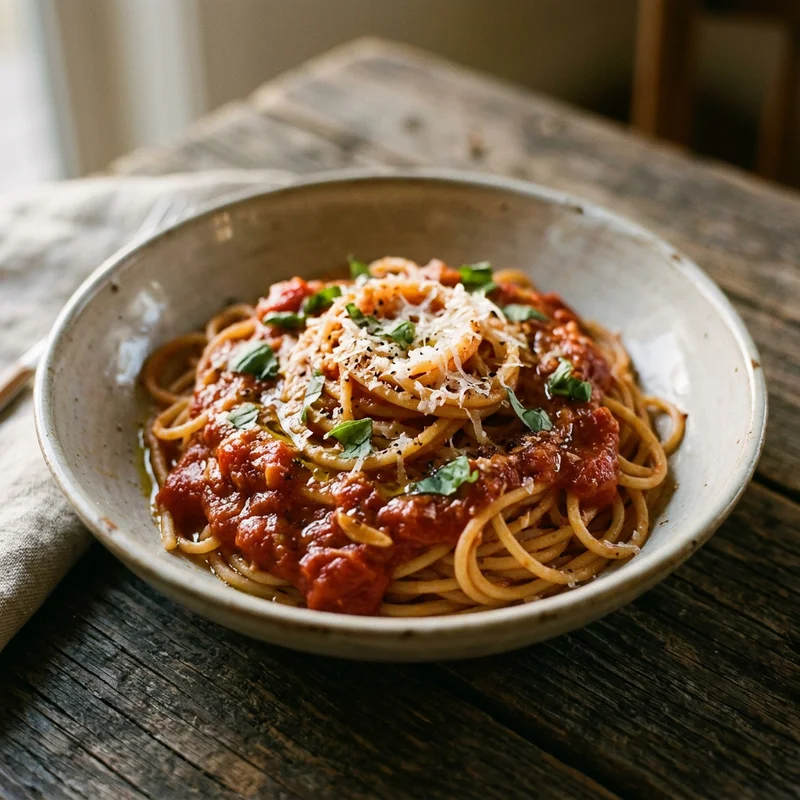
A three-ingredient tomato sauce that eats like it took all day: canned San Marzanos crushed by hand, gently sweated garlic, and whole basil sprigs simmered until the sauce turns deep and glossy. The finish is the whole point — the spaghetti comes out of the water early and swirls in the pan with a ladle of starchy water until the sauce clings to every strand instead of pooling on the plate.
Ingredients
Tomato sauce
- 2 28-oz cans whole peeled San Marzano tomatoes (D.O.P. if you can find them)
- 1/3 cup extra-virgin olive oil, plus more for finishing
- 6 cloves garlic, thinly sliced
- 1 pinch red pepper flakes (optional)
- 2 large sprigs fresh basil, plus 12 leaves for finishing
- 1 tsp kosher salt, plus more to taste
- 1/2 tsp sugar (only if the tomatoes taste sharp)
- 2 tbsp unsalted butter
Pasta and finishing
- 1 lb dried spaghetti, preferably bronze-die
- 3 tbsp kosher salt (for the pasta water)
- 1 1/2 oz Parmigiano-Reggiano, finely grated (about 3/4 cup), plus more for the table
- Flaky sea salt and freshly cracked black pepper
Instructions
- Open the tomatoes and pour them into a large bowl. Working one at a time, crush each tomato through your fingers into rough, ragged pieces — no blender, no food processor, which whip in air and turn the sauce pink and foamy. Pinch out and discard any tough white cores. Rinse the cans with 1/2 cup water total and add that to the bowl.
- Set a wide 4- to 5-quart pot or deep sauté pan over medium-low heat and add the 1/3 cup olive oil and sliced garlic. Cook gently for 4 to 6 minutes, stirring often, until the garlic is soft, fragrant, and just barely blond at the edges. Do not let it brown — brown garlic makes the sauce bitter. Add the red pepper flakes and swirl for 15 seconds.
- Stand back and add the crushed tomatoes all at once (they will spit). Add 1 teaspoon kosher salt and the 2 basil sprigs, stems and all. Raise the heat to medium-high and bring to a simmer, about 4 minutes.
- Reduce the heat to low so the surface bubbles lazily, maybe two or three blips a second. Simmer uncovered for 30 to 35 minutes, stirring and scraping the bottom every 8 minutes or so, until the sauce has reduced by about a third, darkened to a brick red, and the oil has separated out into shimmering orange pools at the edges. That separated oil is the sign it is ready.
- Fish out and discard the basil sprigs. Taste: if the tomatoes read sharp or metallic, stir in the sugar. Adjust salt. Stir in the butter until it melts and the sauce turns glossy, then pull the pot off the heat. You should have about 3 1/2 cups.
- Bring 4 quarts of water to a rolling boil in a large pot and add 3 tablespoons kosher salt — it should taste like a well-seasoned soup. Add the spaghetti, stir for the first 30 seconds so it does not clump, and cook 2 minutes short of the package's al dente time (usually 7 to 8 minutes for spaghetti).
- While the pasta cooks, reheat the sauce over medium in a pan wide enough to hold all the pasta (a 12-inch skillet or Dutch oven). Just before draining, dip out 2 cups of pasta water and set it aside.
- Using tongs, lift the spaghetti straight from the pot into the sauce along with 3/4 cup of the pasta water. Turn the heat to medium-high and toss constantly with tongs, folding the pasta over itself, for 2 to 3 minutes. The water will boil down, the starch will bind with the oil, and the sauce will go from loose and watery to a clinging, satiny coat. Add more pasta water 2 tablespoons at a time if it tightens too fast.
- Off the heat, add the grated Parmigiano in three additions, tossing hard after each so it melts into the sauce rather than clumping. Tear in 8 of the basil leaves and toss once more. The pasta should slide, not clump; if it looks stiff, another splash of pasta water and 10 seconds of tossing will bring it back.
- Twirl into warm shallow bowls using tongs and a ladle to build a nest. Finish each with a drizzle of raw olive oil, a torn basil leaf, cracked black pepper, a few flakes of sea salt, and more grated cheese. Serve immediately — pomodoro waits for no one.
Chef's tips
- Buy the best canned tomatoes you can: real San Marzano D.O.P. or a good domestic brand packed in juice, not purée. With three ingredients, the tomato is the recipe.
- The sauce is better the next day and freezes for 3 months. Make a double batch on Sunday and you are 12 minutes from dinner any night that week.
- Never rinse pasta and never drain it bone dry — that cloudy starch water is the emulsifier that makes restaurant pasta cling. If you must use a colander, save 2 cups of water first.
- If your sauce breaks or looks greasy in the pan, add a splash of pasta water and toss vigorously off the heat; the starch will pull it back together.
- Bronze-die pasta has a chalky, rough surface that grabs sauce far better than slick supermarket spaghetti. It costs a couple of dollars more and is the single biggest upgrade here.
Nutrition (per serving, estimated)
782calories
19gprotein
104gcarbs
32gfat
Estimates only — values vary with brands and portions.
Made with Sprig
Spaghetti Pomodoro with San Marzano Tomatoes was created in Sprig — the AI chef that turns any craving into a complete recipe, plans your week, and shops with one smart list.
Free to start · 14-day Pro trial · cancel anytime
Not ready yet? Get the occasional recipe worth cooking — a couple a month at most.
You're on the list — check your inbox!
Unsubscribe anytime. Privacy Policy
More from Sprig Originals
Are you this recipe's original author or publisher? Report a problem