Sprig Originals's kitchen / Brisket Pho with a Proper Herb Plate
Brisket Pho with a Proper Herb Plate
 By Sprig Originals · cooked up in Sprig
Worked out from this recipe's ingredients. If you're cooking for an allergy, always read the full ingredient list.
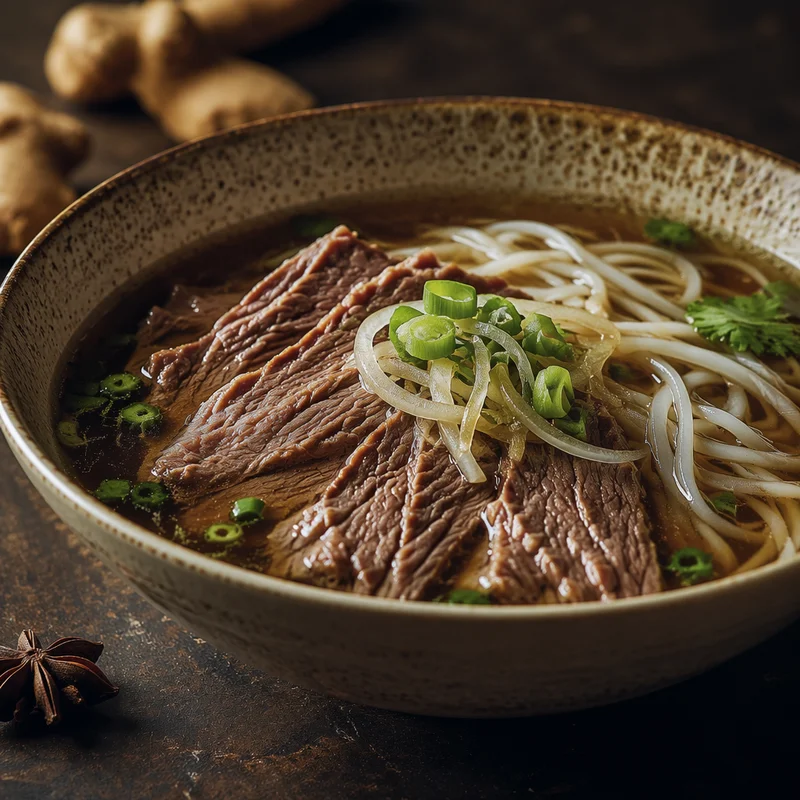
A clear, deeply beefy pho where the brisket cooks right in the broth — charred onion and ginger, toasted star anise and cinnamon, and three hours of patient skimming. The meat comes out sliceable and tender, the broth comes out clean enough to see the noodles through it, and everything gets finished at the table from a piled-high plate of Thai basil, bean sprouts and lime.
Ingredients
Broth base
- 3 lb beef marrow and knuckle bones, cut into 2-inch pieces
- 2 lb flat-cut beef brisket, in one piece, fat cap trimmed to 1/4 inch
- 5 quart cold water, plus more for parboiling
- 2 large yellow onions, unpeeled, halved
- 4 inch piece fresh ginger, unpeeled, halved lengthwise
Spice sachet
- 4 star anise pods
- 1 cinnamon stick (3 inch), preferably cassia
- 6 whole cloves
- 1 tbsp coriander seeds
- 1 tsp fennel seeds
- 2 black cardamom pods, cracked (optional but worth it)
Seasoning
- 1/4 cup fish sauce, plus more to taste
- 1 oz yellow rock sugar (about 2 tbsp), or 1 1/2 tbsp light brown sugar
- 2 tsp kosher salt, plus more to taste
Noodles and bowls
- 14 oz dried flat rice noodles (bánh phở), 1/8-inch wide
- 1/2 small white or yellow onion, sliced paper-thin
- 4 scallions, thinly sliced
- 1/4 cup cilantro, roughly chopped
- Freshly ground black pepper
Herb plate
- 1 large bunch Thai basil
- 3 cups mung bean sprouts
- 2 limes, cut into wedges
- 2 jalapeños or 4 Thai chiles, thinly sliced
- 1 small bunch culantro (ngò gai), optional
- Hoisin sauce and sriracha, for dipping
Instructions
- Parboil the bones and brisket: put the bones and the whole brisket in a large stockpot, cover with cold water by 2 inches, and bring to a hard boil over high heat. Boil 10 minutes — a gray foam will rise. Dump everything into the sink, rinse each bone and the brisket under cold running water, scrubbing off any clinging scum, and scrub the pot clean. This one step is the difference between cloudy broth and clear broth.
- Char the aromatics: set an oven rack 6 inches under the broiler and heat it to high. Put the onion halves cut side up and the ginger on a foil-lined sheet pan and broil 10–15 minutes, turning once, until the cut faces are blackened in patches and the kitchen smells sweet. (A dry cast-iron skillet over high heat for 8 minutes per side works too.) Scrape off any fully carbonized bits and peel the loose onion skin.
- Toast the spices: in a dry skillet over medium heat, toast the star anise, cinnamon, cloves, coriander, fennel and black cardamom for 2–3 minutes, shaking constantly, until fragrant — do not let them smoke. Tie them in a spice bag, a tea ball, or a square of cheesecloth.
- Start the broth: return the rinsed bones and brisket to the clean pot, add 5 quarts cold water, and bring to a bare simmer over medium heat — you want a lazy bubble breaking the surface every second or two, never a rolling boil. Skim off any foam that forms in the first 20 minutes with a fine-mesh skimmer or a wide spoon.
- Add the charred onion, ginger, the spice sachet, the rock sugar and 2 tsp salt. Simmer uncovered, adjusting the heat to hold 195–205°F, and skim every 20–30 minutes.
- After 2 1/2 hours, test the brisket: a paring knife should slide into the thickest part with only slight resistance and the meat should feel tender but still hold its shape (about 195°F internal). If it isn't there yet, keep going in 20-minute increments up to 3 1/2 hours. Lift the brisket out with tongs, submerge it in a bowl of cold water for 10 minutes to stop the cooking and keep the edges from drying, then pat dry, wrap, and refrigerate at least 30 minutes — cold brisket slices cleanly.
- Keep simmering the bones another 30–60 minutes (3 to 4 hours total), then remove the spice sachet, bones, onion and ginger. Strain the broth through a fine-mesh sieve lined with a double layer of cheesecloth into a clean pot. Let it settle 5 minutes and blot the surface fat with a wide spoon or a paper towel laid flat on top; leave a thin sheen for flavor.
- Season the broth: stir in 1/4 cup fish sauce, then taste. It should be assertively savory and faintly sweet, a touch stronger than you'd want to sip on its own, because noodles and herbs will dilute it. Adjust with fish sauce, salt and a pinch more sugar. Hold at a low simmer. You should have about 3 1/2 quarts.
- Build the herb plate: pile Thai basil sprigs, bean sprouts, lime wedges, sliced chiles and culantro on a platter. Soak the paper-thin onion slices in cold water for 10 minutes, then drain — this takes the harsh bite out. Put hoisin and sriracha in small dishes for dipping the brisket, not for dumping in the broth.
- Cook the noodles: bring a separate large pot of water to a boil. Soak the dried rice noodles in hot tap water for 20 minutes until pliable, then boil in batches for 30–60 seconds, just until tender with a slight chew. Drain, rinse briefly with hot water, and divide among 6 wide bowls.
- Slice the chilled brisket across the grain as thinly as you can, 1/8 inch or less, and fan 5–6 slices over the noodles in each bowl. Add the drained onion, scallions, cilantro and a few grinds of black pepper.
- Bring the broth back to a full rolling boil — it needs to be hotter than you think to heat the bowl through — and ladle about 1 1/2 cups over each bowl, enough to just cover the noodles and warm the brisket through. Serve immediately with the herb plate, tearing basil leaves in and squeezing lime to taste at the table.
Chef's tips
- Skimming beats straining. Every bit of foam you lift out in the first hour is grit and scum that won't cloud the finished bowl. Never let the pot boil hard once the bones are in — agitation emulsifies fat and protein into the broth and turns it murky for good.
- No beef bones at the store? Use 2 lb oxtail plus the brisket, or start with 4 quarts good low-sodium beef broth plus 2 quarts water and simmer the brisket in it for 2 1/2 hours — you'll lose a little body but the charred aromatics and spices still carry it.
- The broth gets better overnight. Make it a day ahead, refrigerate broth and brisket separately, then lift off the solidified fat cap and reheat to a hard boil. Slicing is also far easier on fully chilled meat.
- Point-cut brisket has more fat and gives a richer broth; flat cut slices into neater rectangles. If you want both, buy a 2 lb piece with a visible fat seam and trim the cap to 1/4 inch.
- Don't dress the whole pot. Hoisin and sriracha belong in a dipping saucer for the brisket — squirting them into the bowl muddies three hours of work. Taste the broth plain first, then add lime and chile one squeeze at a time.
Nutrition (per serving, estimated)
621calories
42gprotein
68gcarbs
19gfat
Estimates only — values vary with brands and portions.
Made with Sprig
Brisket Pho with a Proper Herb Plate was created in Sprig — the AI chef that turns any craving into a complete recipe, plans your week, and shops with one smart list.
Free to start · 14-day Pro trial · cancel anytime
Not ready yet? Get the occasional recipe worth cooking — a couple a month at most.
You're on the list — check your inbox!
Unsubscribe anytime. Privacy Policy
More from Sprig Originals
Dark Roux Seafood Gumbo with Quick Shrimp Stock
Chilled Watermelon Gazpacho with Cucumber-Chile Relish
French Onion Patty Melts on Rye
Are you this recipe's original author or publisher? Report a problem