Sprig Originals's kitchen / Lemony Herb Dolmades (Stuffed Grape Leaves)
Lemony Herb Dolmades (Stuffed Grape Leaves)
 By Sprig Originals · cooked up in Sprig
Worked out from this recipe's ingredients. If you're cooking for an allergy, always read the full ingredient list.
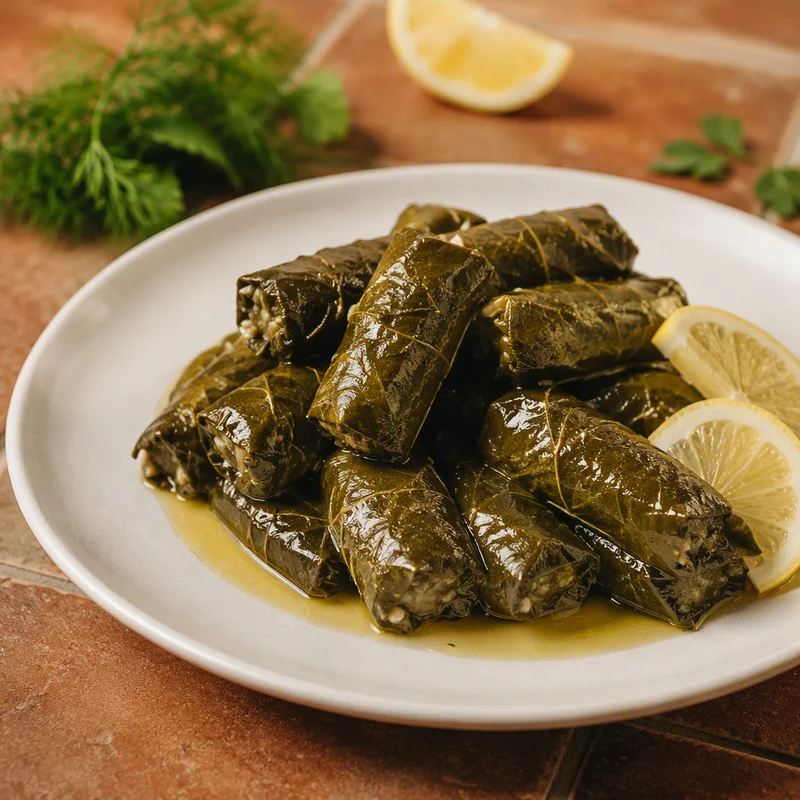
Jarred brined grape leaves wrapped around a bright, dill-and-mint-flecked rice filling, then simmered slowly under an upside-down plate so every roll stays tight. The filling is par-cooked first so it finishes creamy rather than chalky, and a final flood of lemon and olive oil off the heat gives them that cool, glossy taverna-meze finish. Serve at room temperature with thick yogurt.
Ingredients
Grape Leaves
- 1 jar (16 oz) brined grape leaves
Rice–Herb Filling
- 1/3 cup extra-virgin olive oil
- 2 medium yellow onions, finely chopped
- 4 scallions, thinly sliced
- 1 cup short-grain white rice (Arborio or Calrose)
- 1 1/4 cups water
- 1/2 cup chopped fresh dill
- 1/4 cup chopped fresh mint
- 1/4 cup chopped fresh flat-leaf parsley
- 3 tablespoons pine nuts (optional)
- 2 tablespoons fresh lemon juice
- 2 teaspoons finely grated lemon zest
- 1 1/2 teaspoons kosher salt
- 1/2 teaspoon freshly ground black pepper
- 1/4 teaspoon ground allspice
Simmering Liquid & Finish
- 2 cups water or light vegetable broth
- 1/4 cup extra-virgin olive oil
- 1/4 cup fresh lemon juice
- 1/2 teaspoon kosher salt
- 1 lemon, thinly sliced
- 1 cup thick Greek yogurt, for serving
Instructions
- Unroll the grape leaves gently under cool running water, keeping the bundle intact so they don't tear. Place them in a bowl, cover with boiling water, and soak 10 minutes to soften and pull out excess brine. Drain, rinse in cool water, and lay them in a stack on a towel. Snip off any tough stems with scissors. Sort as you go: set aside 8 to 10 torn, tiny, or extra-thick leaves for lining the pot.
- Make the filling: heat 1/3 cup olive oil in a large skillet over medium heat. Add the onions and a pinch of salt and cook, stirring often, 10 to 12 minutes until soft, sweet, and just barely golden. Add the scallions and cook 2 minutes more.
- Stir in the rice and toast 2 minutes, until the grains turn translucent at the edges. Add 1 1/4 cups water, bring to a simmer, cover, and cook over low heat for 8 minutes — the rice should be half-cooked and slightly chalky in the center. Uncover and let it cool for 10 minutes; it will absorb the rest.
- Fold in the dill, mint, parsley, pine nuts, 2 tablespoons lemon juice, lemon zest, 1 1/2 teaspoons salt, pepper, and allspice. Taste and adjust — the filling should be aggressively lemony and herbal, since the flavor mellows during the simmer. Cool to room temperature.
- Line the bottom of a 4- to 5-quart heavy pot or Dutch oven with the reserved torn leaves, overlapping them into a solid mat. This is insurance: it protects the rolls from scorching.
- Learn the rolling rhythm. Lay a leaf shiny-side down, veins up, stem end toward you. Place 1 rounded teaspoon of filling (2 teaspoons for very large leaves) in a short log about 1/2 inch above the stem notch. Fold the bottom two lobes up over the filling, fold both sides in toward the center, then roll away from you into a tight cigar the width of your index finger. Snug but not straining — the rice needs room to swell.
- Pack the rolls seam-side down in the pot in tight concentric rings, shoulder to shoulder, so they brace each other. Build a second and third layer the same way, tucking lemon slices between layers. Crowding is good; gaps are what cause unwrapping.
- Whisk together 2 cups water, 1/4 cup olive oil, 1/4 cup lemon juice, and 1/2 teaspoon salt and pour it over the rolls — the liquid should just barely cover the top layer. Add a splash more water if needed.
- Set an inverted heatproof plate directly on the dolmades, pressing lightly so it sits flat inside the pot. This weight is what keeps them from floating apart. Cover the pot with the lid.
- Bring to a bare simmer over medium heat, then reduce to low so you see only lazy bubbles at the edges. Cook 45 to 55 minutes, until the rice is fully tender and a test roll cuts cleanly. Check at 30 minutes and add 1/4 cup hot water if the pot looks dry.
- Turn off the heat and leave the plate in place. Let the dolmades cool in the pot for at least 45 minutes — they firm up as they rest and are much easier to lift out. Remove the plate and transfer them with a slotted spoon, spooning some of the lemony pan liquid over the top.
- Serve at room temperature or lightly chilled, with extra lemon wedges, a drizzle of olive oil, and a bowl of cold Greek yogurt for dipping.
Chef's tips
- The number-one cause of blown-out dolmades is overfilling. One rounded teaspoon looks stingy in your hand and correct in the pot — the rice nearly doubles.
- Half-cooking the rice is the difference between creamy and crunchy. Fully raw rice needs more liquid and longer simmering than a leaf can survive.
- No spare plate that fits? Use a small heatproof lid, a foil-wrapped saucer, or a piece of parchment topped with a clean, well-rinsed dinner plate or a foil-wrapped can.
- Jars vary in saltiness. Taste a raw soaked leaf; if it's still very briny, soak a second time in fresh hot water for 10 minutes.
- These improve overnight. Refrigerate in their cooking liquid up to 5 days and pull them out 30 minutes before serving — never serve them fridge-cold.
- For a heartier version, add 1/2 pound of ground lamb browned with the onions and reduce the rice to 3/4 cup.
Nutrition (per serving, estimated)
487calories
8gprotein
44gcarbs
32gfat
Estimates only — values vary with brands and portions.
Made with Sprig
Lemony Herb Dolmades (Stuffed Grape Leaves) was created in Sprig — the AI chef that turns any craving into a complete recipe, plans your week, and shops with one smart list.
Free to start · 14-day Pro trial · cancel anytime
Not ready yet? Get the occasional recipe worth cooking — a couple a month at most.
You're on the list — check your inbox!
Unsubscribe anytime. Privacy Policy
More from Sprig Originals
Char-Grilled Oysters with Garlic-Worcestershire Butter
French Onion Patty Melts on Rye
Dark Roux Seafood Gumbo with Quick Shrimp Stock
Are you this recipe's original author or publisher? Report a problem