Sprig Originals's kitchen / Brisket & Napa Cabbage Hangover Soup (Haejangguk)
Brisket & Napa Cabbage Hangover Soup (Haejangguk)
 By Sprig Originals · cooked up in Sprig
Worked out from this recipe's ingredients. If you're cooking for an allergy, always read the full ingredient list.
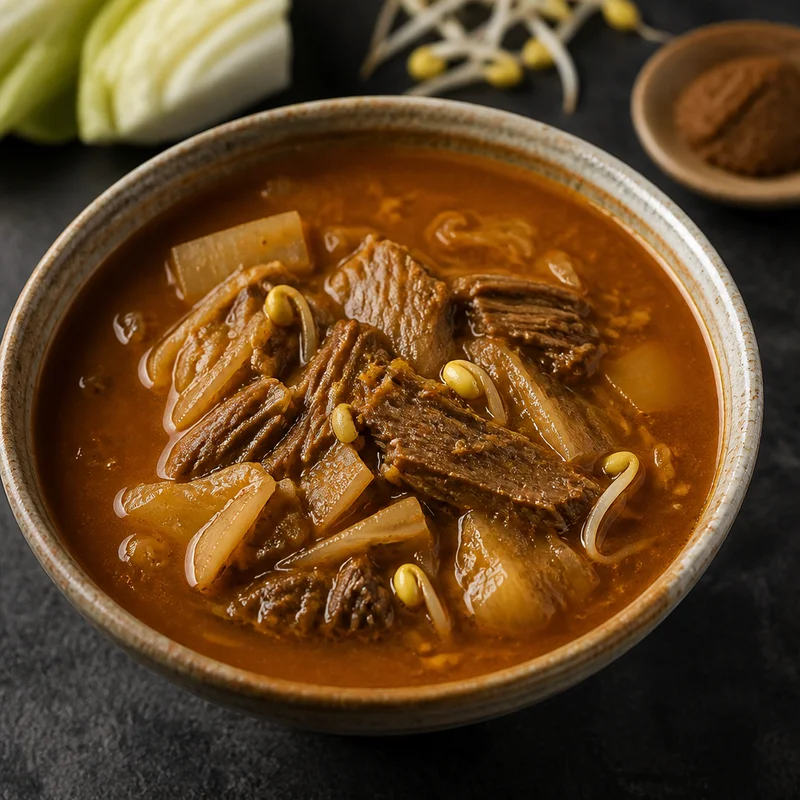
A deep, restorative Korean soup built on a slow-simmered beef brisket broth seasoned with doenjang and gochugaru, loaded with wilted napa cabbage, daikon and soybean sprouts. This is the no-blood version — all the savory, funky, gently spicy comfort of a Korean hangover-soup counter, in a pot big enough to feed six and taste even better on day two. Serve with short-grain rice and let everyone stir it in.
Ingredients
Broth
- 2 lb beef brisket, flat cut, trimmed of heavy fat
- 1 lb beef short rib bones or beef marrow bones (optional, for body)
- 14 cups cold water, plus more as needed
- 1 large yellow onion, halved through the root
- 8 cloves garlic, smashed
- 2 inch piece fresh ginger, sliced into coins
- 4 scallions, white parts only (save greens for serving)
- 1 piece dried kelp (dasima/kombu), about 4x5 inches
- 1 tsp whole black peppercorns
Vegetables
- 1 lb napa cabbage (about 1/2 small head), cut into 2-inch pieces
- 12 oz daikon radish, peeled and cut into 1/4-inch half-moons
- 8 oz soybean sprouts (or mung bean sprouts), rinsed
- 4 scallion greens, cut into 2-inch lengths
Seasoning paste
- 1/3 cup doenjang (Korean soybean paste)
- 1 tbsp gochujang
- 2 tbsp gochugaru (Korean coarse red pepper flakes)
- 2 tbsp soy sauce
- 4 cloves garlic, finely grated
- 1 tbsp toasted sesame oil
- 1 tsp sugar
- Kosher salt, to taste
To serve
- 6 cups cooked short-grain white rice
- 1 tbsp toasted sesame seeds
- 1 jalapeño or Korean green chile, thinly sliced (optional)
- Kimchi, for the table (optional)
Instructions
- Put the brisket and bones (if using) in a large stockpot, cover with cold water by 2 inches, and bring to a boil over high heat. Boil hard for 8 minutes, then drain into the sink and rinse the meat and pot thoroughly under cold water to wash away all the gray foam. This blanching step is what makes the finished broth clean-tasting instead of muddy.
- Return the rinsed brisket and bones to the clean pot. Add 14 cups cold water, the halved onion, smashed garlic, ginger coins, scallion whites, and peppercorns. Bring to a boil over high heat, then reduce to a bare simmer — small bubbles only, around 195°F. Skim any foam from the surface for the first 10 minutes.
- Simmer uncovered (or with the lid barely cracked) for 2 hours, until a paring knife slides into the brisket with no resistance. Top up with hot water if the liquid drops below the meat. Add the kelp during the final 15 minutes only, then fish it out — longer and it turns slippery and bitter.
- Transfer the brisket to a cutting board and let it rest 15 minutes. Strain the broth through a fine-mesh sieve into a large bowl, discarding the aromatics and bones. You want about 10 to 11 cups; add water if you're short. Let the broth settle 5 minutes, then skim the fat off the top with a wide spoon (or chill it and lift the solid cap off later).
- Slice the rested brisket across the grain into 1/4-inch slices, then cut the slices into bite-size pieces about 2 inches long. Set aside.
- In a small bowl, whisk the doenjang, gochujang, gochugaru, soy sauce, grated garlic, sesame oil, and sugar with 1/2 cup of the warm broth until smooth and pourable.
- Wipe out the pot and return the strained broth to it. Whisk in the seasoning paste and bring to a simmer over medium-high heat. Add the daikon and simmer 10 minutes, until it turns translucent at the edges.
- Add the napa cabbage and soybean sprouts. Simmer 10 to 12 minutes more, uncovered, until the cabbage stems are tender and the sprouts have lost their raw bite. Keep the pot uncovered while the sprouts cook — trapping the steam is what gives bean sprouts a grassy smell.
- Return the sliced brisket to the pot along with the scallion greens and simmer 5 minutes to heat through and let the meat drink up the broth. Taste and adjust: salt for depth, another spoonful of doenjang for funk, more gochugaru for heat. It should taste assertively savory, because rice will mellow every spoonful.
- Ladle into deep bowls, showering each with sesame seeds and sliced chile. Serve rice alongside — spoon it into the soup a little at a time, or eat it separately with a sip of broth between bites. Put kimchi on the table.
Chef's tips
- Day two is the point: cool the pot to room temperature within 2 hours, refrigerate, and reheat portions to a full simmer. The doenjang keeps deepening and the brisket gets silkier. It keeps 4 days refrigerated and freezes 3 months (freeze before adding the sprouts if you can).
- This is the seonji-free version — traditional haejangguk often carries congealed ox blood. If you spot it at a Korean market and want the real thing, simmer sliced seonji in the finished broth for 5 minutes at the very end.
- No daikon? Use 2 cups peeled, cubed Korean radish or even turnip. Cabbage-only is also legitimate — some counters serve it as ugeoji haejangguk with dried outer cabbage leaves.
- Doenjang brands vary wildly in salt. Add two-thirds of the paste, taste, then decide. You can always add; you can't take it back.
- For a leaner soup, chill the strained broth overnight and lift off the fat cap before you build the pot. Save a tablespoon of that beef fat to bloom the gochugaru — it makes the broth glossier.
Nutrition (per serving, estimated)
720calories
48gprotein
88gcarbs
19gfat
Estimates only — values vary with brands and portions.
Made with Sprig
Brisket & Napa Cabbage Hangover Soup (Haejangguk) was created in Sprig — the AI chef that turns any craving into a complete recipe, plans your week, and shops with one smart list.
Free to start · 14-day Pro trial · cancel anytime
Not ready yet? Get the occasional recipe worth cooking — a couple a month at most.
You're on the list — check your inbox!
Unsubscribe anytime. Privacy Policy
More from Sprig Originals
Dark Roux Seafood Gumbo with Quick Shrimp Stock
Chilled Watermelon Gazpacho with Cucumber-Chile Relish
French Onion Patty Melts on Rye
Are you this recipe's original author or publisher? Report a problem