Spanish Cured Ham Plate with Sherry, Olives & Toast
 By Sprig Originals · cooked up in Sprig
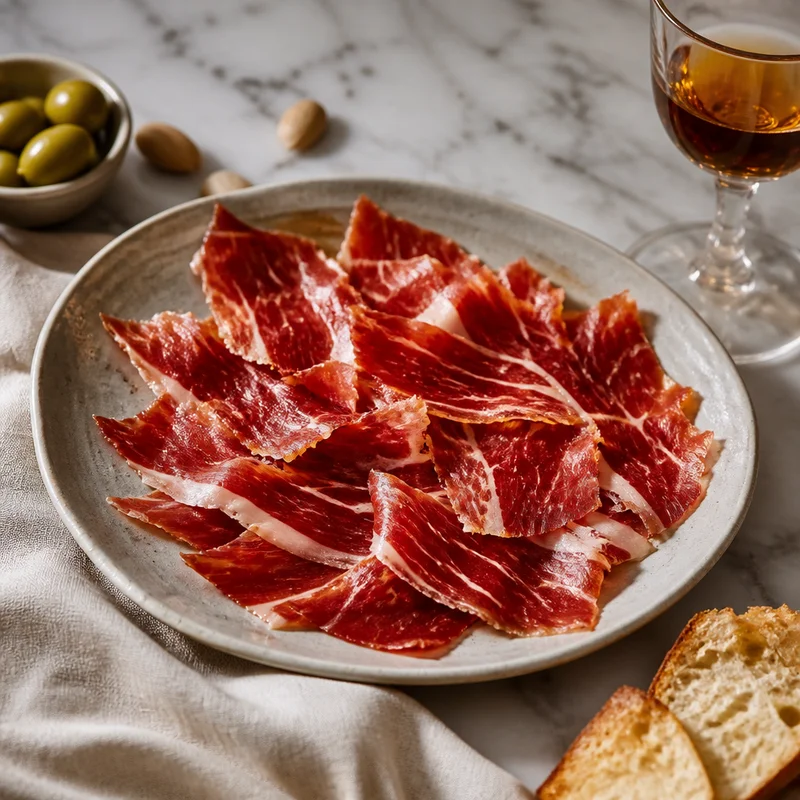
The tapas-bar jamón plate, demystified for home cooks. No leg on a stand, no carving knife — just good ham bought thin-sliced, warmed to room temperature so the fat turns glossy and nutty, and laid out in a single loose layer with bread, marcona almonds, olives and a small glass of dry sherry. This is a shopping-and-plating lesson more than a recipe: learn the difference between serrano and ibérico, how much to buy, and the three-minute plating that makes a $22 restaurant appetizer look and taste better at your own table.
Ingredients
- 6 oz thin-sliced Spanish cured ham (jamón serrano or, for a splurge, jamón ibérico de bellota)
- 1/2 narrow baguette or rustic Spanish-style loaf, cut into 1/2-inch slices on the bias
- 3 tbsp extra-virgin olive oil, plus more for drizzling
- 1 clove garlic, peeled and halved (optional)
- 1/2 cup marcona almonds
- 3/4 cup good green olives such as Gordal, Manzanilla, or Castelvetrano
- 2 oz Manchego cheese, cut into thin wedges (optional)
- 1 small ripe tomato, halved (optional, for rubbing on toast)
- Flaky sea salt
- 1 bottle dry sherry — fino or manzanilla (chilled), or amontillado for a nuttier match
Instructions
- Shop first, and shop for slices, not a leg. Ask the deli or cheese counter for Spanish jamón serrano, sliced paper-thin and layered between sheets of parchment or wax paper, not packed in a solid stack. Serrano (white pig, 12–18 months) is savory, firm and reliably $6–9 per 3 ounces — the right everyday choice. Jamón ibérico, from black Iberian pigs, is deeper and more marbled; ibérico de bellota (acorn-fed, 36+ months) is the top tier, runs $25–40 for 3 ounces, and has fat that melts almost at body heat. Budget 1 1/2 ounces per person as an appetizer, or 2 to 2 1/2 ounces if the plate is dinner. Mixing 4 ounces serrano with 2 ounces ibérico gives you the splurge flavor for about half the price.
- Take the ham out of the refrigerator 30 to 45 minutes before serving and let it come to room temperature, still wrapped. This is the single step that matters most: cold jamón tastes salty and waxy because the fat is solid. At about 70°F the fat softens, goes translucent, and releases the nutty, almost sweet aroma you pay for in a restaurant. If your kitchen is very warm, 20 minutes is plenty.
- Heat the oven to 400°F. Brush the bread slices on both sides with 3 tablespoons olive oil, arrange on a sheet pan, and bake 6 to 8 minutes, flipping once, until golden at the edges but still slightly chewy in the center. While warm, rub one side of each slice with the cut garlic clove, then — if you like — with the cut face of the tomato, pressing so the pulp streaks the toast. Sprinkle lightly with flaky salt.
- Drain the olives and, if they came in brine, rinse and pat them dry; toss with a teaspoon of olive oil and a strip of orange or lemon zest if you have one. Put them in a small bowl with a second empty bowl alongside for pits. Pour the almonds into their own small bowl.
- Unwrap the ham and separate the slices carefully, peeling from one corner. Lay them out on a room-temperature plate or wooden board in a single loose layer, draped and ruffled rather than folded flat or piled — overlapping stacks trap moisture and steam, which dulls the flavor. If you bought both grades, keep serrano and ibérico in separate zones so people can taste the difference. Do not oil, dress, or salt the ham.
- Arrange the toasts, olive bowl, almonds and Manchego wedges around the ham. Finish the cheese with a small drizzle of olive oil. Serve the plate within 20 minutes of laying it out — jamón dries and darkens quickly once exposed to air.
- Pour the sherry: fino or manzanilla, chilled to 50–55°F, in small white wine glasses (not tiny copitas — you want room to smell it). Its bone-dry salinity cuts the ham's fat exactly the way a squeeze of lemon cuts fried fish. Amontillado, served just below room temperature, is the warmer, nuttier alternative and pairs especially well with ibérico. Eat the jamón with your fingers, one slice at a time, chased with a bite of toast.
Chef's tips
- If your ham came in a vacuum-sealed pack and the slices are stuck together, open the pack, lay it flat, and let it rest 10 minutes at room temperature — the fat loosens and the slices peel apart without tearing.
- Never trim the white fat off the edges. That marbling is where the flavor lives, and in ibérico de bellota it's high in oleic acid, which is why it tastes closer to olive oil than to bacon.
- Serve on a room-temperature plate. A plate straight from a cold cupboard, or worse a chilled one, will firm the fat right back up.
- Leftover slices keep 3 days wrapped tightly in the refrigerator, but they lose their edge. Better use: lay them over hot fried eggs, tuck them into a warm baguette with Manchego, or crisp them 8 minutes at 350°F and crumble over sautéed green beans.
- No sherry on hand? A dry Spanish white like Albariño or Verdejo, a light chilled red such as young Mencía, or plain sparkling water with lemon all work. Skip anything oaky or sweet — it flattens the ham.
- Scaling up for a party: 1 1/2 ounces per person, and plate in two waves rather than one giant board so the second half stays supple.
Nutrition (per serving, estimated)
Made with Sprig
Spanish Cured Ham Plate with Sherry, Olives & Toast was created in Sprig — the AI chef that turns any craving into a complete recipe, plans your week, and shops with one smart list.
More from Sprig Originals
Are you this recipe's original author or publisher? Report a problem