Sprig Originals's kitchen / Silky Cashew Korma Sauce Base
Silky Cashew Korma Sauce Base
 By Sprig Originals · cooked up in Sprig
Worked out from this recipe's ingredients. If you're cooking for an allergy, always read the full ingredient list.
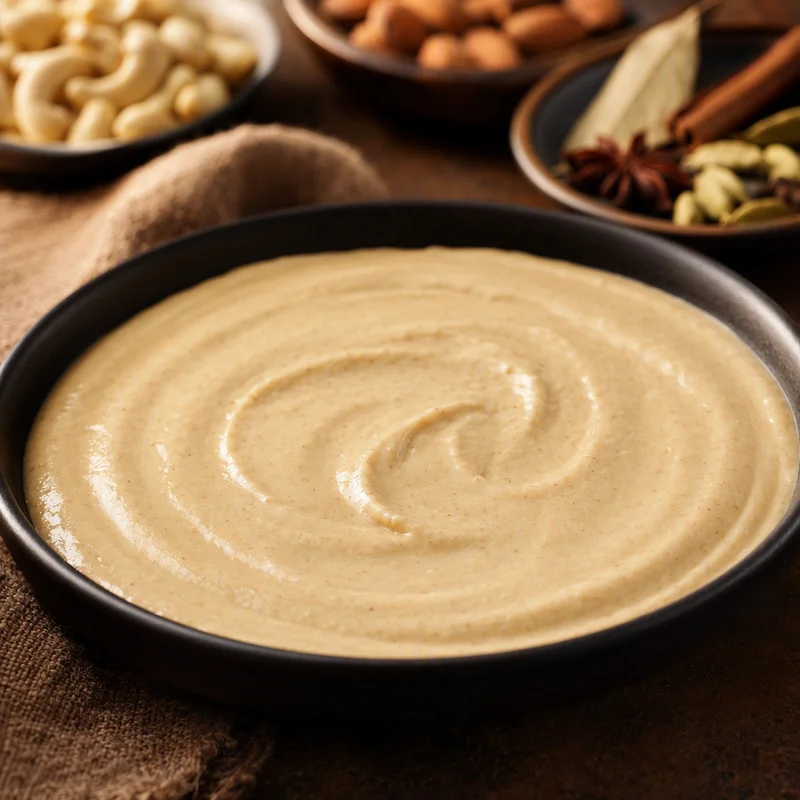
A pale, luxurious korma gravy built the way restaurant kitchens build it: whole spices bloomed in ghee, onions sweated soft without a hint of browning, and a soaked cashew-almond paste blended until it runs like heavy cream. Yogurt goes in off the heat so it never splits, and saffron plus a drop of rose water gives it that banquet-hall perfume. Make a batch, refrigerate or freeze it, then simmer chicken, lamb, paneer or vegetables straight into it on a weeknight.
Ingredients
Nut Base
- 3/4 cup raw cashews
- 1/4 cup blanched slivered almonds
- 2 tbsp white poppy seeds or melon seeds (optional)
- 2 cups boiling water
Whole Spices
- 8 green cardamom pods, lightly crushed
- 1 black cardamom pod, cracked (optional)
- 5 whole cloves
- 1 cinnamon stick (2 inches)
- 2 dried bay leaves
- 1 tsp coriander seeds
- 1/2 tsp cumin seeds
- 1/2 tsp white peppercorns (or black)
- 1 blade mace, or 1/4 tsp ground mace
Aromatics
- 1/4 cup ghee
- 2 tbsp neutral oil
- 3 cups thinly sliced yellow onions (about 3 medium)
- 2 tbsp finely grated fresh ginger
- 6 garlic cloves, grated
- 1 serrano chile, split lengthwise (seeds removed for a milder base)
- 1 1/2 tsp kosher salt, plus more to taste
- 1 tsp ground coriander
- 1/2 tsp ground turmeric (optional, for a warmer ivory color)
Dairy & Finishing
- 1 cup whole-milk plain yogurt, well whisked and at room temperature
- 1/2 cup heavy cream
- 1 1/2 cups water or unsalted chicken stock
- 1 large pinch saffron threads
- 2 tbsp warm milk
- 3/4 tsp garam masala
- 1 tsp sugar
- 1/4 tsp rose water or kewra water
- 1 tsp fresh lemon juice
Instructions
- Put the cashews, slivered almonds and poppy seeds (if using) in a heatproof bowl and pour over the 2 cups boiling water. Cover and let soak at least 30 minutes, or up to 2 hours — the nuts should crush easily between your fingers. Crumble the saffron into the 2 tablespoons warm milk in a small cup and set aside to bloom.
- In a dry skillet over medium heat, toast the coriander seeds, cumin seeds, white peppercorns and mace for 60 to 90 seconds, until fragrant but not colored. Tip onto a plate to cool, then grind to a powder in a spice grinder or mortar. Set aside; keep the cardamom, cloves, cinnamon and bay leaves whole and separate.
- Heat the ghee and oil in a wide 4- to 5-quart pot or Dutch oven over medium heat. Add the green cardamom, black cardamom, cloves, cinnamon stick and bay leaves and fry 45 to 60 seconds, until the cardamom puffs and the fat smells perfumed.
- Add the sliced onions and 1 1/2 teaspoons salt. Reduce the heat to medium-low, cover, and sweat for 18 to 22 minutes, stirring every few minutes. The goal is completely soft, translucent, collapsed onions with no browning at all — if they start to take on color, drop the heat and add a splash of water. This is what keeps a korma pale and sweet rather than tasting like a brown curry.
- Uncover, stir in the ginger, garlic and split serrano, and cook 2 to 3 minutes, just until the raw garlic smell is gone. Add the ground toasted spice mix, the ground coriander and the turmeric (if using) and stir for 30 seconds off the direct heat so the spices bloom without scorching.
- Pour in 1/2 cup of the water or stock, scrape the bottom of the pot clean, and simmer 2 minutes. Turn off the heat. Fish out and discard the bay leaves and cinnamon stick (leave the cardamom and cloves — they will be blended and strained).
- Drain the soaked nuts, reserving the soaking liquid. Transfer the onion mixture and the nuts to a blender along with 1 cup of the nut soaking liquid. Blend on high for a full 2 minutes, stopping to scrape down the sides, until absolutely smooth and glossy — under-blending is the #1 cause of a gritty korma.
- For restaurant-level silkiness, press the purée through a fine-mesh sieve back into the pot, using a ladle to work it through; discard any fibrous bits and whole spice fragments. Add the remaining 1 cup water or stock and bring to a bare simmer over medium-low heat, stirring often. Cook 8 to 10 minutes, until the sauce thickly coats a spoon and no longer tastes floury.
- Take the pot off the heat and let it stop bubbling, about 2 minutes. Whisk the yogurt smooth in a bowl, then temper it: ladle in about 1/2 cup of the hot sauce and whisk, then pour the loosened yogurt back into the pot in a slow stream while stirring constantly. Return to the lowest possible heat and cook 4 to 5 minutes, stirring, never letting it boil.
- Stir in the heavy cream, the saffron milk, garam masala, sugar, rose water and lemon juice. Taste and adjust salt — the base should taste a touch under-seasoned and slightly sweet, since it will finish cooking with meat or vegetables. Cool and refrigerate, or use right away.
- To cook a dish into it: bring 2 cups of the base to a gentle simmer in a skillet with a splash of water, add 1 pound of browned chicken thigh chunks, seared paneer, lamb, chickpeas or parboiled vegetables, and simmer covered on low for 12 to 20 minutes depending on the protein. Finish with a squeeze of lemon, slivered almonds and cilantro.
Chef's tips
- Never let the sauce reach a rolling boil after the yogurt goes in — high heat is what makes the proteins seize and the sauce look curdled. If it does break, take it off the heat and blend a ladleful with 2 tablespoons cream, then stir it back in.
- No high-powered blender? Soak the cashews in boiling water for a full 2 hours, blend in two smaller batches, and always strain. A regular blender plus a sieve beats a good blender with no sieve.
- This makes about 4 cups. Refrigerate up to 5 days, or freeze in 2-cup portions (one dinner's worth) for up to 3 months. Thaw overnight in the fridge and rewarm gently; whisk in a splash of cream or water to bring the texture back together.
- Want a Mughlai white korma? Skip the turmeric, use white peppercorns, and leave out the chile entirely — the heat should come from a pinch of white pepper at the table, not from the base.
- Swap the dairy for full-fat coconut milk in place of the cream and a plant yogurt for a vegan base; add the coconut milk at the very end and don't reduce it hard.
Nutrition (per serving, estimated)
387calories
7gprotein
18gcarbs
33gfat
Estimates only — values vary with brands and portions.
Made with Sprig
Silky Cashew Korma Sauce Base was created in Sprig — the AI chef that turns any craving into a complete recipe, plans your week, and shops with one smart list.
Free to start · 14-day Pro trial · cancel anytime
Not ready yet? Get the occasional recipe worth cooking — a couple a month at most.
You're on the list — check your inbox!
Unsubscribe anytime. Privacy Policy
More from Sprig Originals
French Onion Patty Melts on Rye
Dark Roux Seafood Gumbo with Quick Shrimp Stock
One-Skillet Blackened Cajun Chicken Pasta
Are you this recipe's original author or publisher? Report a problem