Sprig Originals's kitchen / Gulf Snapper Crudo with Satsuma, Chili and Benne Seeds
Gulf Snapper Crudo with Satsuma, Chili and Benne Seeds
 By Sprig Originals · cooked up in Sprig
Worked out from this recipe's ingredients. If you're cooking for an allergy, always read the full ingredient list.
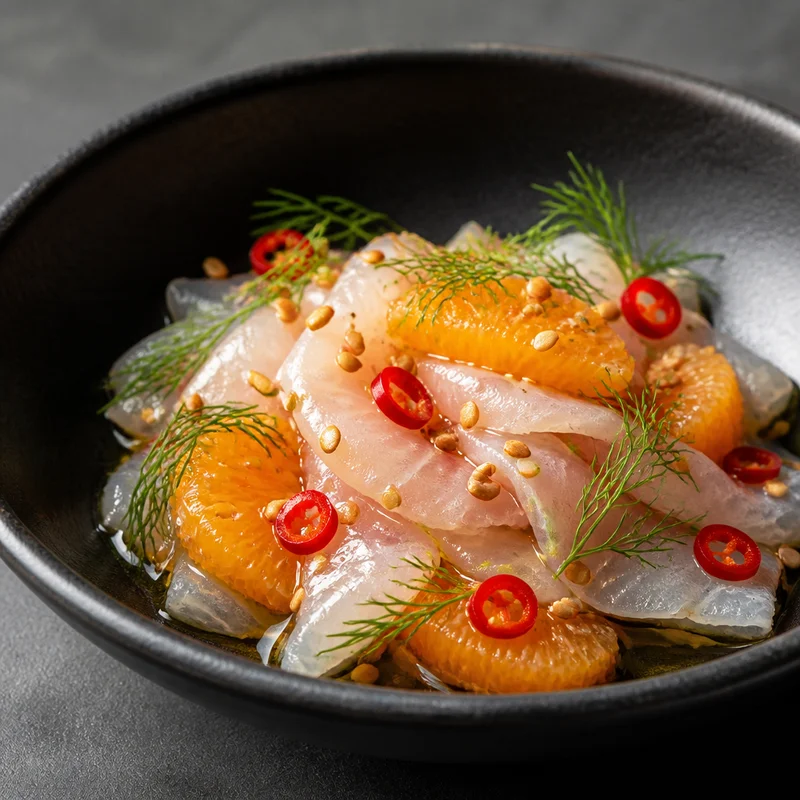
A no-cook Southern-leaning crudo: paper-thin slices of sashimi-grade snapper fanned on a cold plate, then dressed at the very last second with satsuma and lime, cane vinegar, sliced Fresno chili, good olive oil and toasted benne (sesame) seeds. The whole dish lives or dies on sourcing and knife work — buy the best fish you can find, chill it firm, slice against the grain, and spoon the dressing over as you carry the plate to the table.
Ingredients
The Fish
- 12 oz sashimi-grade red snapper, hiramasa or fluke loin, skinless and pin-bone free
- 1 tsp flaky sea salt, for finishing
Citrus-Chili Dressing
- 1 satsuma or small navel orange
- 1 lime
- 2 tsp cane vinegar or unseasoned rice vinegar
- 1/2 tsp sorghum syrup or honey
- 3 tbsp extra-virgin olive oil, best quality
- 1 Fresno chili, very thinly sliced, seeds removed
- 1/4 tsp fine sea salt
To Finish
- 1 tbsp benne seeds or white sesame seeds
- 1 inner celery rib with leaves, shaved paper-thin
- 2 tbsp small mint or cilantro leaves
- cracked black pepper
- saltine crackers or grilled bread, for serving
Instructions
- Buy the fish the day you plan to serve it. Ask the counter specifically for sashimi- or sushi-grade fish and tell them you are eating it raw; you want a center-cut loin piece that smells like clean seawater, with flesh that looks translucent and springs back when pressed. Keep it cold on the ride home — ask for a bag of ice.
- Toast the benne seeds in a dry skillet over medium heat, shaking constantly, for 2 to 3 minutes until they smell nutty and turn pale gold. Slide them onto a plate immediately so they stop cooking, and set aside.
- Put four salad plates in the refrigerator to chill. Pat the fish dry with paper towels, wrap it loosely in a fresh paper towel, and set it on a plate in the freezer for 12 to 15 minutes. You want the exterior firm and cold but not frozen — this is what lets you cut clean, thin slices.
- Make the dressing base: grate 1/2 teaspoon of zest from the satsuma and 1/4 teaspoon from the lime into a small bowl. Squeeze in 3 tablespoons satsuma juice and 1 tablespoon lime juice. Whisk in the cane vinegar, sorghum, and 1/4 teaspoon fine sea salt until the sorghum dissolves, then whisk in the olive oil in a slow stream. Stir in the sliced Fresno chili and refrigerate. Do not add the fish to this — it is spooned over at the last moment so the citrus never has time to cure and cloud the flesh.
- Shave the celery on a mandoline or with a vegetable peeler into paper-thin slices and drop them into ice water for 10 minutes to curl and crisp; drain well and pat dry just before plating.
- Slice the fish: set the chilled loin on a dry board and identify the direction of the muscle lines. Using the longest, sharpest knife you own, cut across those lines (against the grain) at a slight 30-degree angle, drawing the blade through in one smooth pull rather than sawing. Aim for slices about 1/8 inch thick — roughly 6 to 8 slices per plate. Wipe the blade between cuts.
- Fan the slices in a single overlapping layer on the cold plates, leaving a little space between pieces so the dressing can pool. Work quickly and do not stack; the fish should never sit at room temperature for more than a few minutes.
- Seconds before serving, whisk the dressing again and spoon 1 1/2 to 2 tablespoons over each plate, making sure a few chili slices land on top. Scatter with the celery, mint or cilantro leaves, and toasted benne seeds, then finish with flaky salt and a little cracked black pepper. Carry the plates to the table immediately with saltines or grilled bread alongside.
Chef's tips
- Sourcing is 90 percent of this dish. Good candidates from a reputable fishmonger: red snapper, hiramasa or yellowtail, fluke, black bass, kanpachi, or scallops. Skip fresh wild salmon and freshwater fish for raw preparations; if you can only get previously frozen fish, that is actually fine — commercial flash-freezing is what makes most sashimi-grade fish safe.
- If your knife drags or tears the flesh, the fish is too warm or the blade is too dull. Return the loin to the freezer for 5 more minutes and give the knife a few passes on a whetstone or steel.
- Dress at the table, not in the kitchen. Citrus acid begins turning the surface of raw fish opaque within a minute or two — that is ceviche, not crudo. The 30-second window between spooning and eating is the whole point.
- Trim and reserve the tapered tail end and any ragged trim; chop it finely, toss with a spoonful of the dressing and a dash of hot sauce, and eat it on a saltine while you plate.
- Serve the crudo as cold as you can: chilled plates, cold fish, cold dressing. A room-temperature plate will slacken the fish's texture in minutes.
- Pregnant people, young children, older adults and anyone immunocompromised should not eat raw fish.
Nutrition (per serving, estimated)
232calories
22gprotein
6gcarbs
14gfat
Estimates only — values vary with brands and portions.
Made with Sprig
Gulf Snapper Crudo with Satsuma, Chili and Benne Seeds was created in Sprig — the AI chef that turns any craving into a complete recipe, plans your week, and shops with one smart list.
Free to start · 14-day Pro trial · cancel anytime
Not ready yet? Get the occasional recipe worth cooking — a couple a month at most.
You're on the list — check your inbox!
Unsubscribe anytime. Privacy Policy
More from Sprig Originals
Char-Grilled Oysters with Garlic-Worcestershire Butter
French Onion Patty Melts on Rye
Dark Roux Seafood Gumbo with Quick Shrimp Stock
Are you this recipe's original author or publisher? Report a problem