Sprig Originals's kitchen / Two-Day Pineapple Tepache with Piloncillo and Canela
Two-Day Pineapple Tepache with Piloncillo and Canela
 By Sprig Originals · cooked up in Sprig
Worked out from this recipe's ingredients. If you're cooking for an allergy, always read the full ingredient list.
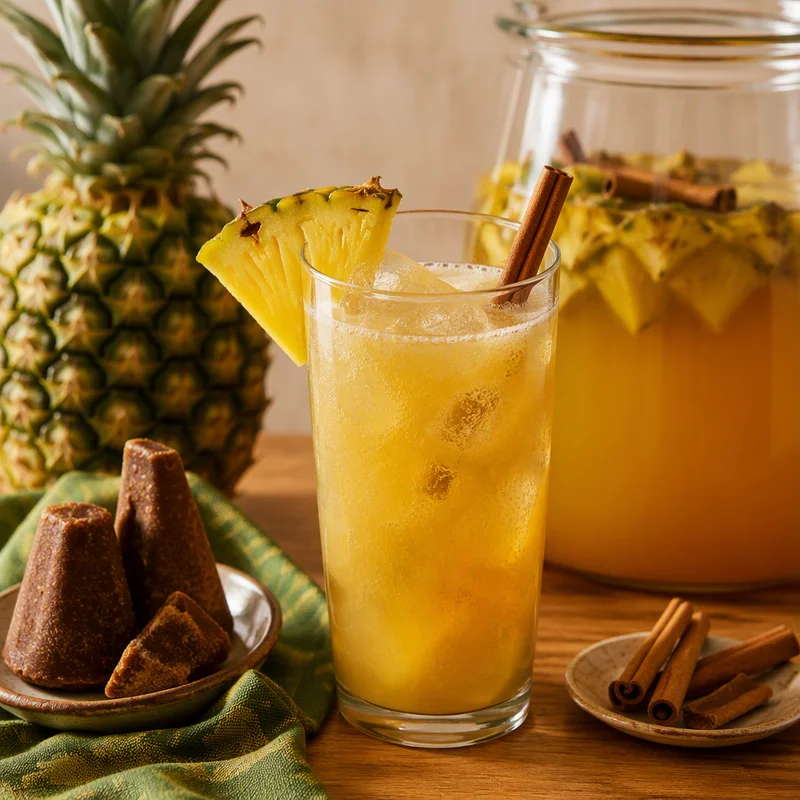
A bright, fizzy Mexican street drink made from the pineapple peel you'd normally throw away. Wild yeast on the skin plus piloncillo syrup gives you a tart, lightly effervescent, cider-like refresco in about 48 hours — kept deliberately short so it stays low in alcohol (well under 0.5% ABV) and tastes like fruit rather than beer. Serve it cold over ice with a squeeze of lime and a whisper of chile salt.
Ingredients
The Ferment
- 1 ripe pineapple, unwaxed if possible
- 8 oz piloncillo (about 1 cone), chopped, or 1 cup packed dark brown sugar
- 2 quarts filtered or dechlorinated water, room temperature
- 1 cinnamon stick (canela / true Ceylon cinnamon preferred)
- 4 whole cloves
- 2 whole allspice berries
- 1 tablespoon fresh ginger, sliced into coins (optional)
To Serve
- 2 limes, cut into wedges
- ice
- 1 cup chilled sparkling water or Mexican lager-free club soda, to top (optional)
- 1 teaspoon Tajín or chile-lime salt, for rims (optional)
- fresh mint sprigs, for garnish (optional)
Instructions
- Scrub the whole pineapple under cool running water with a clean brush — do not use soap, and do not scrub so hard that you strip off all the wild yeast. Pat dry. If the fruit is heavily waxed or you can see a produce sticker residue, rinse those spots a little more aggressively; wax slows fermentation but won't stop it.
- Slice off the crown and the base, then cut the peel away in wide strips about 1/2 inch thick, leaving a little fruit clinging to each strip — that flesh is your sugar and flavor. Reserve the peeled pineapple flesh for another use (or cut 1 cup into chunks and add it to the ferment for a rounder, fruitier tepache). Also save and roughly chop the tough core; it ferments beautifully.
- Make the syrup: combine the piloncillo with 2 cups of the water in a saucepan over medium heat. Simmer 5 to 8 minutes, stirring, until the cone has completely dissolved. Remove from heat and let cool to room temperature — pouring hot syrup over the peels would kill the wild yeast you just worked to preserve.
- Pack the peels, core, cinnamon stick, cloves, allspice, and ginger (if using) into a clean 1-gallon glass jar or two 2-quart jars. Pour in the cooled syrup, then add the remaining 6 cups room-temperature water. Leave at least 2 inches of headspace. Stir with a clean wooden or plastic spoon.
- Push the peels down so they are fully submerged — use a small saucer, a zip-top bag filled with water, or a clean glass as a weight. Anything floating dry above the liquid is where mold starts.
- Cover the mouth of the jar with a double layer of cheesecloth, a clean kitchen towel, or a coffee filter secured with a rubber band. Do not seal it airtight. Set the jar somewhere dark and warm, 70–78°F (a kitchen cabinet or the top of the refrigerator works); avoid direct sun.
- After 24 hours, uncover and look: you should see a foamy white cap of bubbles and smell sweet, yeasty pineapple. Skim off and discard any thick beige or gray foam with a clean spoon, then stir. If nothing is happening, your room is too cool — move the jar somewhere warmer and give it another 12 hours.
- At the 48-hour mark, taste it with a clean spoon. It should be tangy, fizzy on the tongue, and only lightly sweet — like a soft pineapple cider. This is the sweet spot for a low-alcohol drink. If it is still syrupy, ferment up to 12 hours more, tasting every 4 hours. Stop as soon as it turns sharply vinegary or smells like beer or nail polish; past 3 days at warm temperatures the alcohol climbs and the flavor turns harsh.
- Strain through a fine-mesh sieve lined with cheesecloth into a pitcher or clean bottles, pressing gently on the solids. Discard the peels and spices. For a bit more fizz, seal the strained tepache in swing-top bottles and leave at room temperature for just 8 to 12 hours, then refrigerate — 'burp' the bottles once during that window by opening them briefly over the sink to release pressure.
- Refrigerate at least 4 hours until thoroughly cold. Cold slows fermentation almost to a stop, which locks in the flavor and keeps alcohol from developing further. Drink within 5 to 7 days.
- To serve, rim glasses with lime and chile-lime salt if you like. Fill with ice, pour tepache two-thirds full, top with sparkling water for extra lift, and finish with a lime wedge and a mint sprig. Stir and serve immediately.
Chef's tips
- Fizz without alcohol: a 48-hour ferment at room temperature typically lands under 0.5% ABV — legally non-alcoholic in the US. The two variables that push it higher are time and warmth, so refrigerate on schedule and never let it sit out for a week.
- Mold vs. yeast: white foam, streaks of cloudiness, and a yeasty smell are all normal. Fuzzy circular colonies in green, black, or pink are mold — that batch goes down the drain. The fix next time is keeping every scrap of peel submerged.
- Use the ripest pineapple you can find; underripe fruit has less sugar and less wild yeast, and the ferment will crawl. If your kitchen is under 68°F, expect to add 12 to 24 hours.
- Piloncillo brings a smoky, molasses depth that plain white sugar can't match. Dark brown sugar is the closest substitute; honey works but its own antimicrobial edge slows fermentation.
- Flavor variations worth trying: add 2 dried hibiscus flowers per cup for a rose-colored tepache, a split serrano for gentle heat, or the peel of one orange for the last 12 hours only.
- Save 1 cup of finished tepache as a starter for your next batch — it kicks off fermentation in half the time and gives you a house flavor over successive batches.
- Don't seal it fully during the primary ferment. A tightly capped jar of active tepache builds real pressure and glass can fail. Cloth cover first, brief bottle-conditioning second, and always burp the bottles.
Nutrition (per serving, estimated)
113calories
0gprotein
29gcarbs
0gfat
Estimates only — values vary with brands and portions.
Made with Sprig
Two-Day Pineapple Tepache with Piloncillo and Canela was created in Sprig — the AI chef that turns any craving into a complete recipe, plans your week, and shops with one smart list.
Free to start · 14-day Pro trial · cancel anytime
Not ready yet? Get the occasional recipe worth cooking — a couple a month at most.
You're on the list — check your inbox!
Unsubscribe anytime. Privacy Policy
More from Sprig Originals
French Onion Patty Melts on Rye

Dark Roux Seafood Gumbo with Quick Shrimp Stock

One-Skillet Blackened Cajun Chicken Pasta
Are you this recipe's original author or publisher? Report a problem