Sprig Originals's kitchen / Seared Chilean Sea Bass with Lemon-Caper Butter
Seared Chilean Sea Bass with Lemon-Caper Butter
 By Sprig Originals · cooked up in Sprig
Worked out from this recipe's ingredients. If you're cooking for an allergy, always read the full ingredient list.
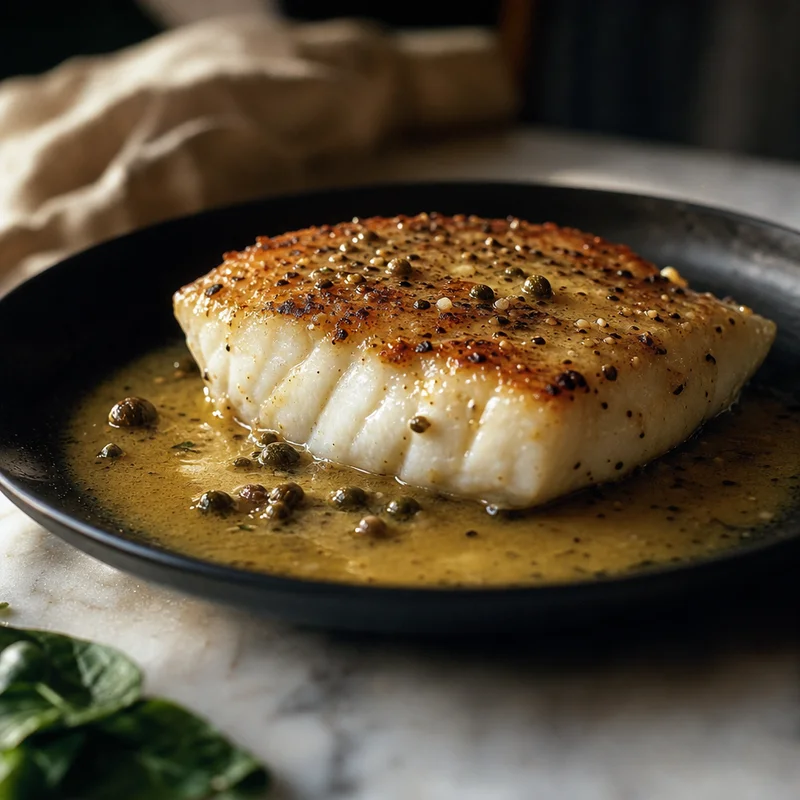
Chilean sea bass is expensive fish, so this recipe is built around not blowing it: dry the fillets, get the pan properly hot, sear one side hard for a lacquered crust, then finish in the oven and pull at 130–135°F for that famous buttery flake. A pan sauce of lemon, capers and cold butter comes together in three minutes while the fish rests, and a quick sauté of garlicky spinach and creamy mashed potatoes rounds it into a steakhouse-Italian plate.
Ingredients
Sea Bass
- 4 6-oz fillets Chilean sea bass fillets, skinless, about 1 1/4 inches thick
- 1 1/4 tsp kosher salt
- 1/2 tsp freshly ground black pepper
- 2 tbsp grapeseed or other neutral high-heat oil
- 1 tbsp unsalted butter
Lemon-Caper Butter
- 1 small shallot, minced
- 1/3 cup dry white wine, such as Pinot Grigio
- 2 tbsp fresh lemon juice, plus lemon wedges for serving
- 2 tbsp drained capers, rinsed
- 6 tbsp cold unsalted butter, cut into 6 pieces
- 2 tbsp chopped fresh flat-leaf parsley
- kosher salt, to taste
Garlic Spinach
- 1 tbsp extra-virgin olive oil
- 3 cloves garlic, thinly sliced
- 10 oz baby spinach
- 1 pinch kosher salt
Mashed Potatoes
- 2 lb Yukon Gold potatoes, peeled and cut into 1 1/2-inch chunks
- 1 tbsp kosher salt, for the cooking water
- 3/4 cup whole milk, warmed
- 5 tbsp unsalted butter
- kosher salt and white pepper, to taste
Instructions
- Take the sea bass out of the refrigerator, pat the fillets very dry on all sides with paper towels, and set them uncovered on a plate lined with fresh paper towels. Season all over with the 1 1/4 tsp kosher salt and the black pepper and let sit at room temperature for 20 minutes while you make the potatoes — dry, tempered fish is what gives you a real crust instead of steam.
- Heat the oven to 400°F. Put the potatoes in a large pot, cover with cold water by 1 inch, add 1 tbsp kosher salt, bring to a boil, then simmer 15–18 minutes until a paring knife slides through with no resistance.
- Drain the potatoes well and return them to the dry pot over low heat for 30 seconds to steam off moisture. Mash with a masher or pass through a ricer, then fold in the 5 tbsp butter until melted, followed by the warm milk. Season with salt and white pepper, cover, and keep warm over the lowest heat, stirring occasionally.
- Set a 12-inch oven-safe stainless or cast-iron skillet over medium-high heat and add the 2 tbsp neutral oil. Heat until the oil shimmers and you see the first faint wisp of smoke, about 2–3 minutes. Blot the fillets dry one last time.
- Lay the fillets in the pan presentation-side down, spacing them apart, and press each gently with a spatula for 5 seconds so it makes full contact. Do not move them. Sear 3–4 minutes, until the edges have turned opaque about a third of the way up and the underside is deep golden brown. If the pan sounds like it's screaming or the oil starts smoking hard, drop the heat to medium.
- Add the 1 tbsp butter to the pan, flip the fillets, spoon the foaming butter over them twice, then transfer the skillet to the 400°F oven. Roast 4–7 minutes, until an instant-read thermometer inserted into the thickest part reads 130–135°F. Sea bass is forgiving but not infinitely so — 130°F is silky and just-set, 140°F and above starts to dry out.
- Move the fish to a warm platter or plate, tent loosely with foil, and let it rest 5 minutes (it will coast up about 3°F). Pour off all but a thin film of fat from the skillet, but leave the browned bits.
- Return the skillet to medium heat, add the minced shallot, and cook 1 minute until softened. Add the white wine and simmer, scraping the pan, until reduced to about 2 tbsp, roughly 2 minutes. Add the lemon juice and capers.
- Lower the heat to the barest simmer and whisk in the 6 tbsp cold butter one piece at a time, adding the next only when the last has nearly disappeared, until you have a glossy, lightly thickened sauce. Do not let it boil or it will separate. Stir in the parsley, taste, and season with salt. Pull off the heat.
- Wipe out a second skillet or use a clean one: heat the olive oil over medium, add the sliced garlic and cook 45 seconds until fragrant and just barely golden. Add the spinach in handfuls with a pinch of salt, tossing, and cook 2–3 minutes until wilted. Tip the spinach into a strainer and press lightly to shed excess liquid.
- Spoon mashed potatoes onto four warm plates, nest the spinach alongside, and set a fillet on top seared-side up. Spoon the lemon-caper butter generously over the fish and around the plate, and serve immediately with lemon wedges.
- Serve right away with lemon wedges — the sauce is at its best within a few minutes of coming together.
Chef's tips
- Buy fillets of even thickness, ideally 1 1/4 inches, cut from the center of the loin. Thin tail pieces overcook before they can brown. If your fish is thinner than an inch, skip the oven entirely and just sear 2–3 minutes per side.
- An instant-read thermometer matters more here than any technique. At $30+ a pound, guessing is expensive. Probe from the side into the center of the thickest part and pull at 130–135°F.
- Frozen-at-sea sea bass is often better than 'fresh' fish that has been thawed at the counter. Thaw it overnight in the fridge on a rack, then dry it aggressively — thawed fish carries extra water that fights your sear.
- If your butter sauce breaks and looks oily, pull the pan off the heat, add 1 tsp cold water and whisk hard; it usually comes back together.
- No white wine? Use 1/3 cup low-sodium chicken broth plus an extra 1 tsp lemon juice.
- To lean toward the restaurant's peppery cream version, whisk 2 tbsp heavy cream and 1/2 tsp coarsely cracked black pepper into the reduced wine before mounting the butter.
Nutrition (per serving, estimated)
784calories
39gprotein
42gcarbs
47gfat
Estimates only — values vary with brands and portions.
Made with Sprig
Seared Chilean Sea Bass with Lemon-Caper Butter was created in Sprig — the AI chef that turns any craving into a complete recipe, plans your week, and shops with one smart list.
Free to start · 14-day Pro trial · cancel anytime
Not ready yet? Get the occasional recipe worth cooking — a couple a month at most.
You're on the list — check your inbox!
Unsubscribe anytime. Privacy Policy
More from Sprig Originals
Are you this recipe's original author or publisher? Report a problem