Sprig Originals's kitchen / Tekka Maki (Tuna Rolls)
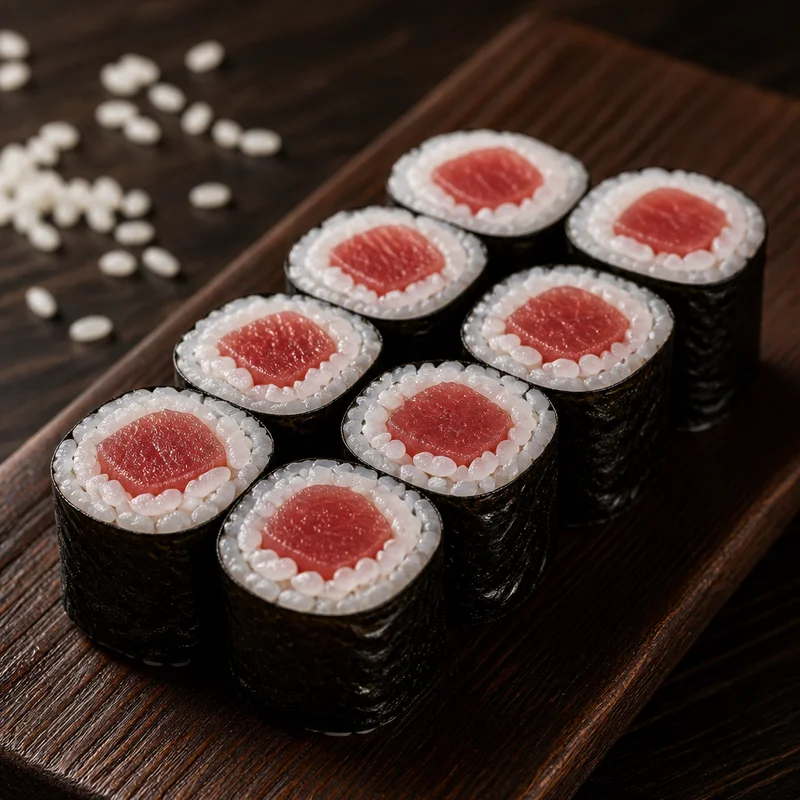
Tekka Maki (Tuna Rolls)
 By Sprig Originals · cooked up in Sprig
Worked out from this recipe's ingredients. If you're cooking for an allergy, always read the full ingredient list.
The best first roll to learn: one filling, seasoned sushi rice, and a bamboo mat. Sushi bars charge around nine dollars for six pieces of this, and the whole thing hinges on three skills — rice cooked and seasoned properly, a tightly rolled cylinder, and a wet knife that cuts without smearing. Make it once and every other maki becomes easy.
Ingredients
Sushi Rice
- 1 1/2 cups Japanese short-grain sushi rice
- 1 3/4 cups cold water
Sushi Vinegar (Awasezu)
- 3 tbsp unseasoned rice vinegar
- 1 1/2 tbsp granulated sugar
- 1 tsp fine sea salt
Rolls
- 8 oz sashimi-grade tuna loin (akami/bluefin or yellowfin), well chilled
- 4 sheets nori (full sheets, about 7 x 8 inches)
- 1 tbsp rice vinegar, for the hand-dipping water
- 2 cups water, for the hand-dipping bowl
- 1 tsp wasabi paste (optional, for inside the roll)
To Serve
- 1/4 cup soy sauce
- 2 tsp wasabi paste
- 2 tbsp pickled ginger (gari)
Instructions
- Rinse the rice: put 1 1/2 cups short-grain rice in a bowl, cover with cold water, swirl with your hand for 15 seconds, and pour off the cloudy water. Repeat 4 to 5 times until the water runs nearly clear, then drain in a sieve for 10 minutes.
- Cook the rice with 1 3/4 cups cold water in a rice cooker on the white-rice setting, or in a heavy 2-quart saucepan: bring to a boil uncovered, then clamp on the lid, drop to the lowest heat, and cook 12 minutes. Kill the heat and let it steam, lid on and untouched, for 10 minutes.
- Meanwhile make the awasezu: whisk 3 tablespoons rice vinegar, 1 1/2 tablespoons sugar, and 1 teaspoon salt in a small bowl until the sugar fully dissolves. Warm it 15 seconds in the microwave if it resists.
- Tip the hot rice into a wide non-metal bowl or wooden hangiri. Drizzle the vinegar mixture over the surface, then use a rice paddle or silicone spatula to slice and fold — cut down through the rice and flip it over rather than stirring, which crushes the grains. Fan it (a magazine works) for 3 to 4 minutes as you fold, until the rice is glossy and just barely warm, about body temperature. Cover with a damp towel; never refrigerate it.
- Cut the tuna: pat the loin dry, trim off any sinew or bloodline, and slice it into long batons about 1/2 inch thick and 1/2 inch wide — the length of the nori sheet's short side. Aim for 2 batons per roll. Keep them on a chilled plate until you roll.
- Set up your station: bamboo rolling mat (wrap it in plastic wrap if it's new or you want easy cleanup), a bowl of 2 cups water mixed with 1 tablespoon vinegar for your hands (tezu), a damp kitchen towel, and a sharp thin-bladed knife.
- Cut each nori sheet in half crosswise so you have 8 half-sheets — half-sheets are the traditional size for tekka maki and much easier for a first roll. Lay one half-sheet shiny side down on the mat, with the lines in the nori running left to right and the bottom edge lined up with the mat's near edge.
- Dip your fingers in the tezu and shake off the excess — damp, not dripping. Pick up about 1/3 cup of rice (roughly 3 ounces) and spread it over the nori in a thin, even layer, leaving a clean 3/4-inch border along the far edge. Push the rice gently to the side edges; don't press it into a paste.
- Smear a thin line of wasabi across the center of the rice if using, then lay 2 tuna batons end to end in a single line along the middle, trimming to fit.
- Roll: lift the near edge of the mat with your thumbs, use your fingers to hold the tuna in place, and fold the nori up and over the filling so the near edge lands just past the far side of the tuna. Squeeze the mat gently along its length to compress the cylinder, then lift the mat's edge and roll the log forward onto the bare nori border. Squeeze once more, firmly and evenly, and square the ends by pressing them in with your fingers.
- Set the finished roll seam side down and repeat with the remaining 7 half-sheets. Let each roll rest seam down for a minute or two so the nori seals itself.
- Cut with a wet knife: dip the blade in water or wipe it with a damp towel before every single cut. Slice each roll in half first, lay the two halves side by side, then cut each into 3 equal pieces — 6 pieces per roll. Use one long pull-through stroke, no sawing, and re-wet the blade whenever rice starts to stick.
- Arrange cut side up on a platter and serve immediately with soy sauce, wasabi, and pickled ginger. Dip fish side down, not rice side, so the roll doesn't fall apart.
Chef's tips
- Buy tuna from a fishmonger you trust and ask specifically for sashimi- or sushi-grade, then use it the same day. Frozen-at-sea saku blocks are a genuinely excellent and safer option — thaw them overnight in the fridge, still wrapped.
- Rice at room temperature is non-negotiable. Cold rice turns hard and won't stick to the nori; hot rice steams the nori limp. Body temperature is the target.
- Under-rice rather than over-rice. Beginners always use too much, which makes the roll impossible to close. A thin layer where you can still see the nori through it in places is correct.
- If your roll comes out loose, you didn't squeeze the mat. Compress it twice — once right after the fold, once after rolling forward — using firm, even pressure across the whole length.
- Trim the ends of each roll before slicing if they look ragged; those two bites are the cook's reward.
- Leftover seasoned rice makes excellent onigiri the same day. Don't refrigerate sushi rice — it goes chalky.
Nutrition (per serving, estimated)
285calories
19gprotein
46gcarbs
2gfat
Estimates only — values vary with brands and portions.
Made with Sprig
Tekka Maki (Tuna Rolls) was created in Sprig — the AI chef that turns any craving into a complete recipe, plans your week, and shops with one smart list.
Free to start · 14-day Pro trial · cancel anytime
Not ready yet? Get the occasional recipe worth cooking — a couple a month at most.
You're on the list — check your inbox!
Unsubscribe anytime. Privacy Policy
More from Sprig Originals
Char-Grilled Oysters with Garlic-Worcestershire Butter
French Onion Patty Melts on Rye
Dark Roux Seafood Gumbo with Quick Shrimp Stock
Are you this recipe's original author or publisher? Report a problem