Sprig Originals's kitchen / Sweet and Sour Spareribs with a Sticky Black Vinegar Glaze
Sweet and Sour Spareribs with a Sticky Black Vinegar Glaze
 By Sprig Originals · cooked up in Sprig
Worked out from this recipe's ingredients. If you're cooking for an allergy, always read the full ingredient list.
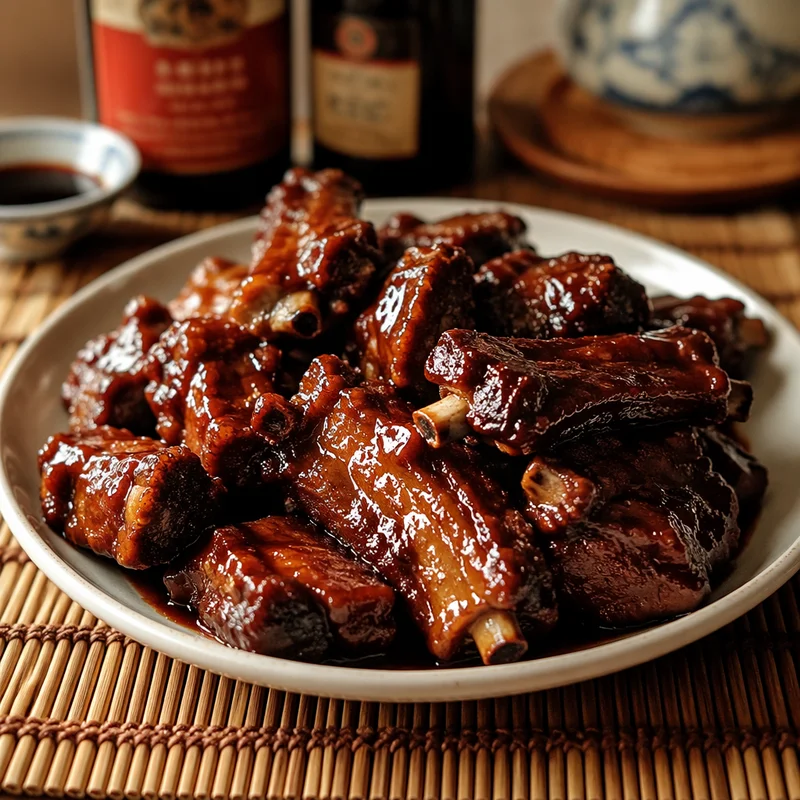
Short-cut spareribs are blanched, browned in a wok, then simmered in the classic Shanghai 1-2-3-4-5 sauce — wine, soy, sugar, black vinegar and water — until the pork is fork-tender. The lid comes off at the end and the liquid reduces to a mahogany glaze that clings to every rib instead of pooling on the plate. A second splash of Chinkiang vinegar right before serving keeps the sour edge bright.
Ingredients
Ribs and blanching
- 2 lb pork spareribs, cut crosswise into 1 1/2-inch pieces
- 1 tbsp Shaoxing wine
- 4 slices fresh ginger, coin-sized
- 2 scallions, cut into 2-inch lengths
Sauce (the 1-2-3-4-5)
- 1 tbsp Shaoxing wine
- 2 tbsp light soy sauce
- 3 tbsp granulated sugar (or crushed rock sugar)
- 4 tbsp Chinkiang black vinegar
- 5 tbsp water
- 1 tsp dark soy sauce, for color
- 1 cup hot water, plus more as needed
Cooking and finishing
- 2 tbsp neutral oil, such as peanut or canola
- 3 slices fresh ginger
- 1 star anise (optional)
- 1 tbsp Chinkiang black vinegar, for finishing
- 1/4 tsp kosher salt, or to taste
- 2 tsp toasted sesame seeds
- 1 scallion, thinly sliced
Instructions
- Ask the butcher to band-saw a rack of spareribs crosswise into 1 1/2-inch lengths, then cut between the bones at home so each piece is a single short rib. Rinse the pieces under cold water and rub away any bone dust.
- Put the ribs in a pot, cover with cold water by 2 inches, and add 1 tablespoon Shaoxing wine, the ginger coins and the scallion lengths. Bring to a boil over high heat, skimming the gray foam for the first 2 minutes, then boil 3 minutes more. Drain into a colander and rinse the ribs under warm (not cold) running water to wash off the scum. Pat completely dry — wet ribs will not brown.
- Stir the sauce together in a measuring cup: 1 tablespoon Shaoxing wine, 2 tablespoons light soy sauce, 3 tablespoons sugar, 4 tablespoons Chinkiang vinegar, 5 tablespoons water, plus the dark soy sauce. Set it next to the stove.
- Heat a wok or wide heavy skillet over medium-high with 2 tablespoons oil. When it shimmers, add the ribs in a single layer, meaty side down. Fry undisturbed for 3 to 4 minutes until deeply browned, then turn and brown the second side another 3 minutes. Work in two batches if the pan is crowded.
- Return all the ribs to the pan, add the 3 fresh ginger slices and the star anise, and toss for 30 seconds until fragrant.
- Pour in the sauce mixture. It will hiss and reduce fast — stir to coat the ribs, then add 1 cup hot water. It should come about two-thirds of the way up the ribs; add a splash more if not.
- Bring to a boil, then drop the heat to low, cover, and simmer for 40 to 45 minutes. Stir every 15 minutes and check the liquid level, adding 1/4 cup hot water if the pan looks dry. The ribs are ready when a paring knife slides into the meat with no resistance and the meat has pulled back from the bone ends.
- Uncover, fish out the ginger and star anise, and raise the heat to medium-high. Boil the liquid down for 6 to 10 minutes, turning the ribs constantly with tongs or shaking the pan, until the sauce goes from watery to syrupy and starts to coat the back of a spoon. Watch closely in the last 2 minutes — the sugar can catch and burn.
- When the glaze is thick enough to cling to the ribs and leaves a clear trail when you drag a spoon through the pan, kill the heat. Add the final 1 tablespoon Chinkiang vinegar and toss for 15 seconds off the heat — this restores the sharp aroma that boils away during the simmer. Taste and add up to 1/4 teaspoon salt if it needs grounding.
- Pile the ribs on a warm plate, scrape every bit of glaze over the top, and scatter with toasted sesame seeds and sliced scallion. Serve hot or at room temperature with steamed rice.
Chef's tips
- If your market only sells whole racks, buy pork riblets or a rack of St. Louis ribs and ask the meat counter to cut it crosswise into 1 1/2-inch strips — that cut is what makes this dish work, and it takes them ten seconds on the saw.
- Chinkiang (Zhenjiang) black vinegar is the whole personality of the dish: malty, mellow and less aggressive than white vinegar. If you truly can't find it, use 3 tablespoons balsamic plus 1 tablespoon rice vinegar, and cut the sugar to 2 1/2 tablespoons.
- The reduction is where most people go wrong. Stop when the glaze coats the ribs and pools thinly — if you push past that, it turns to hard candy as it cools. If it does seize, add 2 tablespoons hot water off the heat and stir to loosen.
- Rock sugar gives a glossier, less cloying glaze than granulated. Smash it under a towel with a rolling pin so it dissolves evenly.
- These are excellent cold the next day. Reheat covered in a 300°F oven with a tablespoon of water to soften the glaze back up.
Nutrition (per serving, estimated)
620calories
29gprotein
19gcarbs
45gfat
Estimates only — values vary with brands and portions.
Made with Sprig
Sweet and Sour Spareribs with a Sticky Black Vinegar Glaze was created in Sprig — the AI chef that turns any craving into a complete recipe, plans your week, and shops with one smart list.
Free to start · 14-day Pro trial · cancel anytime
Not ready yet? Get the occasional recipe worth cooking — a couple a month at most.
You're on the list — check your inbox!
Unsubscribe anytime. Privacy Policy
More from Sprig Originals
Are you this recipe's original author or publisher? Report a problem