Spanish Cured Meat Platter with Sherry-Vinegar Olives
 By Sprig Originals · cooked up in Sprig
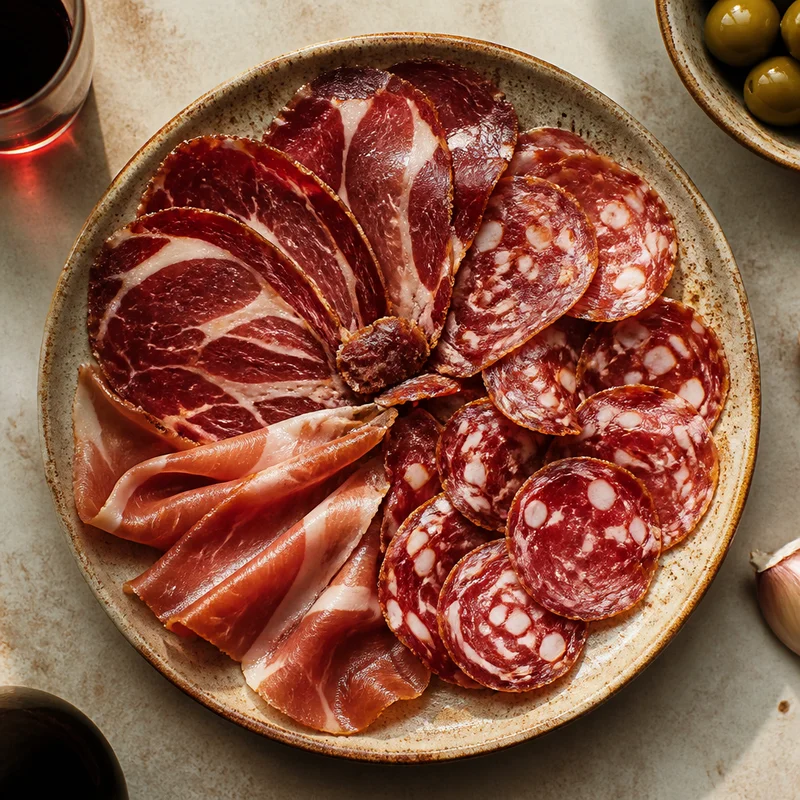
A proper embutidos board is a shopping-and-slicing project, not a cooking one. Four cured pork products — jamón, chorizo, lomo and salchichón — each get their own knife angle and thickness, then rest at room temperature until the fat turns glossy and the aromas open up. A quick plate of olives marinated in sherry vinegar, orange zest and smashed garlic cuts the richness, and Marcona almonds, Manchego and good bread round it into the kind of spread that costs $38 in a tapas bar and about a third of that at home.
Ingredients
- 4 oz jamón serrano or jamón ibérico, in one piece or pre-sliced
- 5 oz cured Spanish chorizo (not fresh), a dry-cured link
- 4 oz lomo embuchado (cured pork loin)
- 5 oz salchichón or fuet (Spanish cured salami)
- 2 cups mixed unpitted olives (Gordal, Manzanilla, Arbequina)
- 3 tbsp Spanish extra-virgin olive oil
- 2 tbsp sherry vinegar
- 2 cloves garlic, peeled and smashed
- 3 strips orange zest, peeled wide with a vegetable peeler
- 1 tsp fennel seeds
- 1 tsp dried oregano
- 1/2 tsp sweet pimentón (smoked Spanish paprika)
- 1 pinch red pepper flakes
- 1 sprig fresh thyme or rosemary
- 6 oz Manchego cheese, 6- to 12-month aged
- 1 cup Marcona almonds
- 1 jar piquillo peppers (about 8 oz), drained
- 4 oz quince paste (membrillo)
- 1 loaf rustic baguette or pan de cristal
- to taste flaky sea salt
- to taste extra-virgin olive oil, for drizzling
Instructions
- Marinate the olives first, ideally 4 hours to 3 days ahead: drain the olives and pat them dry. In a small skillet over low heat, warm the 3 tablespoons olive oil with the smashed garlic, orange zest strips, fennel seeds, oregano, pimentón and red pepper flakes for 3 to 4 minutes, just until the garlic smells sweet and the oil is fragrant — do not let the garlic color. Pull the pan off the heat, stir in the sherry vinegar (it will hiss), then pour everything over the olives in a jar or bowl and tuck in the thyme sprig. Cover and refrigerate; shake once or twice a day.
- Shop with intent. You want four distinct textures, not four versions of salami: jamón (silky, sliced paper-thin), chorizo (firm, deep red, smoky with pimentón), lomo (lean, dense, whole cured pork loin — the most delicate of the four), and salchichón or fuet (coarser grind, peppery, springy). Buy jamón in a sealed pre-sliced pack unless you have a very sharp long knife; buy the other three as whole links or pieces and slice them yourself, which costs less and tastes fresher.
- Take everything out of the refrigerator 45 minutes to 1 hour before serving. This is the single most important step: cold cured pork tastes waxy and mute. At 65 to 70°F the fat softens to translucent and the aromas — nuts, smoke, cured pepper — actually reach your nose. Leave pre-sliced jamón sealed in its package while it tempers so it doesn't dry out.
- Slice the chorizo: trim off any papery casing at the cut end and peel back about 2 inches with a paring knife. Hold the link at a sharp 30-degree angle to the board and cut coins about 1/8 inch thick — thick enough to chew, thin enough to bend. You should get long ovals, not round pucks. Peel and slice only what you'll serve; wrap the rest in butcher paper.
- Slice the lomo as thin as you possibly can — this is the leanest meat on the board and thickness reads as toughness. Remove the casing, then cut straight across the loin at 90 degrees with a long, sharp knife, aiming for translucent rounds about 1/16 inch thick. If the piece is short and wide, chill it for 15 minutes to firm the fat, slice, then let the slices come back to room temperature on the board.
- Slice the salchichón or fuet at a slight angle, 1/8 inch thick, casing removed. Fuet is narrow, so cut it on a long bias to get more surface area per slice. For jamón, if you're slicing it yourself from a piece, use a long thin blade held nearly flat and shave with a sawing pull toward you; each slice should be thin enough to see the board through it, about 2 inches wide and no more than 3 inches long.
- Cut the Manchego into thin wedges: slice the rind end away, then cut 1/4-inch triangles following the natural wedge shape so each piece keeps a bit of rind edge for gripping. Slice the membrillo into 1/4-inch slabs and cut into small squares. Open the piquillo peppers, drain well, and tear them into wide strips.
- Build the board 15 minutes before guests arrive. Drape the jamón in loose ribbons — never flat and never stacked, or the slices weld together; lift each one and let it fall into folds. Fan the chorizo coins in an overlapping row, shingle the lomo in a tight arc, and pile the salchichón in a casual heap. Group the Manchego wedges with the membrillo squares, and mound the Marcona almonds and piquillo strips into the gaps.
- Turn the olives out into a small shallow dish with a spoonful of their marinade, garlic and orange zest included, and set it beside the board with an empty bowl for pits. Finish the lomo and jamón with a whisper of flaky salt and a thin drizzle of olive oil over the piquillos only — the cured meats need nothing.
- Slice the bread 1/2 inch thick and serve it plain in a napkin-lined basket, or toast it if you like. Serve immediately, with chilled fino or amontillado sherry, vermut, or a light Rioja. Replenish the board in small batches from the reserved links rather than putting everything out at once, so nothing dries or warms past its prime.
Chef's tips
- Cured Spanish chorizo and fresh Mexican chorizo are not interchangeable. You want a firm, dry link that slices cleanly and needs no cooking — look for the words 'cured' or 'seco' on the label, or shop the shelf-stable charcuterie section rather than the raw-meat case.
- No slicer, no problem: refrigerate whole links for 20 minutes before cutting so the fat firms up, and use your longest, thinnest knife. Wipe the blade between every few slices — accumulated fat drags the edge and tears the meat.
- Buy about 3 ounces of total meat per person for an appetizer, doubling to 6 ounces if the board is dinner. Skew toward jamón and chorizo, which almost everyone loves, and treat the lomo as the small-quantity luxury item.
- Any leftover chorizo, salchichón and jamón ends are gold: dice them into scrambled eggs, lentil soup or a paella base. Save the Manchego rinds in the freezer to drop into bean soups.
- The olives improve for three days and hold for two weeks refrigerated. Pull them out an hour ahead with the meats — cold olive oil goes cloudy and thick, and the marinade loses its perfume.
Nutrition (per serving, estimated)
Made with Sprig
Spanish Cured Meat Platter with Sherry-Vinegar Olives was created in Sprig — the AI chef that turns any craving into a complete recipe, plans your week, and shops with one smart list.
More from Sprig Originals
Are you this recipe's original author or publisher? Report a problem