Sprig Originals's kitchen / Oven-Braised Baby Back Ribs with Sticky Broiled Bark
Oven-Braised Baby Back Ribs with Sticky Broiled Bark
 By Sprig Originals · cooked up in Sprig
Worked out from this recipe's ingredients. If you're cooking for an allergy, always read the full ingredient list.
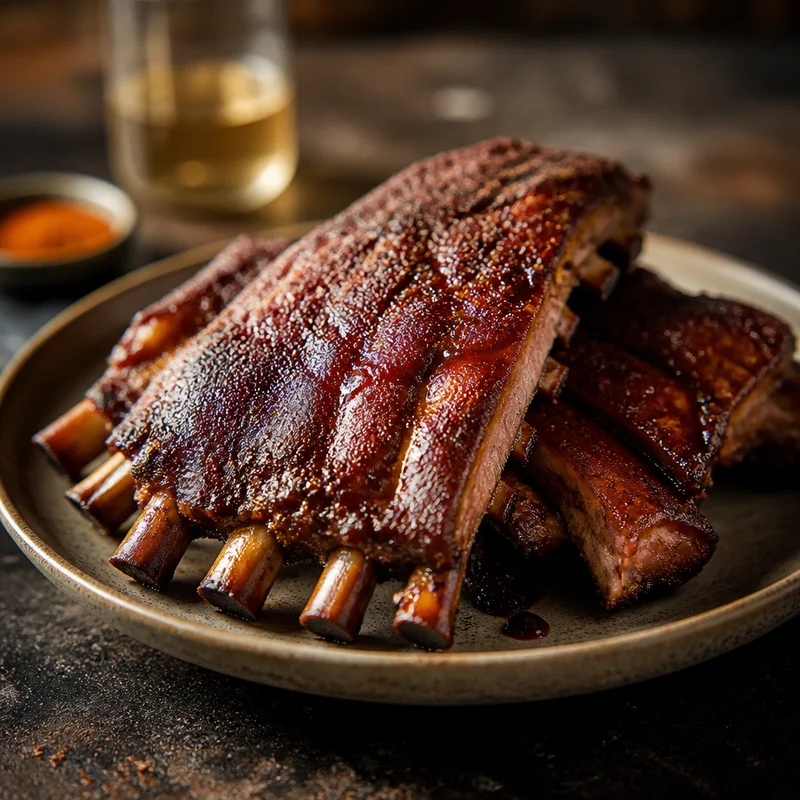
Steakhouse-style baby back ribs without a smoker. A brown-sugar-and-paprika rub sets overnight, then the racks braise low and slow in a tight foil pouch with cider vinegar and apple juice until the meat pulls cleanly from the bone. A final blast under the broiler (or five minutes on a hot grill) lacquers on a tangy homemade sauce and builds the sticky, blistered bark that makes a $27 plate of ribs worth ordering.
Ingredients
Ribs and Rub
- 2 racks baby back ribs (about 2 to 2 1/2 lb each)
- 2 tbsp packed dark brown sugar
- 1 tbsp kosher salt
- 1 tbsp sweet paprika
- 2 tsp smoked paprika
- 2 tsp garlic powder
- 1 tsp onion powder
- 1 tsp freshly ground black pepper
- 1 tsp dry mustard
- 1/2 tsp chipotle chile powder or cayenne
- 1 tbsp yellow mustard
Braising Liquid
- 1/2 cup apple juice or apple cider
- 1/4 cup apple cider vinegar
- 3 tbsp unsalted butter, cut into pats
- 2 tbsp honey
Sticky Sauce
- 1 cup ketchup
- 1/3 cup packed dark brown sugar
- 3 tbsp apple cider vinegar
- 2 tbsp molasses
- 2 tbsp Worcestershire sauce
- 1 tbsp Dijon mustard
- 1 tsp garlic powder
- 1/2 tsp smoked paprika
- 1/4 tsp kosher salt
- 1/2 tsp hot sauce, or to taste
To Finish
- 2 tbsp thinly sliced scallion greens
- Flaky salt, for serving
Instructions
- Prep the racks: pat the ribs dry. Slide a butter knife under the thin, papery membrane on the bone side at one end, lift a corner, grip it with a paper towel, and peel it off in one sheet. Trim any loose flaps of fat.
- Make the rub: whisk the brown sugar, kosher salt, sweet paprika, smoked paprika, garlic powder, onion powder, black pepper, dry mustard, and chipotle powder in a small bowl. Smear both racks all over with the yellow mustard (it is just glue, you will not taste it), then coat every surface generously with the rub, pressing it in.
- Rest: set the racks on a rack-lined sheet pan, cover loosely, and refrigerate at least 1 hour and ideally 8 to 24 hours. Pull them out 30 minutes before cooking.
- Heat the oven to 275°F with a rack in the lower third. Tear two 24-inch sheets of heavy-duty foil for each rack (or double up regular foil).
- Wrap: lay a rack meat-side up on the foil. Scatter half the butter pats over the top, drizzle with 1 tablespoon honey, then pour 1/4 cup apple juice and 2 tablespoons cider vinegar around the base. Bring the foil up and crimp into a tightly sealed pouch, keeping the liquid in. Repeat with the second rack. Set both pouches seam-side up on a rimmed sheet pan.
- Braise for 2 1/2 to 3 hours. Start checking at 2 1/2 hours: carefully open a pouch (steam is hot) and probe between the bones with a skewer, which should slide in with almost no resistance. The meat should have pulled back about 1/4 inch from the bone ends. Thicker racks may need the full 3 hours.
- Make the sauce while the ribs cook: combine the ketchup, brown sugar, cider vinegar, molasses, Worcestershire, Dijon, garlic powder, smoked paprika, salt, and hot sauce in a small saucepan. Simmer over medium-low, stirring often, for 12 to 15 minutes, until glossy and thick enough to coat a spoon. Keep warm.
- Drain and rest: open the pouches and pour the rib juices into a fat separator or heatproof measuring cup. Skim the fat and stir 3 tablespoons of the defatted juices into the sauce for depth. Let the racks sit uncovered for 10 minutes so the surface dries out — dry meat lacquers, wet meat steams.
- Broil to finish: move an oven rack 6 inches below the broiler element and heat the broiler to high. Set the racks meat-side up on a foil-lined sheet pan. Brush with a thin coat of sauce and broil 3 to 4 minutes, until it tightens and darkens. Brush a second coat and broil 3 to 4 minutes more, watching constantly — the sugar goes from caramelized to burnt in under a minute. For grill finish instead: sauce the racks and cook over medium-direct heat, 400°F, meat-side down for 2 minutes, then flip, sauce again, and close the lid for 3 to 4 minutes.
- Rest the ribs 5 to 10 minutes, then cut down between the bones with a sharp knife, slicing from the bone side where the gaps are visible. Pile on a platter, brush with a little more sauce, and scatter with scallion greens and flaky salt. Serve the remaining sauce alongside.
Chef's tips
- Removing the membrane is non-negotiable — it never softens and it blocks the rub from reaching the meat.
- If your foil pouch leaks, the ribs will roast instead of braise and end up dry. Use heavy-duty foil and crimp seams tightly upward, and set the pouches on a sheet pan to catch drips.
- Cooking ahead? Braise the ribs a day early, cool in the sealed pouches, and refrigerate. Reheat wrapped at 300°F for 25 minutes, then dry, sauce, and broil to order.
- Spare ribs work here too, but add 45 to 60 minutes to the braise — they are meatier and fattier than baby backs.
- The bend test is the real doneness check: lift a rack with tongs at one end and it should sag deeply and the surface should crack. If it stays stiff, wrap it back up for another 20 minutes.
Nutrition (per serving, estimated)
1180calories
58gprotein
90gcarbs
62gfat
Estimates only — values vary with brands and portions.
Made with Sprig
Oven-Braised Baby Back Ribs with Sticky Broiled Bark was created in Sprig — the AI chef that turns any craving into a complete recipe, plans your week, and shops with one smart list.
Free to start · 14-day Pro trial · cancel anytime
Not ready yet? Get the occasional recipe worth cooking — a couple a month at most.
You're on the list — check your inbox!
Unsubscribe anytime. Privacy Policy
More from Sprig Originals
Are you this recipe's original author or publisher? Report a problem