Sprig Originals's kitchen / Weeknight Bibimbap Bowls with Gochujang Sauce
Weeknight Bibimbap Bowls with Gochujang Sauce
 By Sprig Originals · cooked up in Sprig
Worked out from this recipe's ingredients. If you're cooking for an allergy, always read the full ingredient list.
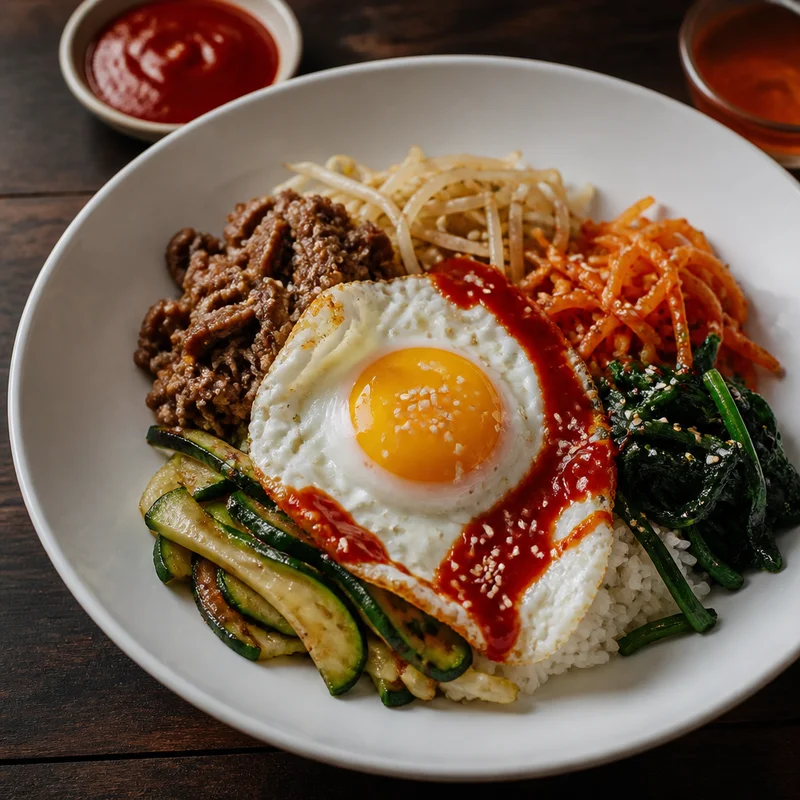
A use-what-you-have rice bowl built the Korean way: three or four vegetables each seasoned separately in the same skillet, your choice of protein, a runny fried egg on top and a glossy gochujang sauce that everyone stirs in at the table. Nothing here is fussy — the technique is just cooking each vegetable for two minutes and dressing it while warm, which is what makes a pile of ordinary produce taste like a restaurant bowl.
Ingredients
Gochujang sauce
- 1/4 cup gochujang (Korean red chile paste)
- 1 tbsp toasted sesame oil
- 1 tbsp rice vinegar
- 1 tbsp honey or sugar
- 2 tsp soy sauce
- 1 clove garlic, finely grated
- 2 tbsp water, plus more as needed
Rice
- 2 cups short-grain white rice
- 2 1/4 cups water
Seasoned vegetables (pick 3 or 4)
- 5 oz baby spinach
- 2 medium carrots, cut into thin matchsticks
- 8 oz shiitake or cremini mushrooms, thinly sliced
- 1 medium zucchini, cut into thin half-moons
- 2 cups mung bean sprouts (optional)
- 4 tsp toasted sesame oil, divided
- 2 tbsp neutral oil, divided
- 3 cloves garlic, minced, divided
- 2 tsp soy sauce, divided
- 1 tbsp toasted sesame seeds
- kosher salt
Protein (choose one)
- 12 oz ground beef, or thinly sliced sirloin
- 14 oz extra-firm tofu, pressed and cubed (vegetarian option)
- 2 tbsp soy sauce
- 1 tbsp brown sugar
- 1 tsp toasted sesame oil
- 1 clove garlic, minced
To serve
- 4 large eggs
- 1 tbsp neutral oil
- 2 scallions, thinly sliced
- 1 cup kimchi, roughly chopped (optional)
- 1 sheet toasted nori, cut into thin strips (optional)
Instructions
- Rinse the rice in a bowl of cold water, swirling and draining 3 times until the water runs mostly clear. Combine with 2 1/4 cups water in a saucepan, bring to a boil over high heat, then cover, reduce to the lowest heat and cook 15 minutes. Turn off the heat and let it steam, covered, 10 minutes more. (Or cook in a rice cooker.)
- Make the sauce: whisk the gochujang, 1 tablespoon sesame oil, rice vinegar, honey, 2 teaspoons soy sauce, grated garlic and 2 tablespoons water in a small bowl until smooth and pourable, like ketchup. Add water a teaspoon at a time if it's too thick. Set aside.
- Mix the protein marinade: stir 2 tablespoons soy sauce, brown sugar, 1 teaspoon sesame oil and 1 minced garlic clove into the ground beef (or toss with the tofu cubes). Let it sit while you cook the vegetables.
- Blanch the spinach: bring a small pot of salted water to a boil, add the spinach and cook 30 seconds, just until collapsed. Drain, rinse under cold water, then squeeze firmly in your hands to remove as much liquid as possible. Chop roughly and toss with 1 teaspoon sesame oil, 1/3 of the minced garlic, 1/2 teaspoon soy sauce and a pinch of salt. Pile it in one corner of a large platter.
- Heat a large nonstick or cast-iron skillet over medium-high with 2 teaspoons neutral oil. Add the carrots and a pinch of salt and cook, tossing, 2 to 3 minutes until just tender but still bright. Scrape onto the platter and toss with 1 teaspoon sesame oil.
- Return the skillet to medium-high with 2 more teaspoons oil. Add the mushrooms and a pinch of salt and cook undisturbed 2 minutes, then toss and cook 2 to 3 minutes more until browned and any liquid has evaporated. Add 1/3 of the garlic and 1 teaspoon soy sauce, toss 30 seconds, and move to the platter.
- Add 2 teaspoons oil to the skillet and cook the zucchini with a pinch of salt over medium-high, tossing, 2 minutes until barely softened. Add the remaining garlic and cook 30 seconds. Move to the platter and drizzle with the last teaspoon of sesame oil. If using bean sprouts, blanch them 2 minutes in the spinach water, drain, and season with salt and a splash of sesame oil. Sprinkle all the vegetables with sesame seeds.
- Wipe the skillet, set it over medium-high heat with 1 teaspoon oil, and cook the beef, breaking it up, 4 to 5 minutes until browned and the marinade has glazed it. (For tofu, use 1 tablespoon oil and pan-fry 8 to 10 minutes, turning, until crisp on several sides, adding the marinade in the last minute.) Transfer to a bowl.
- Fry the eggs: wipe the skillet, add 1 tablespoon neutral oil and heat over medium. Crack in the eggs, season with salt, and cook 2 1/2 to 3 minutes, basting the whites with the hot oil, until the edges are crisp and lacy and the yolks are still liquid.
- Divide the warm rice among 4 wide bowls. Arrange the vegetables in separate mounds around the edge, add the protein and kimchi, and set an egg in the center. Scatter with scallions and nori. Serve the gochujang sauce alongside so everyone can add 1 to 2 tablespoons and mix the whole bowl vigorously with a spoon before eating.
Chef's tips
- Any three or four vegetables work: blanched bean sprouts, sautéed cabbage, quick-pickled cucumber, roasted sweet potato, snow peas, even frozen corn. The rule is one vegetable at a time in the pan, seasoned with salt, garlic and sesame oil while still warm.
- For a crackly dolsot-style crust, heat a cast-iron skillet over medium with 1 tablespoon sesame oil, press in 2 cups of the cooked rice and cook undisturbed 5 to 7 minutes until it smells toasty, then build the bowl right in the pan.
- Everything except the eggs can be made up to 3 days ahead and refrigerated in separate containers — reheat the rice and protein and serve the vegetables at room temperature for a 10-minute dinner.
- Gochujang brands vary a lot in heat and salt. Taste the sauce and adjust with honey for sweetness or vinegar for lift; thin leftovers with water and use them on eggs or grain bowls all week.
Nutrition (per serving, estimated)
720calories
35gprotein
88gcarbs
27gfat
Estimates only — values vary with brands and portions.
Made with Sprig
Weeknight Bibimbap Bowls with Gochujang Sauce was created in Sprig — the AI chef that turns any craving into a complete recipe, plans your week, and shops with one smart list.
Free to start · 14-day Pro trial · cancel anytime
Not ready yet? Get the occasional recipe worth cooking — a couple a month at most.
You're on the list — check your inbox!
Unsubscribe anytime. Privacy Policy
More from Sprig Originals


Are you this recipe's original author or publisher? Report a problem