Sprig Originals's kitchen / Steakhouse Red Wine Pan Sauce
Steakhouse Red Wine Pan Sauce
 By Sprig Originals · cooked up in Sprig
Worked out from this recipe's ingredients. If you're cooking for an allergy, always read the full ingredient list.
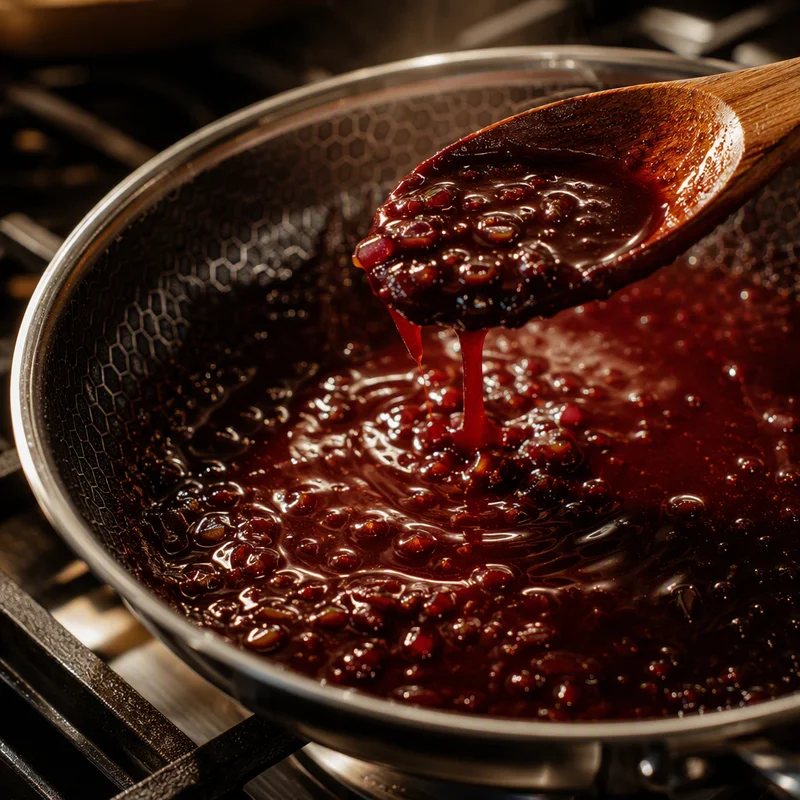
The sauce that turns a good home-cooked steak into a special-occasion one: shallots softened in the same skillet you seared in, red wine cooked down to a syrup, stock reduced until it coats a spoon, then a cold knob of butter swirled in off the heat for gloss. It takes about ten minutes of active work after the steak comes out of the pan, which is exactly how long the meat needs to rest.
Ingredients
For the fond (searing the steak)
- 2 boneless steaks, 1 to 1 1/2 inches thick (ribeye, strip or sirloin), about 12 oz each
- 1 tbsp neutral oil, such as grapeseed or canola
- kosher salt and coarsely ground black pepper
For the sauce
- 2 tbsp unsalted butter, divided
- 2 large shallots, finely minced (about 1/2 cup)
- 1 garlic clove, smashed
- 1 tsp tomato paste
- 1 1/4 cups dry red wine (Cabernet Sauvignon, Merlot or Syrah)
- 1 1/2 cups low-sodium beef stock or veal stock
- 2 sprigs fresh thyme
- 1 small bay leaf
- 1 tsp red wine vinegar or sherry vinegar
To finish
- 4 tbsp cold unsalted butter, cut into 4 cubes
- kosher salt, to taste
- flaky sea salt and chopped chives, for serving (optional)
Instructions
- Pat the steaks very dry and season generously on all sides with kosher salt and coarse black pepper. Let them sit at room temperature for 30 minutes if you have time — dry surface means better browning, and browning is where this sauce comes from.
- Heat a heavy stainless-steel or cast-iron skillet over medium-high until a drop of water skitters and evaporates instantly, about 3 minutes. Add the neutral oil, swirl, and lay in the steaks. Sear undisturbed 3 to 4 minutes per side for medium-rare (125°F on an instant-read thermometer), pressing lightly so the whole surface contacts the pan. Transfer to a cutting board or rack, tent loosely with foil, and rest at least 10 minutes while you build the sauce. Do not wash the skillet — the browned crust stuck to the bottom is the entire point.
- Pour off all but about 1 tablespoon of fat from the skillet. Return it to medium heat, add 1 tablespoon of the butter, then the minced shallots and smashed garlic. Cook, stirring and scraping constantly with a wooden spoon, until the shallots are soft and translucent, 2 to 3 minutes. If the fond looks dangerously dark, drop the heat immediately.
- Push the shallots aside, add the tomato paste to a bare spot, and fry it for 45 seconds until it darkens to brick red and smells sweet. Stir it into the shallots.
- Pour in the red wine and raise the heat to medium-high. As it bubbles, scrape hard at the bottom of the pan until every bit of fond dissolves into the liquid. Add the thyme and bay leaf and reduce, stirring occasionally, until the wine is thick and syrupy and a spatula drawn across the pan leaves a clear trail — about 6 to 8 minutes, down to roughly 1/4 cup. Reducing the wine this far before the stock goes in is what removes the raw, sharp edge.
- Add the beef stock along with any juices that have pooled under the resting steaks. Simmer at a steady, energetic bubble until reduced by about two-thirds, 8 to 12 minutes. You want roughly 3/4 cup of glossy liquid that lightly coats the back of a spoon and looks a shade darker than the stock did going in.
- Strain the sauce through a fine-mesh sieve into a small saucepan or heatproof bowl, pressing the solids with a spoon to extract everything, then discard the solids. (For a rustic sauce with texture, skip straining and just fish out the thyme, bay leaf and garlic.)
- Return the strained sauce to low heat — it should be steaming but not simmering. Add the cold butter one cube at a time, swirling the pan or whisking constantly and waiting until each piece has nearly disappeared before adding the next. The sauce will turn opaque, thicken slightly and take on a satiny shine. This takes about 1 minute; if it ever boils, the butter will break and the sauce will look greasy.
- Off the heat, stir in the vinegar and taste. Add salt in small pinches until the flavor snaps into focus — reduced stock needs less salt than you'd expect, so go slowly. Serve immediately.
- Slice the rested steak against the grain, arrange on warm plates, and spoon 2 to 3 tablespoons of sauce over or alongside each portion. Finish with flaky salt and chives if you like.
Chef's tips
- Buy wine you'd actually drink a glass of. It reduces to a fifth of its volume, so anything harsh, sweet or labeled "cooking wine" gets five times more so.
- Boxed broth is thinner than restaurant veal stock, so it needs more reduction to get body. If your sauce still feels watery after reducing by two-thirds, keep going — or cheat with 1 teaspoon of store-bought demi-glace concentrate stirred in with the stock.
- The butter must be cold and the sauce must be below a simmer when you add it. Cold butter melts slowly enough to emulsify instead of separating; that's the difference between glossy and oily.
- No steak on the menu? Build the same sauce over 8 oz of sliced cremini mushrooms browned hard in oil until they squeak and stick — they leave behind a surprisingly convincing fond. Use mushroom or vegetable stock.
- Made ahead: stop after straining and refrigerate the reduced base up to 3 days or freeze up to 3 months. Rewarm gently and mount with cold butter just before serving — never reheat an already-buttered pan sauce over high heat.
Nutrition (per serving, estimated)
682calories
48gprotein
6gcarbs
44gfat
Estimates only — values vary with brands and portions.
Made with Sprig
Steakhouse Red Wine Pan Sauce was created in Sprig — the AI chef that turns any craving into a complete recipe, plans your week, and shops with one smart list.
Free to start · 14-day Pro trial · cancel anytime
Not ready yet? Get the occasional recipe worth cooking — a couple a month at most.
You're on the list — check your inbox!
Unsubscribe anytime. Privacy Policy
More from Sprig Originals
French Onion Patty Melts on Rye
Dark Roux Seafood Gumbo with Quick Shrimp Stock
One-Skillet Blackened Cajun Chicken Pasta
Are you this recipe's original author or publisher? Report a problem