Everyday Black Tea Kombucha (The Base Batch You Brew Every Week)
 By Sprig Originals · cooked up in Sprig
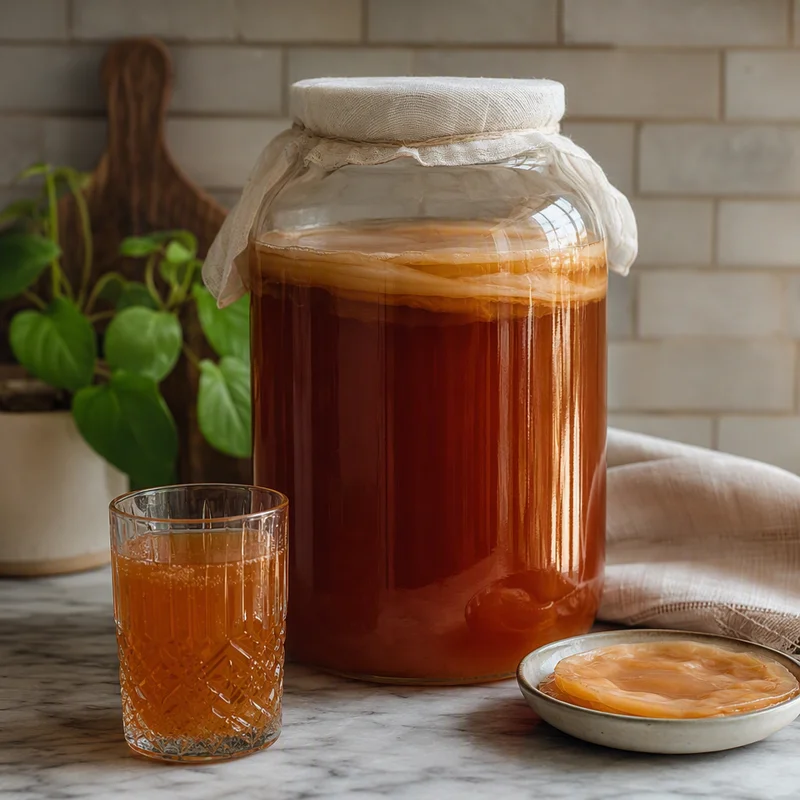
This is the workhorse kombucha: a one-gallon jar of clean, tart, lightly sweet black tea booch that you keep on the counter and re-brew every 7 to 14 days. The focus here is the first ferment — the right sugar-to-tea ratio, the temperature window that keeps it tasting like tea instead of vinegar, and how to taste your way to the exact sweetness you like. There's a quick lemon-ginger bottle step at the end for fizz, but the point is the base: get this right and every flavored batch after it is easy.
Ingredients
- 14 cups filtered or dechlorinated water, divided
- 1 cup plain white granulated sugar
- 8 bags plain black tea (English breakfast, Assam, or orange pekoe), or 2 tablespoons loose-leaf
- 1 live kombucha culture (SCOBY)
- 2 cups strong unflavored starter liquid from a previous batch or raw store-bought kombucha
- 2 tablespoons finely grated fresh ginger
- 3 tablespoons fresh lemon juice
- 2 teaspoons sugar or honey, for carbonation
- 1 1-gallon glass jar (wide mouth)
- 1 tight-weave cloth or coffee filter plus a rubber band
- 4 16-ounce flip-top bottles, optional
- pH strips, optional
Instructions
- Wash the gallon jar, a saucepan, and any utensils with hot water and a fragrance-free soap, then rinse until you can't smell or feel any soap film — residue and strong scents will stress the culture. Skip antibacterial soap entirely.
- Bring 4 cups of the water to a boil in the saucepan. Off the heat, stir in the 1 cup sugar until fully dissolved, then add the 8 tea bags or loose tea. Steep 12 to 15 minutes for a strong, slightly astringent brew; longer than 20 minutes adds harsh tannin. Remove or strain out the tea.
- Pour the hot sweet tea into the clean gallon jar, then add the remaining 10 cups cool water. Let the mixture come down to 75 to 85°F — cool to the touch, not warm. Anything above 90°F can kill the culture, so give it 1 to 2 hours, or set the jar in a sink of cool water to speed it up.
- Add the 2 cups starter liquid and stir once. Slide in the SCOBY with clean hands. It may float, sink, or turn sideways — all normal, and it does not affect fermentation.
- Cover the jar mouth with the tight-weave cloth or a coffee filter and secure it with a rubber band. Do not use a solid lid: the ferment needs airflow, and it needs protection from fruit flies.
- Set the jar somewhere dark and still with a steady 72 to 78°F temperature, away from direct sun and away from the stove. Do not move or stir it. Within 3 to 7 days a thin cream-colored film will spread across the surface — that's the new baby SCOBY forming.
- Start tasting on day 7: slide a clean straw past the SCOBY, cover the top with your finger, and pull out a sample (don't drink from the straw and re-dip it). At 72 to 78°F, most batches land where you want them between day 7 and day 12. Cooler rooms can take 16 to 21 days.
- Judge it by taste, not the calendar. You want tart-forward with a faint sweet finish and a light cider-like sharpness — sweet tea flavor should be almost gone. If you have pH strips, finished kombucha reads 2.5 to 3.5. If it tastes like vinegar, it went a day or two too long; use it as starter liquid and pull the next batch sooner.
- When it tastes right, wash your hands and lift out both SCOBYs (the original and the new layer) into a clean bowl. Ladle 2 cups of the finished kombucha over them — that's the starter liquid for your next batch, and you can start it immediately using steps 2 through 6.
- Bottle the rest: for plain kombucha, funnel it into bottles, cap, and refrigerate right away — it will be lightly tangy and barely fizzy, which is exactly right for drinking cold over ice. Store up to 1 month.
- For real carbonation, whisk the grated ginger, lemon juice, and 2 teaspoons sugar into the kombucha before bottling, then fill flip-top bottles leaving 1 1/2 inches of headspace. Seal and leave at room temperature 2 to 4 days, opening one bottle a day over the sink to check the fizz.
- Once the bottles hiss and foam at the neck, move them all to the refrigerator to stop the ferment. Chill at least 4 hours before opening, and open cold and slowly — warm, over-carbonated bottles gush. Strain out the ginger through a fine sieve as you pour, if you like.
Chef's tips
- Use plain, unflavored tea. Earl Grey and chai contain oils and spices that coat and weaken a SCOBY over repeated batches; if you love those flavors, add them in the second ferment instead.
- Brown sugar, honey, and coconut sugar all work but ferment unevenly and change the flavor. Plain white sugar gives the most predictable base — and almost all of it is eaten by the culture, not left in your glass.
- Brown, stringy strands hanging off the SCOBY and dark specks floating in the jar are yeast, and they're healthy. Fuzzy, raised, dry-looking spots in blue, green, or black are mold: throw out the whole batch, culture included, and start over with fresh store-bought raw kombucha.
- Chlorinated tap water can stall a ferment. Either use filtered water or boil tap water for 10 minutes and let it cool fully before using.
- Fermentation is temperature-driven. Below 68°F it crawls and is more vulnerable to mold; above 82°F it turns vinegary fast. A spot on top of the refrigerator or inside a cabinet near a warm interior wall usually holds the sweet spot.
- Taking a break? Put the SCOBY in a jar with 2 cups finished kombucha, cover with cloth, and hold it at room temperature for up to 4 weeks. Feed it a fresh cup of cooled sweet tea if you'll be gone longer.
Nutrition (per serving, estimated)
Made with Sprig
Everyday Black Tea Kombucha (The Base Batch You Brew Every Week) was created in Sprig — the AI chef that turns any craving into a complete recipe, plans your week, and shops with one smart list.
More from Sprig Originals

Are you this recipe's original author or publisher? Report a problem