Sprig Originals's kitchen / Korean Grilled Beef Belly with Sesame Salt Dip
Korean Grilled Beef Belly with Sesame Salt Dip
 By Sprig Originals · cooked up in Sprig
Worked out from this recipe's ingredients. If you're cooking for an allergy, always read the full ingredient list.
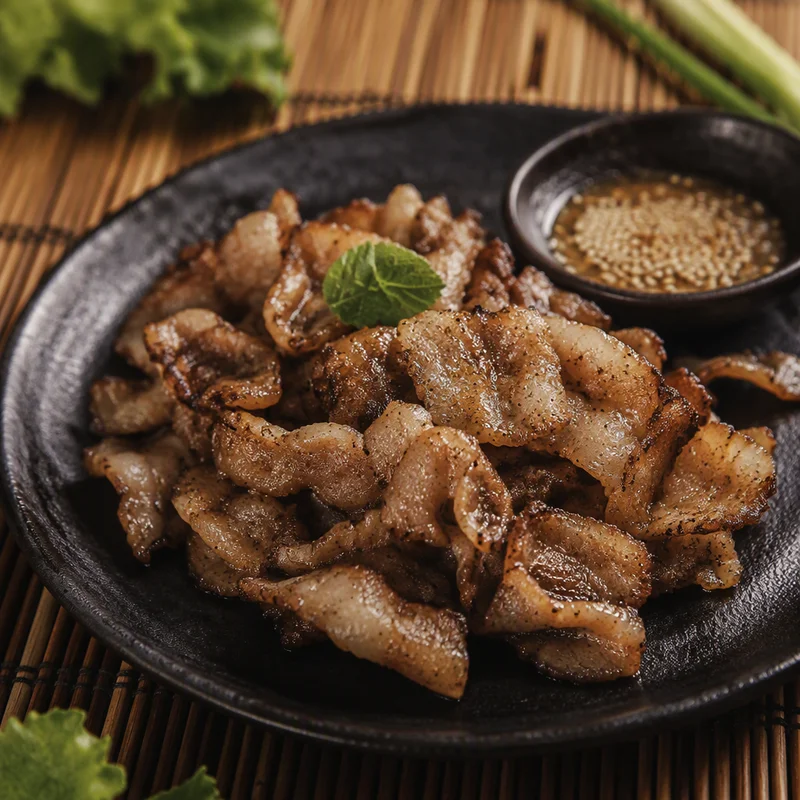
Paper-thin brisket belly hits a screaming-hot cast-iron pan and curls into lacy, crisp-edged ribbons in under a minute. The real engine of the dish is the trio on the side: a sesame-oil salt dip, a scallion salad slicked with chili flake, and cold lettuce for wrapping. It's the fastest Korean barbecue you can pull off indoors, and it eats like a $17 plate at a proper gogigui house.
Ingredients
Beef
- 1.5 lb frozen paper-thin sliced beef brisket (chadolbagi), about 1/16-inch thick
- Kosher salt, for finishing
- Freshly ground black pepper
Sesame Oil Salt Dip (Gireumjang)
- 1/4 cup toasted sesame oil
- 1.5 tsp fine sea salt
- 1/2 tsp coarsely ground black pepper
- 1 tsp toasted sesame seeds, lightly crushed
Scallion Salad (Pa Muchim)
- 6 scallions, slivered lengthwise into thin threads
- 1 Tbsp gochugaru (Korean chili flakes)
- 1 Tbsp rice vinegar
- 2 tsp soy sauce
- 1 tsp sugar
- 1 tsp toasted sesame oil
- 1 tsp toasted sesame seeds
Ssamjang (Wrap Sauce)
- 3 Tbsp doenjang (Korean soybean paste)
- 1 Tbsp gochujang
- 1 tsp honey
- 1 tsp toasted sesame oil
- 1 clove garlic, grated
- 1 Tbsp minced onion
- 1 tsp toasted sesame seeds
For the Table
- 2 heads red leaf or butter lettuce, leaves separated and chilled
- 1 bunch perilla leaves (kkaennip), optional
- 4 cloves garlic, thinly sliced
- 1 jalapeño or Korean green chili, sliced
- 1 cup kimchi
- 4 cups cooked short-grain white rice, hot
Instructions
- Keep the beef frozen or very cold until the moment you cook it. If it came in a frozen block, let it sit at room temperature 10–15 minutes, then peel the sheets apart and lay them in loose, single-layer piles on a plate or parchment-lined tray. Return to the fridge. Half-frozen slices separate best; fully thawed brisket belly turns to a sticky mass.
- Make the sesame salt dip: divide the sesame oil among 4 small dishes (about 1 tablespoon each), then top each with a scant 1/2 teaspoon fine sea salt, a pinch of black pepper, and a few crushed sesame seeds. Do not stir — diners swirl the salt in as they dip, which is the point.
- Make the scallion salad: soak the slivered scallions in a bowl of ice water for 10 minutes to curl them and pull out the harsh bite, then drain very well and pat dry. In a bowl whisk gochugaru, rice vinegar, soy sauce, sugar, and sesame oil until the chili flakes bloom, about 30 seconds. Toss with the scallions and sesame seeds right before serving so they stay crisp.
- Make the ssamjang: stir doenjang, gochujang, honey, sesame oil, grated garlic, minced onion, and sesame seeds together in a small bowl until smooth. Thin with 1–2 teaspoons water if it's stiffer than a thick dip.
- Arrange the table: pile the chilled lettuce, perilla leaves, sliced garlic, and chilies on a platter; set out the kimchi, ssamjang, sesame salt dishes, scallion salad, and bowls of hot rice. Everything must be ready before the beef touches the pan — chadolbagi is eaten straight off the heat.
- Set a 12-inch cast-iron skillet or grill pan over medium-high heat for 5–6 minutes, until a drop of water vaporizes instantly and the surface just barely smokes. Add no oil — the brisket belly renders plenty of its own fat. Turn on your hood fan or open a window.
- Lay 5–6 slices of beef flat in the hot pan in a single layer, without crowding. Cook 30–45 seconds until the underside is browned and the edges have curled and crisped, then flip with tongs and cook 20–30 seconds more. The slices should be deeply browned in spots and still juicy — total time under 90 seconds. Season with a small pinch of kosher salt and pepper.
- Transfer the cooked slices directly to the serving platter (or a preheated plate) and eat immediately while the fat is still liquid. Pour off excess rendered fat from the pan when it pools deeper than about 1/8 inch, and wipe the skillet with a folded paper towel held in tongs every 3–4 batches to remove burnt bits.
- Repeat with the remaining beef in batches, letting the pan reheat for 20–30 seconds between rounds. Serve batch by batch rather than cooking it all at once.
- To eat: lay a lettuce leaf on your palm, top with a perilla leaf if using, add a spoonful of rice, a slice of beef that's been dragged through the sesame salt dip, a dab of ssamjang, a pinch of scallion salad, and a sliver of garlic or chili. Fold into a bundle and eat in one bite.
Chef's tips
- Ask for "chadolbagi" or "beef brisket for shabu-shabu" at a Korean or Japanese market — it comes frozen in flat trays already sliced to about 1/16 inch. Thin-sliced ribeye or short plate works too. Don't try to slice it yourself unless you freeze a brisket point solid for 90 minutes and use a very sharp knife.
- The pan must be hot enough to sear in seconds but not so hot the rendered fat scorches. If the fat smokes black and the beef tastes bitter, drop the heat slightly and wipe the pan more often.
- Don't pre-marinate chadolbagi. The whole appeal is unseasoned fatty beef against the sesame-salt dip; a sugary marinade burns instantly at this thickness.
- Save the last of the rendered fat: toss cold cooked rice and a spoonful of chopped kimchi in the hot skillet for 2 minutes to make an end-of-meal fried rice.
- Cook this with the range hood on high. Paper-thin fatty beef on cast iron produces real smoke — that's the trade-off for indoor Korean barbecue.
Nutrition (per serving, estimated)
886calories
24gprotein
54gcarbs
60gfat
Estimates only — values vary with brands and portions.
Made with Sprig
Korean Grilled Beef Belly with Sesame Salt Dip was created in Sprig — the AI chef that turns any craving into a complete recipe, plans your week, and shops with one smart list.
Free to start · 14-day Pro trial · cancel anytime
Not ready yet? Get the occasional recipe worth cooking — a couple a month at most.
You're on the list — check your inbox!
Unsubscribe anytime. Privacy Policy
More from Sprig Originals
Are you this recipe's original author or publisher? Report a problem