Sprig Originals's kitchen / Silky Vanilla Bean Crème Anglaise
Silky Vanilla Bean Crème Anglaise
 By Sprig Originals · cooked up in Sprig
Worked out from this recipe's ingredients. If you're cooking for an allergy, always read the full ingredient list.
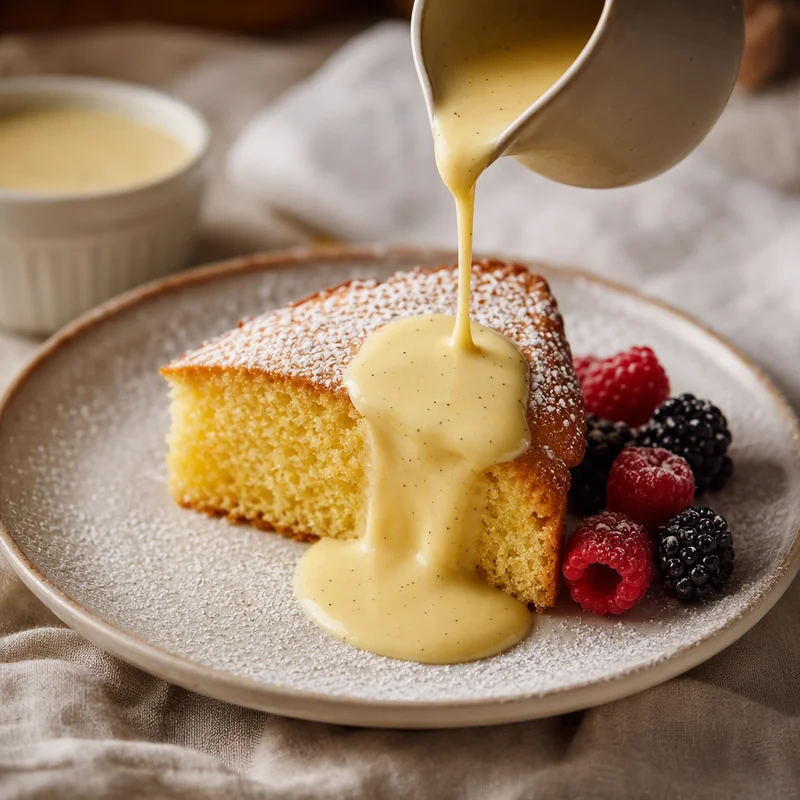
The pouring custard that turns a plain slice of cake, a wedge of tart, or a bowl of berries into a restaurant dessert. Real vanilla bean, six egg yolks, and one number to hit — 180°F — for a sauce that coats the back of a spoon and never tastes of scrambled egg. Makes about 2 cups and keeps four days in the fridge.
Ingredients
Custard Sauce
- 1 cup whole milk
- 1 cup heavy cream
- 1 plump vanilla bean, split lengthwise (or 2 tsp vanilla bean paste, or 1 Tbsp pure vanilla extract)
- 6 large egg yolks
- 1/2 cup granulated sugar (100 g)
- 1/8 tsp fine sea salt
Optional Finishes
- 1 tsp cornstarch (curdling insurance for nervous first-timers)
- 1 Tbsp bourbon, dark rum, or Cognac
- 1 Tbsp unsalted butter, cold
- 1 tsp finely grated orange zest
Instructions
- Set up before you cook: place a fine-mesh strainer over a medium heatproof bowl, and set that bowl inside a larger bowl holding a few inches of ice water. Have a whisk, a silicone spatula, and an instant-read thermometer within reach. Crème anglaise moves fast at the end, so nothing should require hunting.
- Pour the milk and cream into a heavy 2-quart saucepan. Scrape the seeds from the split vanilla bean into the pot with the tip of a paring knife and drop in the pod halves too (if using vanilla paste, add it now; if using extract, hold it until the very end). Warm over medium heat until you see wisps of steam and bubbles just breaking at the edges, about 4 to 5 minutes — roughly 175°F. Do not let it boil. Slide off the heat, cover, and steep 10 minutes for maximum vanilla flavor.
- Meanwhile, whisk the egg yolks, sugar, and salt in a medium bowl for a full 45 to 60 seconds, until the mixture lightens to pale yellow and falls from the whisk in a ribbon. If you want the cornstarch insurance, whisk it in now — it will not be detectable in the finished sauce but makes the custard far harder to break.
- Temper: whisking the yolks constantly with one hand, pour about 1/2 cup of the hot dairy into them in a slow stream. Add another cup the same way. The bowl should now feel warm, not hot. Whisk in the remaining dairy, pods and all.
- Return everything to the saucepan and set over medium-low heat. Stir constantly with the silicone spatula, scraping the bottom and corners of the pan in a figure-eight pattern. The foam on top will subside and the mixture will thicken almost imperceptibly at first.
- Cook to 180°F (82°C), checking with the instant-read thermometer as you approach — this takes 5 to 8 minutes depending on your pan and burner. The visual cue: the sauce coats the spatula, and a finger drawn through that coating leaves a clean path that holds. Never let it reach a simmer; yolks curdle at about 185°F.
- The instant it hits temperature, pour the custard through the strainer into the chilled bowl. The strainer catches the vanilla pods and any stray bits of set egg. Stir for 30 seconds over the ice bath to drop the temperature quickly.
- Stir in the vanilla extract now if that is what you used, along with any optional additions: the spirit for depth, the cold butter for extra gloss, or the orange zest. Taste and add a pinch more salt if the sweetness feels flat.
- Cool over the ice bath, stirring occasionally, until the sauce is barely warm — about 10 minutes. Serve it warm over warm desserts, or press plastic wrap directly onto the surface and refrigerate at least 2 hours to serve cold. It thickens noticeably when chilled; loosen with a splash of milk if needed.
Chef's tips
- If it curdles, do not throw it out. Pour the sauce immediately into a blender and run it on high for 30 to 45 seconds — the blades break up the egg curds and most batches come back smooth. Strain afterward.
- Save the strained vanilla pods: rinse, dry, and bury them in a jar of granulated sugar for vanilla sugar, or in a bottle of vodka for homemade extract.
- No thermometer? Use the ribbon test — dip the spatula, draw a line through the coating with your finger, and pull the pan the moment the line stays put instead of flooding back.
- Six leftover egg whites make a pavlova, meringues, or an angel food cake. They freeze well in a zip-top bag for up to 3 months.
- Riffs: steep a cinnamon stick and strip of lemon peel for a Spanish-leaning sauce, 2 tablespoons of coffee beans for a mocha version, or replace 1/4 cup of the milk with strong espresso after cooking.
- Serve over warm chocolate cake, apple tart, bread pudding, poached pears, or roasted stone fruit. Half a batch churned in an ice cream maker becomes excellent vanilla ice cream — crème anglaise is the base.
Nutrition (per serving, estimated)
220calories
3gprotein
22gcarbs
14gfat
Estimates only — values vary with brands and portions.
Made with Sprig
Silky Vanilla Bean Crème Anglaise was created in Sprig — the AI chef that turns any craving into a complete recipe, plans your week, and shops with one smart list.
Free to start · 14-day Pro trial · cancel anytime
Not ready yet? Get the occasional recipe worth cooking — a couple a month at most.
You're on the list — check your inbox!
Unsubscribe anytime. Privacy Policy
More from Sprig Originals
French Onion Patty Melts on Rye
Dark Roux Seafood Gumbo with Quick Shrimp Stock
One-Skillet Blackened Cajun Chicken Pasta
Are you this recipe's original author or publisher? Report a problem