Sprig Originals's kitchen / Dutch-Oven Lamb Biryani with Cucumber-Mint Raita
Dutch-Oven Lamb Biryani with Cucumber-Mint Raita
 By Sprig Originals · cooked up in Sprig
Worked out from this recipe's ingredients. If you're cooking for an allergy, always read the full ingredient list.
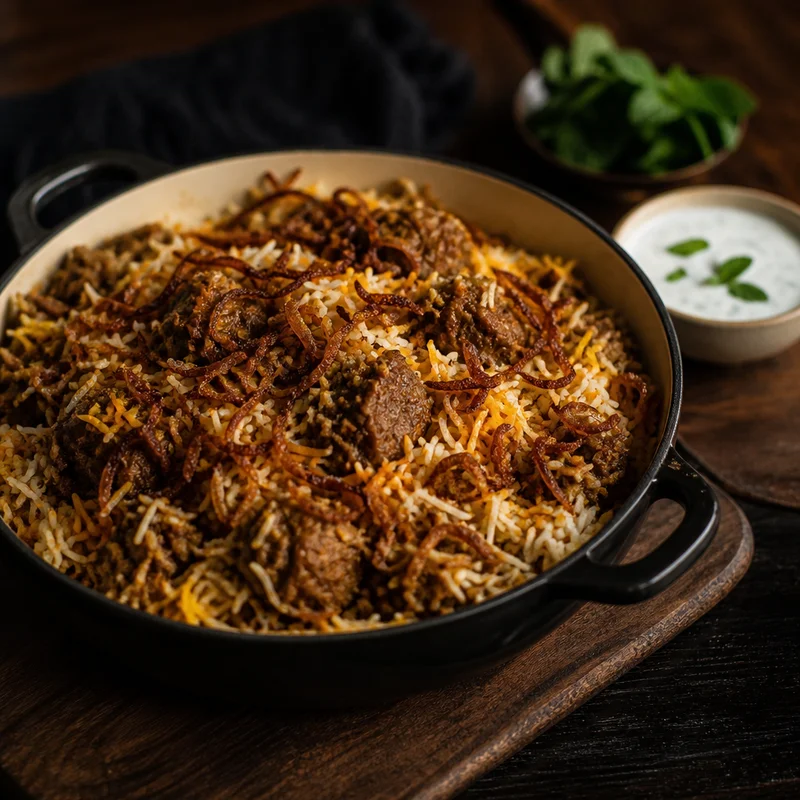
A restaurant-grade layered biryani built entirely in one Dutch oven: lamb shoulder braised in a yogurt-and-whole-spice masala, rice parboiled to exactly 70 percent, and a mountain of deeply fried onions worked through every layer. The pot goes into the oven sealed so the steam finishes the rice in its own perfume, and a cold cucumber-mint raita cuts through it the way it does at the table in an Indian dining room.
Ingredients
Fried onions (birista)
- 1 cup neutral oil, for frying
- 3 large yellow onions, halved and sliced very thin
Lamb and marinade
- 2 1/2 lb boneless lamb shoulder, cut into 1 1/2-inch cubes
- 1 cup whole-milk plain yogurt (not Greek)
- 2 tbsp ginger, finely grated
- 2 tbsp garlic, finely grated
- 2 tsp kosher salt
- 1 1/2 tsp Kashmiri chile powder
- 1 tsp ground turmeric
- 2 tsp garam masala
- 1 tsp ground coriander
- 1/2 tsp ground cumin
- 2 tbsp lemon juice
Braise
- 3 tbsp ghee
- 1 whole cinnamon stick, 3 inches
- 4 whole green cardamom pods, lightly crushed
- 1 whole black cardamom pod
- 4 whole cloves
- 2 whole bay leaves
- 2 medium Roma tomatoes, chopped
- 2 whole serrano chiles, slit lengthwise
- 3/4 cup water
Rice
- 3 cups aged basmati rice
- 4 quarts water
- 3 tbsp kosher salt
- 1 whole cinnamon stick
- 3 whole green cardamom pods
- 1 tsp cumin seeds
- 1 tbsp lemon juice
Layering and finish
- 1/2 tsp saffron threads
- 1/3 cup whole milk, warmed
- 3 tbsp ghee, melted
- 1/2 cup cilantro, chopped
- 1/2 cup mint leaves, torn
- 1 tsp garam masala
- 1 tbsp kewra water or rose water (optional)
Cucumber-mint raita
- 2 cups whole-milk plain yogurt
- 1 cup English cucumber, coarsely grated
- 3 tbsp mint, finely chopped
- 1/2 tsp cumin seeds, toasted and crushed
- 1/4 tsp Kashmiri chile powder
- 3/4 tsp kosher salt
- 1 pinch sugar
Instructions
- Fry the onions first, because they flavor everything else. Heat 1 cup oil in a 5- to 7-quart Dutch oven over medium-high until it reaches 325°F. Add half the sliced onions and fry, stirring often, 9 to 12 minutes, until they are a deep even amber — pull them when they are one shade lighter than you want, since they darken off the heat. Lift out with a slotted spoon onto a paper-towel-lined tray and spread thin. Repeat with the second batch. Salt lightly. They should crisp as they cool. Pour off the oil, reserving 2 tablespoons, and wipe the pot.
- Whisk the yogurt, ginger, garlic, 2 teaspoons salt, Kashmiri chile, turmeric, garam masala, coriander, cumin, and lemon juice in a large bowl. Crumble in one-third of the fried onions. Add the lamb and turn to coat every piece. Cover and marinate at room temperature 45 minutes, or refrigerate up to 12 hours (bring back to room temperature before cooking).
- Heat the 3 tablespoons ghee plus the 2 tablespoons reserved frying oil in the Dutch oven over medium heat. Add the cinnamon, green and black cardamom, cloves, and bay leaves and fry 45 seconds until fragrant and sizzling. Add the tomatoes and serranos and cook 5 to 6 minutes, mashing with a spoon, until the tomatoes break down and the fat separates.
- Scrape in the lamb with all its marinade. Raise the heat to medium-high and cook 8 to 10 minutes, stirring, until the yogurt tightens around the meat and no longer looks raw. Add 3/4 cup water, bring to a simmer, cover, and cook over low heat at a bare bubble for 60 to 75 minutes, stirring every 20 minutes, until the lamb is fork-tender and the gravy is thick enough to mound on a spoon. If it is loose, uncover and boil 5 minutes to reduce — a watery masala will turn the rice to mush. Taste and adjust salt; it should be assertively seasoned. Scrape the lamb and gravy into a bowl and wipe the pot clean.
- While the lamb braises, rinse the basmati in several changes of cold water until the water runs nearly clear, then soak in cold water 30 minutes. Drain. Crush the saffron between your fingers into the warm milk and let it steep at least 20 minutes.
- Heat the oven to 325°F. Bring 4 quarts water to a hard boil in a large pot with 3 tablespoons salt, the cinnamon stick, cardamom, cumin seeds, and lemon juice. Add the drained rice and boil, uncovered, 4 to 5 minutes — start testing at 3 1/2. A grain should snap cleanly when bitten with a firm white core still visible: about 70 percent cooked. Drain immediately in a colander and shake well; do not rinse.
- Layer in the Dutch oven. Spread half the lamb and gravy across the bottom in an even layer. Top with half the rice, spread gently with a fork, never packed. Scatter half the remaining fried onions, half the cilantro and mint, and 1/2 teaspoon garam masala. Add the rest of the lamb, then the rest of the rice. Finish with the remaining fried onions, herbs, and garam masala. Spoon the saffron milk over the surface in streaks so the rice cooks up mottled white, cream, and gold, then drizzle with the melted ghee and the kewra water if using.
- Seal the pot: lay a sheet of parchment or foil directly over the rim, then clamp on the lid. Set the Dutch oven over medium-high heat for 3 to 4 minutes until you hear active sizzling from the bottom, then transfer to the 325°F oven and bake 35 minutes.
- Take the pot out and let it stand, sealed, for 15 minutes. This rest is not optional — it lets the grains finish absorbing steam and firm up. Meanwhile make the raita: squeeze the grated cucumber gently to shed excess water, then stir it into the yogurt with the mint, crushed cumin, Kashmiri chile, salt, and sugar. Chill until serving.
- Uncover, then dig down through all the layers with a wide spoon at the edge of the pot and lift-and-fold rather than stir, bringing lamb up through the rice and keeping the grains whole. Serve straight from the Dutch oven with the cold raita alongside.
Chef's tips
- Aged basmati is worth seeking out — it absorbs more liquid without breaking and gives you the long separate grains that define a good biryani. Fresh-crop rice will cook faster, so shave 30 to 60 seconds off the parboil.
- Fry the onions a day ahead and store them airtight at room temperature. It is the longest, messiest step and they only get crisper.
- The most common failure is a wet gravy. Before layering, drag a spoon through the lamb: if liquid rushes in to fill the track, reduce it further.
- No parchment or foil? Mix 1 cup flour with 1/3 cup water into a stiff dough, roll it into a rope, and press it around the rim to seal the lid the traditional way.
- Leftovers reheat best in a covered skillet with a splash of water over low heat, 8 to 10 minutes — the microwave dries out the grains.
Nutrition (per serving, estimated)
1020calories
42gprotein
96gcarbs
52gfat
Estimates only — values vary with brands and portions.
Made with Sprig
Dutch-Oven Lamb Biryani with Cucumber-Mint Raita was created in Sprig — the AI chef that turns any craving into a complete recipe, plans your week, and shops with one smart list.
Free to start · 14-day Pro trial · cancel anytime
Not ready yet? Get the occasional recipe worth cooking — a couple a month at most.
You're on the list — check your inbox!
Unsubscribe anytime. Privacy Policy
More from Sprig Originals
Are you this recipe's original author or publisher? Report a problem