Sprig Originals's kitchen / 20-Minute Hot-and-Sour Shrimp Soup (Tom Yum Goong)
20-Minute Hot-and-Sour Shrimp Soup (Tom Yum Goong)
 By Sprig Originals · cooked up in Sprig
Worked out from this recipe's ingredients. If you're cooking for an allergy, always read the full ingredient list.
A fast, fragrant Thai shrimp soup built on a broth of bruised lemongrass, galangal and lime leaf — the aromatics that flavour the pot but get eaten around, not chewed. Shrimp poach in 2 minutes, fish sauce and chilli paste do the heavy lifting, and the lime juice goes in off the heat so it stays bright instead of turning bitter. Sharper and cleaner than most restaurant bowls, for a fraction of the price.
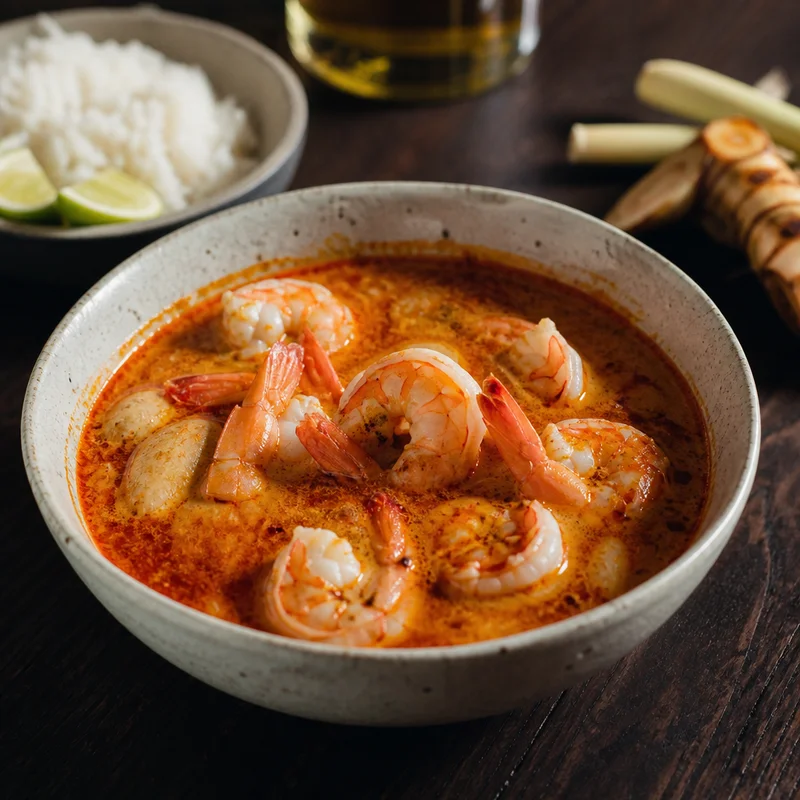
Ingredients
Aromatics (flavour the broth, don't eat these)
- 2 stalks lemongrass, tough tops trimmed, bruised and cut into 2-inch lengths
- 1 inch fresh or frozen galangal, sliced into thin coins
- 6 makrut (kaffir) lime leaves, torn in half
- 3 cilantro stems or roots, bruised
Soup
- 1 lb large shrimp, shell-on if possible (about 20 count)
- 6 cups water or unsalted chicken stock
- 8 oz cremini or oyster mushrooms, quartered
- 1 small shallot, thinly sliced
- 2 tbsp nam prik pao (Thai roasted chilli paste)
- 3 tbsp fish sauce, plus more to taste
- 1 tsp granulated sugar
- 3 Thai bird chilies, lightly crushed (or 1 for mild)
- 1 tbsp neutral oil
- 6 tbsp fresh lime juice (about 3 limes), divided
- 1/4 cup evaporated milk or coconut milk (optional, for tom yum nam khon)
To finish
- 1/2 cup cilantro leaves, roughly chopped
- 2 scallions, thinly sliced
- 4 wedges lime
- Steamed jasmine rice, for serving (optional)
Instructions
- Peel the shrimp, leaving the tails on if you like, and reserve every shell and head. Devein the shrimp with the tip of a paring knife, then refrigerate them on a plate while you build the broth.
- Heat 1 tablespoon neutral oil in a 4-quart pot over medium-high. Add the reserved shrimp shells and heads and cook, pressing them against the pot with a spoon, for 2 to 3 minutes until they turn deep orange and smell toasty. This 3-minute step is what separates homemade tom yum from a thin restaurant broth.
- Pour in the 6 cups water or stock and add the lemongrass, galangal coins, torn lime leaves and bruised cilantro stems. Bring to a boil, then reduce to a bare simmer and cook uncovered for 10 minutes. Do not boil hard — you want a clear, perfumed broth, not a cloudy one.
- Strain the broth through a fine-mesh sieve into a bowl and discard the shells. Return the broth to the pot along with the strained lemongrass, galangal and lime leaves (fish them out of the sieve). These stay in the bowl for aroma but are not meant to be eaten — tell your guests to push them aside, the way you would a bay leaf.
- Bring the broth back to a gentle simmer over medium heat. Whisk in the 2 tablespoons nam prik pao until it dissolves, then add the fish sauce, sugar, sliced shallot, crushed bird chilies and mushrooms. Simmer 4 minutes, until the mushrooms are tender and the broth has turned a burnished orange.
- Taste the broth now, before the shrimp go in. It should read distinctly salty and a little sweet — the lime will bring the sourness later. Add fish sauce 1 teaspoon at a time if it tastes flat.
- Add the shrimp, stir once, and cook 90 seconds to 2 minutes, just until they curl and turn opaque at the centre. Immediately turn off the heat. Residual heat will finish them; overcooked shrimp is the most common tom yum failure.
- With the pot fully off the heat, stir in 5 tablespoons of the lime juice and the optional evaporated or coconut milk. Adding lime off the heat is essential — simmered lime juice goes dull and faintly bitter, while raw lime juice keeps the soup sharp and lifted.
- Taste and balance: it should hit sour first, then salty, then heat. Add the last tablespoon of lime juice, or another splash of fish sauce, until it makes you sit up.
- Ladle into four bowls, making sure each gets shrimp and mushrooms. Shower with cilantro and scallions and serve with lime wedges and jasmine rice alongside.
Chef's tips
- Lemongrass, galangal and lime leaf are aromatics, not vegetables — they stay tough no matter how long they cook. Leave them in for fragrance and eat around them, or strain them out entirely before serving if you're feeding kids.
- Galangal is not interchangeable with ginger; it's piney and medicinal where ginger is sweet-hot. Frozen sliced galangal from an Asian market works perfectly and keeps for months. If you truly can't find it, use half the amount of ginger and accept a different soup.
- Nam prik pao (Thai roasted chilli paste in soybean oil) is the single ingredient that makes this taste like a restaurant bowl — smoky, sweet and deeply savoury. A jar lasts a year in the fridge. Sriracha is not a substitute.
- Never boil the soup after the lime juice goes in. If you reheat leftovers, warm them gently and add a fresh squeeze of lime at the table.
- For tom yum nam sai (clear style), skip the evaporated milk. For the creamy nam khon version common in the US, stir in the evaporated milk — it's the traditional Thai shortcut, and it tastes cleaner than coconut milk here.
- Swap the shrimp for 1 lb mixed seafood (squid rings, mussels, firm white fish) added in stages: fish first for 2 minutes, then squid and shrimp for 90 seconds.
Nutrition (per serving, estimated)
220calories
22gprotein
15gcarbs
7gfat
Estimates only — values vary with brands and portions.
Made with Sprig
20-Minute Hot-and-Sour Shrimp Soup (Tom Yum Goong) was created in Sprig — the AI chef that turns any craving into a complete recipe, plans your week, and shops with one smart list.
Free to start · 14-day Pro trial · cancel anytime
Not ready yet? Get the occasional recipe worth cooking — a couple a month at most.
You're on the list — check your inbox!
Unsubscribe anytime. Privacy Policy
More from Sprig Originals
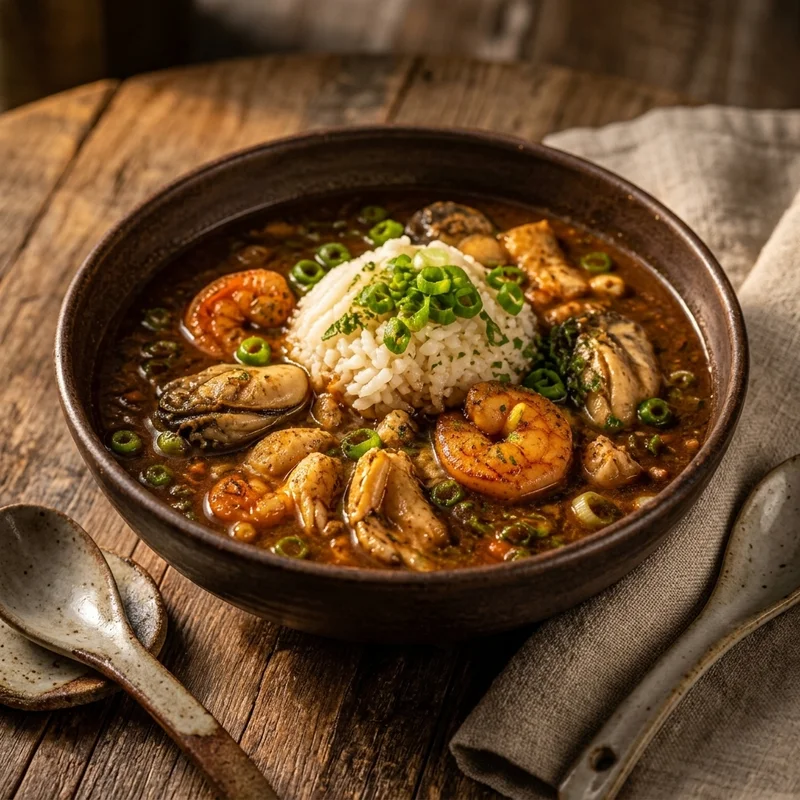
Dark Roux Seafood Gumbo with Quick Shrimp Stock
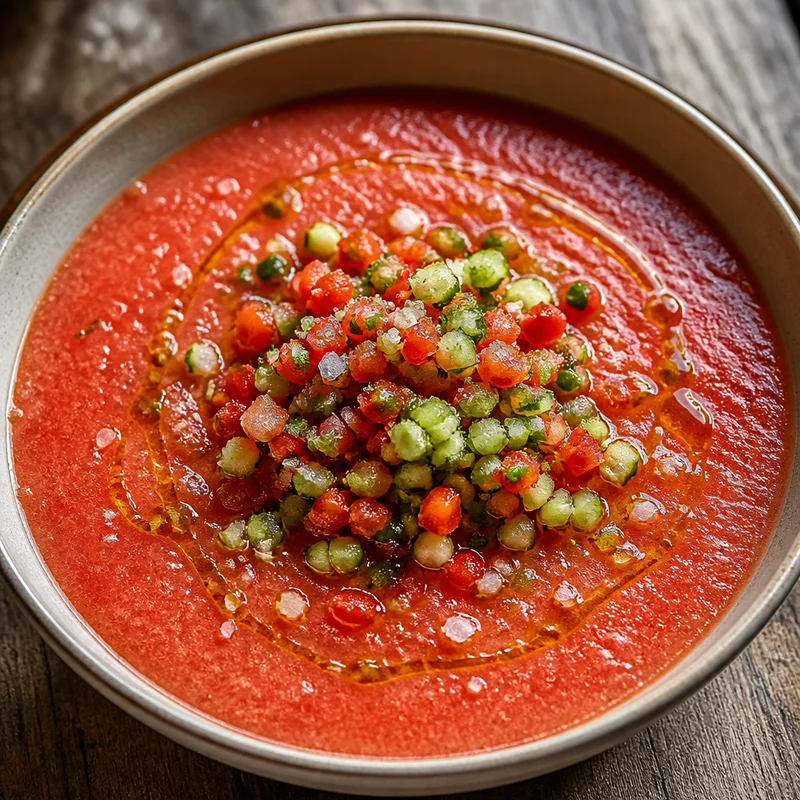
Chilled Watermelon Gazpacho with Cucumber-Chile Relish
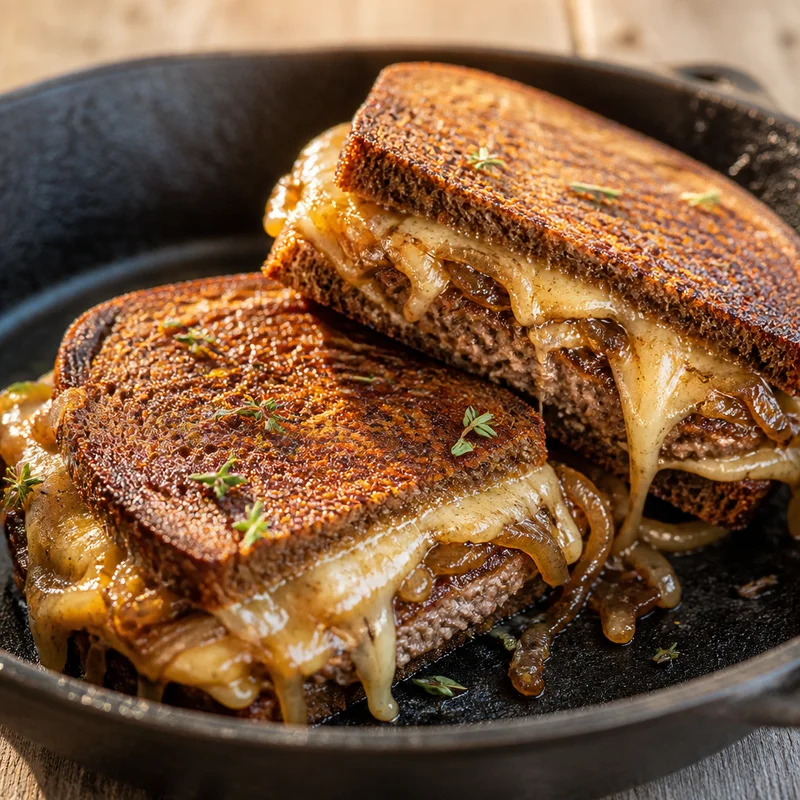
French Onion Patty Melts on Rye
Are you this recipe's original author or publisher? Report a problem