Sprig Originals's kitchen / Any-Fridge Mixed Vegetable Stir-Fry with Garlic-Ginger Sauce
Any-Fridge Mixed Vegetable Stir-Fry with Garlic-Ginger Sauce
 By Sprig Originals · cooked up in Sprig
Worked out from this recipe's ingredients. If you're cooking for an allergy, always read the full ingredient list.
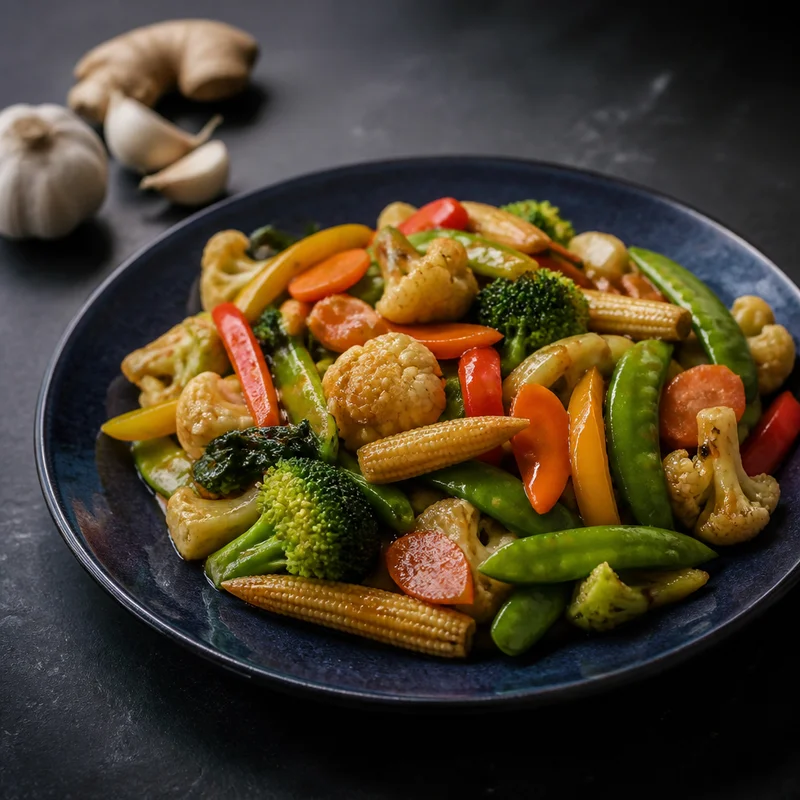
The takeout-counter classic, rebuilt as a method instead of a shopping list. You learn one garlic-ginger sauce you can make in 60 seconds and one staging order — dense vegetables first, quick-cooking next, leafy greens last — so whatever is loitering in the crisper drawer comes out crisp-tender and glossy rather than steamed and sad. Ready in about 25 minutes in an ordinary skillet, no wok burner required.
Ingredients
Garlic-Ginger Sauce
- 1/2 cup vegetable broth or water
- 3 tbsp soy sauce
- 1 tbsp Shaoxing wine or dry sherry
- 2 tsp toasted sesame oil
- 2 tsp granulated sugar
- 1 tbsp rice vinegar
- 1 tbsp cornstarch
- 4 cloves garlic, finely minced
- 1 tbsp fresh ginger, finely minced or grated
- 1/2 tsp white pepper (or black pepper)
Stage 1 — Hard Vegetables (pick about 3 cups total)
- 1 cup carrots, sliced 1/8 inch thick on a bias
- 1 cup broccoli florets, cut into bite-size pieces
- 1 cup cauliflower florets or green beans, trimmed
Stage 2 — Medium Vegetables (about 3 cups total)
- 1 medium red bell pepper, cut into 1-inch pieces
- 1 cup snow peas or sugar snap peas, strings removed
- 1 cup mushrooms, thickly sliced
- 1/2 medium yellow onion, cut into thin wedges
Stage 3 — Leafy & Delicate (about 3 cups, lightly packed)
- 3 cups baby bok choy leaves, napa cabbage, or spinach, roughly torn
- 3 scallions, cut into 1-inch lengths
To Cook & Finish
- 3 tbsp neutral oil, such as canola or peanut
- 1/4 cup water, for steam-cooking
- 1/2 tsp kosher salt
- 1 tbsp toasted sesame seeds
- Steamed jasmine rice, for serving
Instructions
- Make the sauce first — stir-frying moves too fast to mix it later. In a small bowl or jar, whisk the broth, soy sauce, Shaoxing wine, sesame oil, sugar, rice vinegar, and cornstarch until no lumps remain. Stir in the minced garlic, ginger, and white pepper. Set it right next to the stove; the cornstarch will settle, so whisk again just before it goes in the pan.
- Prep and sort all vegetables into three bowls by density: Stage 1 (hard — carrots, broccoli, cauliflower, green beans), Stage 2 (medium — peppers, snap peas, mushrooms, onion), Stage 3 (leafy and delicate — greens and scallions). This staging is the whole technique. Cut everything to a similar thickness, roughly 1/8 to 1/4 inch for hard vegetables and 1-inch pieces for the rest, so pieces finish together.
- Heat a 12-inch carbon steel or stainless skillet (or a wok) over high heat for 2 minutes, until a drop of water skitters and evaporates instantly. Add 2 tablespoons of the neutral oil and swirl to coat.
- Add the Stage 1 hard vegetables with the 1/2 teaspoon salt. Spread them in a single layer and let them sit undisturbed for 60 seconds to take color, then toss and cook 1 minute more. Add the 1/4 cup water, immediately cover, and steam 90 seconds — this cooks the dense pieces through without burning them.
- Uncover, raise the heat back to high, and cook 30 to 60 seconds until the water has fully evaporated and you hear sizzling again. Push the vegetables to one side, add the remaining 1 tablespoon oil to the bare surface, and add the Stage 2 vegetables. Toss everything together and stir-fry 2 minutes, moving constantly, until the peppers are blistered in spots and the mushrooms have released and reabsorbed their liquid.
- Add the Stage 3 leafy greens and scallions and toss just 30 seconds — they should barely begin to wilt. Whisk the sauce one last time and pour it around the edge of the pan rather than into the center, so it hits hot metal and starts thickening on contact.
- Toss constantly for 45 to 60 seconds, until the sauce turns from cloudy to glossy and clings to every piece. It should coat the vegetables like a light glaze, not pool at the bottom; if it looks tight, splash in a tablespoon of water, and if it looks loose, cook 20 seconds longer.
- Kill the heat, taste and adjust with a few drops of soy sauce or vinegar, scatter with sesame seeds, and serve immediately over steamed jasmine rice. Stir-fried vegetables lose their crispness within minutes, so plate straight from the pan.
Chef's tips
- The staging rule in one line: anything that takes more than 3 minutes to cook goes in first with a splash of water and a lid; anything that takes 2 minutes goes in second; anything that wilts goes in during the last 30 seconds. Sort your fridge that way and this recipe works with any combination.
- Total vegetable volume matters more than variety — aim for about 9 cups raw across all three stages. Any more and the skillet drops below searing temperature and you get a steamy stew. Cook in two batches if you're doubling.
- The sauce doubles or triples beautifully and keeps in a jar in the fridge for 1 week. Shake hard before using to redistribute the cornstarch.
- To add protein, cook it separately first: sear pressed extra-firm tofu cubes or thin-sliced chicken until browned, remove to a plate, and fold it back in with the sauce in step 6 so it doesn't overcook.
- No Shaoxing wine? Dry sherry is the closest match. In a pinch, skip it and add an extra tablespoon of broth plus a few drops of rice vinegar.
Nutrition (per serving, estimated)
162calories
6gprotein
19gcarbs
8gfat
Estimates only — values vary with brands and portions.
Made with Sprig
Any-Fridge Mixed Vegetable Stir-Fry with Garlic-Ginger Sauce was created in Sprig — the AI chef that turns any craving into a complete recipe, plans your week, and shops with one smart list.
Free to start · 14-day Pro trial · cancel anytime
Not ready yet? Get the occasional recipe worth cooking — a couple a month at most.
You're on the list — check your inbox!
Unsubscribe anytime. Privacy Policy
More from Sprig Originals
Are you this recipe's original author or publisher? Report a problem