Sprig Originals's kitchen / Greek Lobster Pasta in Shell-Infused Tomato Broth
Greek Lobster Pasta in Shell-Infused Tomato Broth
 By Sprig Originals · cooked up in Sprig
Worked out from this recipe's ingredients. If you're cooking for an allergy, always read the full ingredient list.
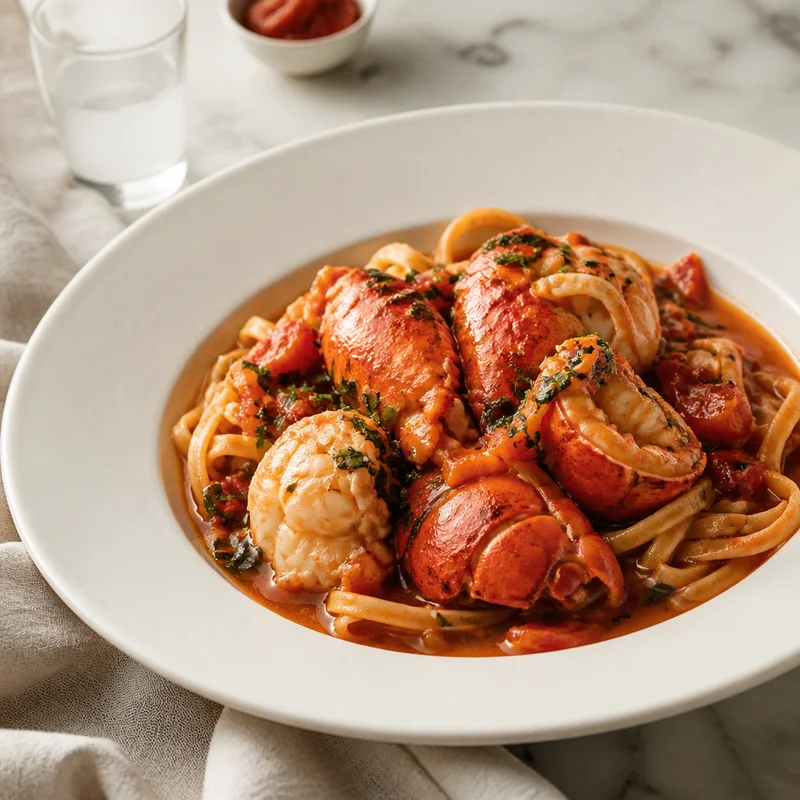
The taverna splurge you normally pay $46 for, rebuilt around split frozen lobster tails. The shells get toasted in olive oil with ouzo and tomato paste to make a fast, deeply savory broth, then the pasta finishes right in the pan so every strand drinks up the sauce. Sweet lobster meat goes in only at the very end, so it stays snappy instead of rubbery.
Ingredients
Lobster and shell broth
- 4 frozen lobster tails, 5–6 oz each, thawed
- 3 tablespoons extra-virgin olive oil
- 1 small carrot, roughly chopped
- 1 celery rib, roughly chopped
- 1/2 yellow onion, roughly chopped
- 2 tablespoons tomato paste
- 1/4 cup ouzo (or dry vermouth)
- 4 cups water
- 2 wide strips lemon peel
- 1 bay leaf
Tomato sauce
- 3 tablespoons extra-virgin olive oil
- 1 medium yellow onion, finely diced
- 4 cloves garlic, thinly sliced
- 1/2 teaspoon Aleppo pepper or red pepper flakes
- 1 teaspoon dried Greek oregano
- 1 pinch ground cinnamon
- 1/2 cup dry white wine
- 1 can (28 oz) whole San Marzano tomatoes, crushed by hand
- 1 teaspoon sugar, if needed
- kosher salt and black pepper
Pasta and finishing
- 12 oz bucatini or thick spaghetti
- 2 tablespoons unsalted butter, cold
- 1 teaspoon finely grated lemon zest
- 1 tablespoon fresh lemon juice
- 3 tablespoons chopped fresh flat-leaf parsley
- 2 tablespoons chopped fresh dill
- 2 tablespoons extra-virgin olive oil, for finishing
Instructions
- Thaw the lobster tails fully — overnight in the refrigerator, or 30 minutes in a bowl of cold water. Pat dry. Working on a cutting board, place each tail shell-side up and split it lengthwise through the shell with sturdy kitchen shears or a chef's knife, cutting the meat in half as you go. You should have 8 half-tails.
- Pull the raw meat out of each shell half in one piece (slide a finger under it and lift; use the shears to snip the membrane if it clings). Cut each piece into 2–3 bite-size chunks, cover, and refrigerate. Reserve every scrap of shell — that is your flavor.
- Heat 3 tablespoons olive oil in a large saucepan over medium-high. Add the reserved shells and cook 5–6 minutes, pressing them down, until they turn deep red-orange and smell sweet and toasty. Add the carrot, celery, and chopped onion half and cook 4 minutes more.
- Stir in the 2 tablespoons tomato paste and cook 2 minutes until it darkens and coats the shells. Pour in the ouzo, stand back, and simmer 1 minute to burn off the raw alcohol, scraping the pan bottom.
- Add 4 cups water, the lemon peel, and bay leaf. Bring to a bare simmer and cook, uncovered, 25 minutes — do not boil hard, or the broth turns cloudy and bitter. Strain through a fine-mesh sieve into a bowl, pressing the solids firmly to extract all the liquid. You want about 3 cups of ruddy lobster broth; discard the solids.
- In a wide 12-inch skillet or shallow braiser, heat 3 tablespoons olive oil over medium. Add the diced onion with a pinch of salt and cook 6–7 minutes until soft and translucent. Add the garlic, Aleppo pepper, oregano, and cinnamon; cook 60 seconds until fragrant.
- Pour in the white wine and simmer 2–3 minutes until reduced by half. Add the hand-crushed tomatoes and 1 1/2 cups of the lobster broth. Simmer briskly, uncovered, 18–20 minutes, stirring occasionally, until the sauce is glossy and thick enough to coat a spoon. Taste and season with salt, pepper, and the sugar only if the tomatoes taste sharp.
- Meanwhile, bring a large pot of water to a boil and salt it lightly (1 tablespoon kosher salt per 4 quarts — the broth and sauce are already seasoned). Cook the bucatini 3 minutes short of the package time, until quite firm in the center. Reserve 1 cup pasta water before draining.
- Transfer the drained pasta directly into the simmering sauce along with 3/4 cup more lobster broth. Cook over medium-high, tossing constantly with tongs, 3–4 minutes, until the pasta is al dente and the liquid has reduced to a clinging sauce. Add splashes of the remaining broth or pasta water any time the pan looks dry — the pasta should stay loose and saucy.
- Nestle the lobster chunks into the pasta, spooning sauce over them. Cover and cook 3–4 minutes over medium-low, just until the meat is opaque white throughout and firm to the touch (an instant-read thermometer in the largest piece reads 135–140°F). Do not go longer or it will toughen.
- Kill the heat. Add the cold butter, lemon zest, lemon juice, parsley, and dill, and toss gently for 30 seconds until the sauce turns silky and clings. Taste one last time for salt.
- Divide among 4 warm shallow bowls, making sure each gets an even share of lobster, and finish each with a drizzle of raw olive oil. Serve immediately, with bread for the sauce.
Chef's tips
- The shells carry most of the lobster flavor, so buy shell-on tails, never peeled lobster meat. If you can only find cooked tails, skip step 10's simmer and fold the meat in off the heat for 1 minute to warm through.
- Make the shell broth up to 3 days ahead, or freeze it for 3 months — then the dish comes together in 35 minutes on a weeknight. It also freezes well in ice cube trays for future risotto or fish soup.
- Greek cooks leave cheese off seafood pasta, and the sauce genuinely doesn't need it. If you want a salty finish, grate a little dry myzithra or ricotta salata over the top instead of Parmesan.
- Use a wide, shallow pan for the sauce and the pan-finish. A deep pot won't reduce fast enough and the pasta will sit in soup rather than absorbing the broth.
Nutrition (per serving, estimated)
742calories
38gprotein
75gcarbs
29gfat
Estimates only — values vary with brands and portions.
Made with Sprig
Greek Lobster Pasta in Shell-Infused Tomato Broth was created in Sprig — the AI chef that turns any craving into a complete recipe, plans your week, and shops with one smart list.
Free to start · 14-day Pro trial · cancel anytime
Not ready yet? Get the occasional recipe worth cooking — a couple a month at most.
You're on the list — check your inbox!
Unsubscribe anytime. Privacy Policy
More from Sprig Originals

Are you this recipe's original author or publisher? Report a problem