Sprig Originals's kitchen / Roman-Style Carbonara Sauce (No Cream, All Emulsion)
Roman-Style Carbonara Sauce (No Cream, All Emulsion)
 By Sprig Originals · cooked up in Sprig
Worked out from this recipe's ingredients. If you're cooking for an allergy, always read the full ingredient list.
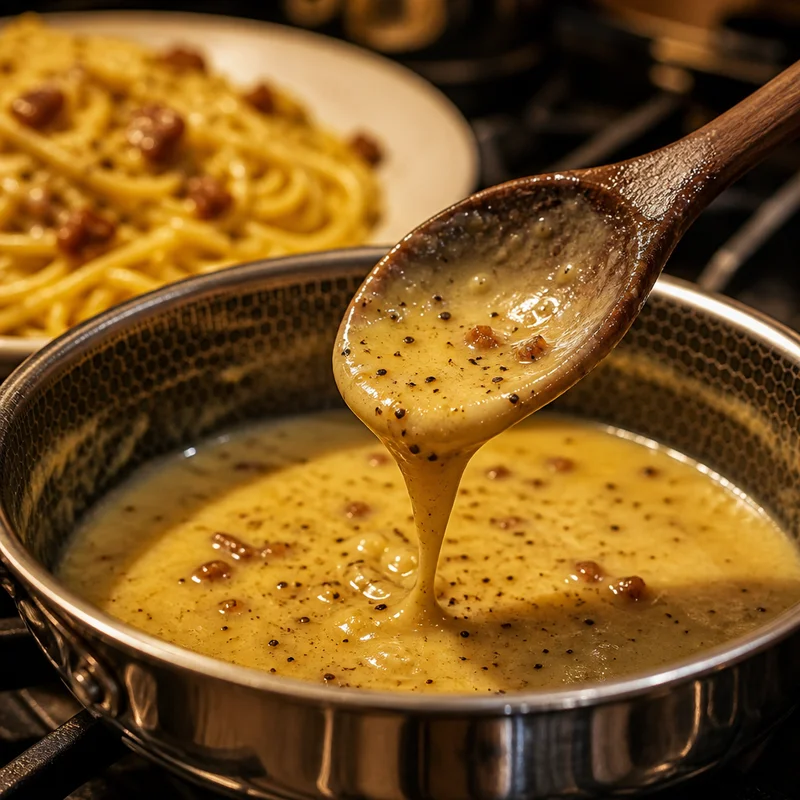
A four-ingredient sauce that lives or dies on technique: rendered guanciale fat, egg yolks, aged Pecorino Romano and a hard rain of cracked black pepper, whisked with starchy pasta water into a glossy custard that never scrambles. This is the version Roman trattorias serve — no cream, no garlic, no shortcuts — scaled and de-risked for a home stove with a plain skillet and a mixing bowl.
Ingredients
The Sauce
- 5 oz guanciale, in one slab, rind removed
- 4 large egg yolks
- 1 whole large egg
- 2 1/2 oz Pecorino Romano, finely grated on a rasp (about 1 1/4 packed cups)
- 2 tsp whole black peppercorns, coarsely cracked, plus more to finish
- 1 pinch flaky salt, only if needed
For Serving
- 1 lb dried spaghetti, rigatoni, or tonnarelli
- 4 quarts water
- 1 tbsp kosher salt, for the pasta water
Instructions
- Freeze the guanciale for 15 minutes to firm it up, then cut it into batons about 1/4 inch thick and 1 inch long. Uniform pieces render evenly — this is the whole reason to buy a slab instead of slices.
- Toast the cracked peppercorns in a dry 12-inch skillet over medium heat for 45–60 seconds, until you can smell them sharply. Tip them onto a plate and reserve; leaving them in the pan while the pork renders will scorch them.
- Return the skillet to medium-low heat and add the guanciale with 2 tablespoons of water. Cook 10–14 minutes, stirring occasionally, until the water has evaporated and the pieces are deep gold and crisp at the edges but still chewy in the center. You should have about 1/4 cup of rendered fat. Pull the pan off the heat and let it cool for 5 minutes — hot fat is the number one cause of scrambled carbonara.
- Bring the water to a boil with 1 tablespoon kosher salt (the sauce is already salty from pork and Pecorino, so keep the water lighter than usual). Add the pasta and cook 1 minute short of the package's al dente time.
- While the pasta cooks, whisk the 4 yolks and the whole egg in a large heatproof bowl until completely smooth and slightly lightened, about 30 seconds. Add the grated Pecorino and the toasted pepper and whisk to a thick, sandy paste — it should look almost too stiff to be a sauce. That thickness is your insurance against a runny result.
- Ladle 1/3 cup of the boiling pasta water into the egg mixture in a slow stream while whisking hard. Keep whisking 20 seconds; the paste should loosen into a pourable, glossy cream. Whisk in the guanciale fat (leave the meat in the pan) a spoonful at a time until fully emulsified.
- Using tongs, move the pasta directly from the pot into the skillet with the guanciale, carrying a little water with it. Toss over low heat for 30 seconds to coat, then take the skillet completely off the burner and let it cool for 30 seconds — the pan should be warm, not sizzling.
- Pour the egg mixture over the pasta and toss vigorously and continuously for 60–90 seconds, lifting the strands high so the sauce aerates. If the pan cools too fast and the sauce stays loose, return it to the lowest possible heat for 10–15 seconds at a time, tossing constantly, until it thickens to a glossy coat that clings. Stop the moment it looks creamy.
- Loosen with additional hot pasta water 1 tablespoon at a time if it tightens — a finished carbonara should slide, not clump. Taste and add flaky salt only if it needs it. Serve immediately in warmed bowls with more Pecorino and a fresh grind of pepper.
- To make the sauce ahead as a standalone: prepare through step 6, cover, and refrigerate up to 24 hours. Bring to room temperature and whisk in 2 tablespoons hot pasta water before using; it will not hold once combined with pasta.
Chef's tips
- No guanciale? Use 5 oz of unsmoked pancetta in a slab. Bacon works but its smoke reads American rather than Roman — if you use it, choose the least sweet, least smoky one you can find.
- Grate the Pecorino on a Microplane, not the box grater's large holes. Coarse shreds refuse to melt and leave gritty knots in the sauce.
- A stainless bowl set over the empty (but still warm) pasta pot gives you gentle, controllable heat if you're nervous about the skillet. Whisk in the bowl, off the direct burner, and you essentially cannot scramble it.
- If the sauce does break into curds, dump it into a blender with 2 tablespoons hot water and blitz 15 seconds — it will re-emulsify enough to save dinner, though the texture will be slightly tighter.
- The 4-yolks-plus-1-whole-egg ratio is deliberate: yolks bring richness and emulsifying power, and the single white adds just enough body to help the sauce grip the pasta without turning it eggy.
Nutrition (per serving, estimated)
721calories
27gprotein
87gcarbs
29gfat
Estimates only — values vary with brands and portions.
Made with Sprig
Roman-Style Carbonara Sauce (No Cream, All Emulsion) was created in Sprig — the AI chef that turns any craving into a complete recipe, plans your week, and shops with one smart list.
Free to start · 14-day Pro trial · cancel anytime
Not ready yet? Get the occasional recipe worth cooking — a couple a month at most.
You're on the list — check your inbox!
Unsubscribe anytime. Privacy Policy
More from Sprig Originals
French Onion Patty Melts on Rye
Dark Roux Seafood Gumbo with Quick Shrimp Stock
One-Skillet Blackened Cajun Chicken Pasta
Are you this recipe's original author or publisher? Report a problem