Sprig Originals's kitchen / Warm Baguette with Cultured Butter and Flaky Salt
Warm Baguette with Cultured Butter and Flaky Salt
 By Sprig Originals · cooked up in Sprig
Worked out from this recipe's ingredients. If you're cooking for an allergy, always read the full ingredient list.
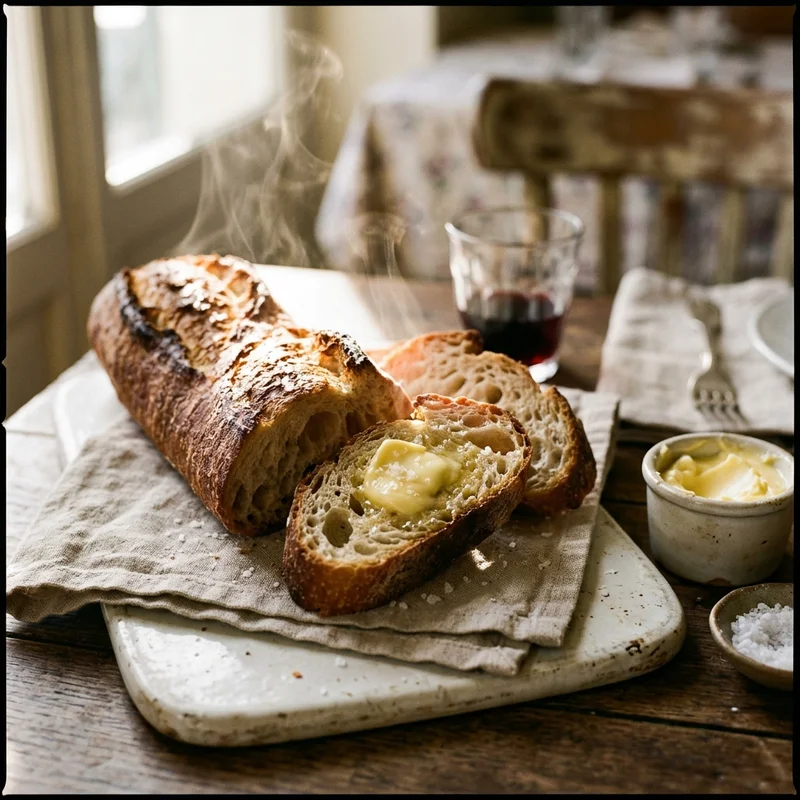
The French bistro side dish that costs five dollars and takes almost no cooking: a crackling-crisp baguette pulled warm from the oven, a slab of cultured butter softened to the exact point where it spreads without tearing the crumb, and a scatter of flaky sea salt. It is all technique — how you revive the crust, how you temper the butter, how you salt at the last second — and once you learn it you will stop buying bread baskets you don't love.
Ingredients
Bread
- 1 good bakery baguette (about 10–12 oz), ideally baked that day
- 1 tbsp water, for misting the crust
Butter
- 6 oz cultured butter (European-style, 82%+ butterfat), unsalted or lightly salted
- 1 tsp flaky sea salt, such as Maldon or fleur de sel
Optional finishes (pick one)
- 1 tsp finely chopped chives
- 1/4 tsp cracked black pepper
- 1 tsp honey
- 1/2 tsp finely grated lemon zest
Instructions
- Take the butter out of the refrigerator 45 to 60 minutes before serving. Cut it into a rough block or two and set it on a small plate on the counter — you want it at 62–68°F, cool but yielding to a gentle press, never greasy or melty. If your kitchen is warm, 30 minutes is plenty. If you're in a hurry, cut the butter into 1/2-inch cubes and spread them out on a plate; they'll temper in about 15 minutes.
- Arrange a rack in the middle of the oven and heat to 400°F. Do not skip preheating fully — a lukewarm oven steams the crumb instead of crisping the crust.
- If the baguette is fresh from the bakery that day, dampen your fingertips and flick a little water over the crust — about a teaspoon's worth total, just enough to bead. If the loaf is a day old, run it briefly under the tap or mist it more generously; the crust should look wet but the bread should not be soaked.
- Place the baguette directly on the oven rack (no pan, no foil) and bake 7 to 9 minutes for a same-day loaf, 9 to 11 minutes for day-old bread. It's ready when the crust crackles audibly if you squeeze it gently and the loaf smells toasty. Do not go past 12 minutes or the interior dries out.
- Let the baguette rest on a wire rack for 3 to 4 minutes. This is the step people skip: the crust sets and shatters properly instead of going leathery, and the steam inside redistributes so the crumb is moist rather than gummy.
- Tear the baguette crosswise into 6 rough sections by hand rather than slicing it — torn bread has more surface texture and holds butter better. If you prefer slices, cut on a sharp diagonal with a serrated knife into 3/4-inch pieces.
- Transfer the butter to a small serving dish or leave it as a block on a board and drag the back of a spoon across the top to make shallow ridges. Scatter about 3/4 teaspoon of the flaky salt over the surface right before it goes to the table — salting early dissolves the crystals and you lose the crunch that makes the whole thing work.
- Serve immediately, with the remaining flaky salt in a small pinch bowl alongside. Spread butter thickly on warm bread, add a pinch of salt on top of the butter, and eat. If using an optional finish, sprinkle chives, pepper, or lemon zest over the butter with the salt, or drizzle honey over individual buttered pieces.
- Line the bread in a napkin-lined basket and fold the cloth over the top to hold heat — the bread stays warm for about 15 minutes this way. Any bread that cools past that point can be re-warmed for 2 minutes at 400°F once, but not twice.
Chef's tips
- Cultured butter is the whole point of the $5 restaurant version: the cream is fermented before churning, which gives it a tangy, almost cheesy depth that commodity butter lacks. Look for Vermont Creamery, Isigny Ste-Mère, Rodolphe Le Meunier, or Kerrygold as a widely available step up. Buy the best one you can find in the smallest quantity — you're using it as a condiment, not a cooking fat.
- Butter temperature matters more than butter price. Cold butter tears the crumb and tastes of nothing; melted butter soaks in and reads as greasy. The target is a butter that holds a spoon ridge but takes a fingerprint easily.
- Never microwave the baguette. It gelatinizes the starches and the loaf turns tough and rubbery within minutes.
- No baguette worth eating nearby? A ciabatta, country sourdough boule, or par-baked supermarket baguette all work — increase the bake to 12–14 minutes for a par-baked loaf and follow the package as a floor, not a ceiling.
- To make a compound butter ahead, mash softened cultured butter with chives and lemon zest, roll into a log in parchment, and chill up to 5 days. Pull it out an hour before serving and slice into coins, then salt the coins at the table.
- Leftover buttered bread makes exceptional croutons: cube it, toss with a little olive oil, and bake at 350°F for 12 minutes.
Nutrition (per serving, estimated)
318calories
6gprotein
32gcarbs
19gfat
Estimates only — values vary with brands and portions.
Made with Sprig
Warm Baguette with Cultured Butter and Flaky Salt was created in Sprig — the AI chef that turns any craving into a complete recipe, plans your week, and shops with one smart list.
Free to start · 14-day Pro trial · cancel anytime
Not ready yet? Get the occasional recipe worth cooking — a couple a month at most.
You're on the list — check your inbox!
Unsubscribe anytime. Privacy Policy
More from Sprig Originals
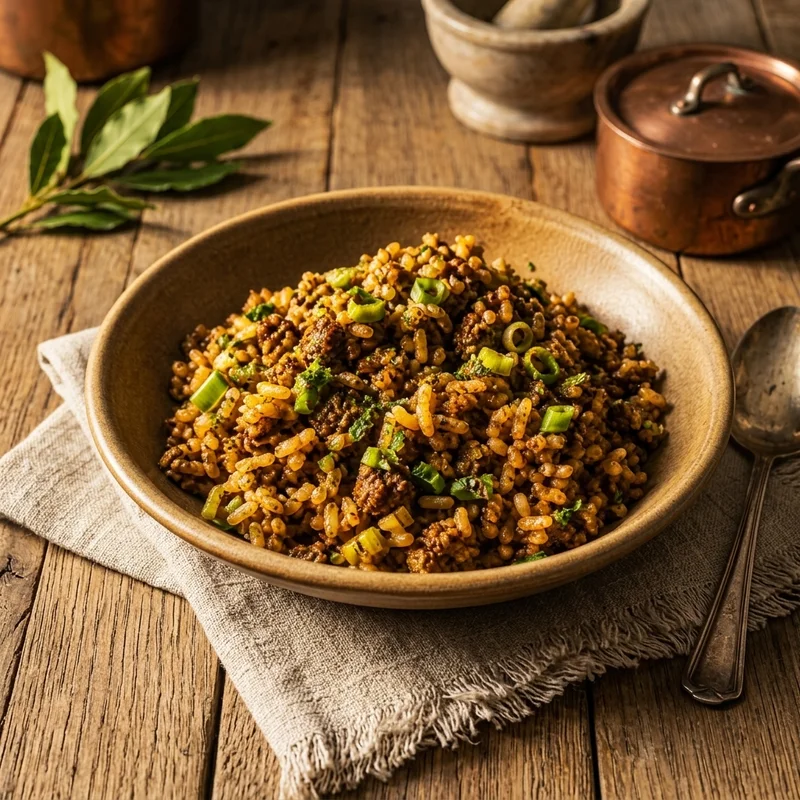
South Louisiana Rice Dressing (Dirty Rice)
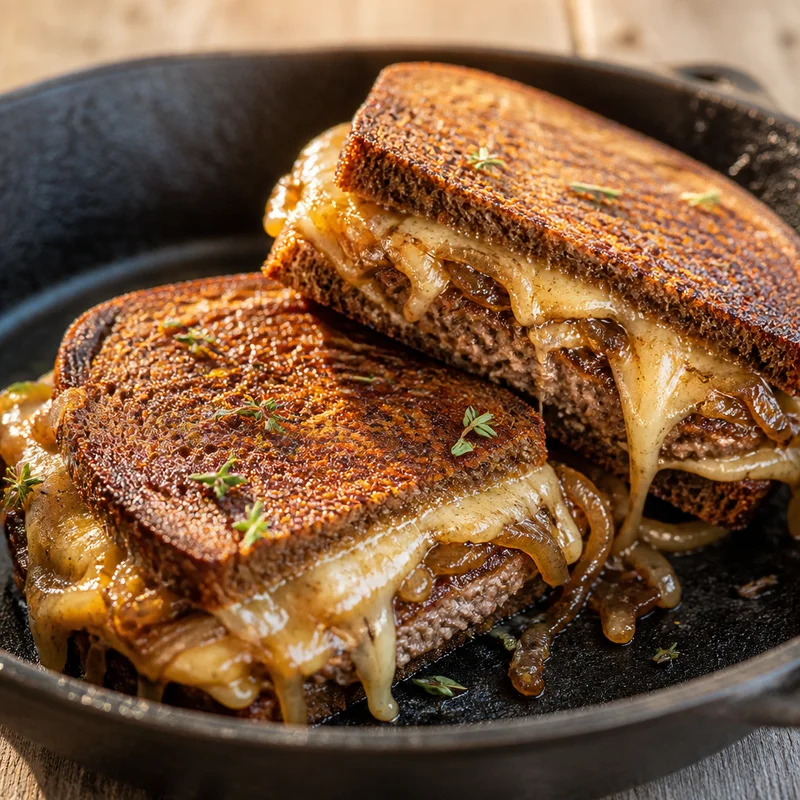
French Onion Patty Melts on Rye

Dark Roux Seafood Gumbo with Quick Shrimp Stock
Are you this recipe's original author or publisher? Report a problem